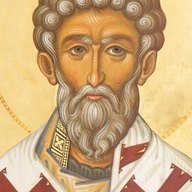
Blessed AugustineHomily 6 on 1 John · on 1 John 4:1
"Beloved, believe not every spirit." Because he had said, "In this we know that He abideth in us, by the Spirit which He hath given us." But how this same Spirit is known, mark this: "Beloved, believe not every spirit, but prove the spirits whether they be from God." And who is he that proves the spirits? A hard…
Blessed AugustineHomily 6 on 1 John · on 1 John 4:1
The Holy Spirit is spoken of in the Gospel by the name of water; where the Lord "cried and said, If any man thirst, let him come unto me, and drink. He that believeth on me, out of his belly shall flow rivers of living water." But the evangelist has expounded of what He said this: for he goes on to say, "But this…
Blessed AugustineHomily 6 on 1 John · on 1 John 4:1
The water of the sacrament is one thing: another, the water which betokens the Spirit of God. The water of the sacrament is visible: the water of the Spirit invisible. That washes the body, and betokens that which is done in the soul. By this Spirit the soul itself is cleansed and fed. This is the Spirit of God, which…
Blessed AugustineHomily 6 on 1 John · on 1 John 4:1
This Spirit is denoted by the Lord under the name of water: and we have heard from this epistle, "Believe not every spirit;" and those words of Solomon bear witness, "From strange water keep thee far." What meaneth, "water"? Spirit. Does water always signify spirit? Not always: but in some places it signifies the…
Blessed AugustineHomily 6 on 1 John · on 1 John 4:2
There remains then the test by which it is to be proved to be the Spirit of God. He has indeed set down a sign, and this, be-like, difficult: let us see, however. We are to recur to that charity; it is that which teacheth us, because it is the unction. However, what saith he here? "Prove the spirits, whether they be…
Blessed AugustineHomily 6 on 1 John · on 1 John 4:2–3
"Hereby is known the Spirit of God: every spirit that confesseth that Jesus Christ is come in the flesh is of God: and every spirit that confesseth not that Jesus Christ is come in the flesh is not of God: and this is the antichrist, of whom ye have heard that he should come; and even now already is he in this world."…
Blessed AugustineHomily 6 on 1 John · on 1 John 4:2–3
Aye, here perchance they lift themselves up against us, and say: Ye have not the Spirit from God; but we confess "that Jesus Christ came in the flesh:" but the apostle here hath said that those have not the Spirit of God, who confess not "that Jesus Christ came in the flesh." Ask the Arians: they confess "that Jesus…
Blessed AugustineHomily 6 on 1 John · on 1 John 4:2–3
What are we to do then? By what to discern them? Be very attentive; let us go together in heart, and knock. Charity herself keeps watch; for it is none other than she that shall knock, she also that shall open: anon ye shall understand in the name of our Lord Jesus Christ. Already ye have heard that it was said above,…
Blessed AugustineHomily 6 on 1 John · on 1 John 4:2–3
What is the spirit that is not from God? That "which denieth that Jesus Christ is come in the flesh." And what is the spirit that is from God? That "which confesseth that Jesus Christ is come in the flesh." Who is he that confesseth that Jesus Christ is come in the flesh? Now, brethren, to the mark! let us look to the…
Blessed AugustineHomily 6 on 1 John · on 1 John 4:2–3
Wherefore then came He in the flesh? Because it behooved us to have the hope of resurrection shown unto us. God He was, and in flesh He came; for God could not die, flesh could die; He came then in the flesh, that He might die for us. But how died He for us? "Greater charity than this hath no man, that a man lay down…
Blessed AugustineHomily 6 on 1 John · on 1 John 4:2–3
"How," sayest thou, "do I deny in deeds?" Because the end for which Christ came in the flesh, was, that He might die for us. He died for us, because therein He taught much charity. "Greater charity than this hath no man, that a man lay down his life for his friends." Thou hast not charity, seeing thou for thine own…
Blessed AugustineHomily 6 on 1 John · on 1 John 4:2–3
This then is the Spirit of God, which saith that Jesus is come in the flesh, which saith, not in tongue but in deeds, which saith, not by making a noise but by loving. And that spirit is not of God, which denies that Jesus Christ is come in the flesh - denies, here also, not in tongue but in life; not in words but in…
Blessed AugustineHomily 6 on 1 John · on 1 John 4:2–3
Nay, and that ye may know that he has referred the matter to deeds, he saith, "And every spirit, qui solvit Christum, which does away with Christ that He came in the flesh, is not of God." A doing away in deeds is meant. What has he shown thee? "That denieth:" in that he saith, "doeth away" (or, "unmaketh"). He came…
And every spirit that confesseth not that Jesus Christ is come in the flesh is not of God: and this is that spirit of antichrist, whereof ye have heard that it should come; and even now already is it in the world.
Blessed AugustineHomily 6 on 1 John · on 1 John 4:3
Thus then let us now also make the enquiry in the deeds not in the tongue. What is the spirit that is not from God? That "which denieth that Jesus Christ is come in the flesh." And what is the spirit that is from God? That "which confesseth that Jesus Christ is come in the flesh." Who is he that confesseth that Jesus…
Blessed AugustineHomily 6 on 1 John · on 1 John 4:3
"And every spirit, qui solvit Christum, which does away with Christ that He came in the flesh, is not of God." A doing away in deeds is meant. What has he shown thee? "That denieth:" in that he saith, "doeth away" (or, "unmaketh"). He came to gather in one, thou comest to unmake. Thou wouldest pull Christ's members…
Blessed AugustineHomily 6 on 1 John · on 1 John 4:3
"But he that shall do, and shall teach so, shall be called great in the kingdom of heaven." From this, that He has here said, fecerit, "shall do," while in opposition to this He has there said solverit, meaning non fecerit, "shall not do, and shall teach so" - to break, then, is, not to do - what doth He teach us, but…
Blessed AugustineHomily 7 on 1 John · on 1 John 4:4
"Now are ye of God little children, and have overcome him:" whom but Antichrist? For above he had said, "Whosoever unmaketh Jesus Christ and denieth that He is come in the flesh is not of God." Now we expounded, if ye remember, that all those who violate charity deny Jesus Christ to have come in the flesh. For Jesus…
Blessed AugustineHomily 7 on 1 John · on 1 John 4:5
"These are of the world." Who? The antichrists. Ye have already heard who they be. And if ye be not such, ye know them, but whosoever is such, knows not. "These are of the world: therefore speak they of the world, and the world heareth them." Who are they that "speak of the world"? Mark who are against charity.…
Blessed AugustineHomily 7 on 1 John · on 1 John 4:6
"We are of God." Let us see why; see whether it be for any other thing than charity. "We are of God: he that knoweth God heareth us; he that is not of God heareth not us. Hereby know we the spirit of truth, and of error:" namely by this, that he that heareth us hath the spirit of truth; he that heareth not us, hath…
Blessed AugustineHomily 7 on 1 John · on 1 John 4:7
"Beloved, let us love one another." Why? Because a man adviseth? "Because love is of God." Much hath he commended love, in that he hath said, "Is of God:" but he is going to say more; let us eagerly hear. At present he hath said, "Love is of God; and every one that loveth is born of God, and knoweth God. He that…
Blessed AugustineHomily 7 on 1 John · on 1 John 4:8
Now see that to act against love is to act against God. Let no man say, "I sin against man when I do not love my brother, (mark it!) and sin against man is a thing to be taken easily; only let me not sin against God. How sinnest thou not against God, when thou sinnest against love? "Love is God." Do "we" say this? If…
Blessed AugustineHomily 7 on 1 John · on 1 John 4:8
In what sense then was it said a while ago, "Love is of God;" and now, "Love Is God?" For God is Father and Son and Holy Ghost: the Son, God of God, the Holy Ghost, God of God; and these three, one God, not three Gods. If the Son be God, and the Holy Ghost God, and that person loveth in whom dwelleth the Holy Ghost:…
Blessed AugustineHomily 7 on 1 John · on 1 John 4:9
"In this was manifested the love of God in us." Behold, in order that we may love God, we have exhortation. Could we love Him, unless He first loved us? If we were slow to love, let us not be slow to love in return. He first loved us; not even so do we love. He loved the unrighteous, but He did away the…
Blessed AugustineHomily 7 on 1 John · on 1 John 4:10
"In this is love, not that we loved God, but that He loved us:" we did not love Him first: for to this end loved He us, that we may love Him: "And sent His Son to be the Atoner for our sins:" "litatorem," i.e. one that sacrifices. He sacrificed for our sins. Where did He find the sacrifice? Where did He find the…
Blessed AugustineHomily 7 on 1 John · on 1 John 4:10
This we have said in the case where the things done are similar. In the case where they are diverse, we find a man by charity made fierce; and by iniquity made winningly gentle. A father beats a boy, and a boy-stealer caresses. If thou name the two things, blows and caresses, who would not choose the caresses, and…
Blessed AugustineHomily 7 on 1 John · on 1 John 4:11
He sacrificed for our sins. Where did He find the sacrifice? Where did He find the victim which he would offer pure? Other He found none; His own self He offered. "Beloved, if God so loved us we ought also to love one another." "Peter," saith He, "lovest thou me?" And he said, "I love." "Feed my sheep."
Blessed AugustineHomily 7 on 1 John · on 1 John 4:11
If any of you perchance wish to keep charity, brethren, above all things do not imagine it to be an abject and sluggish thing; nor that charity is to be preserved by a sort of gentleness, nay not gentleness, but tameness and listlessness. Not so is it preserved. Do not imagine that thou then lovest thy servant when…
Blessed AugustineHomily 8 on 1 John · on 1 John 4:12
"No man hath seen God at any time." See, beloved: "If we love one another, God will dwell in us, and His love will be perfected in us." Begin to love; thou shalt be perfected. Hast thou begun to love? God has begun to dwell in thee: love Him that has begun to dwell in thee, that by more perfect indwelling He may make…
Blessed AugustineHomily 7 on 1 John · on 1 John 4:12
"No man hath seen God at any time:" He is a thing invisible; not with the eye but with the heart must He be sought. But just as if we wished to see the sun, we should purge the eye of the body; wishing to see God, let us purge the eye by which God can be seen. Where is this eye? Hear the Gospel: "Blessed are the pure…
Blessed AugustineHomily 8 on 1 John · on 1 John 4:13
"In this we know that we dwell in Him and He in us, because He hath given us of His Spirit." It is well: thanks be to God! We come to know that He dwelleth in us. And whence come we to know this very thing, to wit, that we do know that He dwelleth in us? Because John himself has said this: "Because He hath given us of…
Blessed AugustineHomily 8 on 1 John · on 1 John 4:14
"And we have seen, and are witnesses, that God hath sent His Son to be the Saviour of the world." Set your minds at rest, ye that are sick: such a Physician is come, and do ye despair? Great were the diseases, incurable were the wounds, desperate was the sickness. Dost thou note the greatness of thine ill, and not…
Blessed AugustineHomily 8 on 1 John · on 1 John 4:15
"Whosoever shall confess that Jesus is the Son of God, God dwelleth in him and he in God." Now we may say it in not many words; "Whosoever shall confess;" not in word but in deed, not with tongue but with the life. For many confess in words, but in deeds deny.
Blessed AugustineHomily 8 on 1 John · on 1 John 4:16
"And we have known and believed the love which God hath in us." And again, by what hast thou come to know this? "Love is God." He hath already said it above, behold he saith it again. Love could not be more exceedingly commended to thee than that it should be called God. Haply thou wast ready to despise a gift of God.…
Blessed AugustineHomily 9 on 1 John · on 1 John 4:17
He tells how each may prove himself, what progress charity has made in him or rather what progress he has made in charity. For if charity is God, God is capable neither of proficiency nor of deficiency: that charity is said to be making proficiency in thee, means only that thou makest proficiency in it. Ask therefore…
Blessed AugustineHomily 9 on 1 John · on 1 John 4:17
Some man has begun to believe in a day of judgment: if he has begun to believe, he has also begun to fear. But because he fears as yet, because he hath not yet boldness in the day of judgment, not yet is charity in that man made perfect. But for all that, is one to despair? In whom thou seest the beginning, why…
Blessed AugustineHomily 9 on 1 John · on 1 John 4:17
Now in proportion as this man who has begun to fear the day of judgment, mortifies his members which are upon the earth, in that proportion the heavenly members rise up and are strengthened. But the heavenly members are all good works. As the heavenly members rise up, he begins to desire that which once he feared.…
Blessed AugustineHomily 9 on 1 John · on 1 John 4:17
Thou hast heard the ground of thy boldness: "Because as He is," saith the apostle, "are we also in this world." Does he not seem to have said something impossible? For is it possible for man to be as God? I have already expounded to you that "as" is not always said of equality, but is said of a certain resemblance.…
Blessed AugustineHomily 9 on 1 John · on 1 John 4:17
The Lord in the Gospel saith, "If ye love them that love you, what reward shall ye have? do not the publicans this?" Then what would He have us do? "But I say unto you, Love your enemies, and pray for them that persecute you." If then He bids us love our enemies, whence brings He an example to set before us? From God…
Blessed AugustineHomily 9 on 1 John · on 1 John 4:18
Now therefore concerning this same boldness, let us see what he says. Whence do we understand that charity is perfect? "There is no fear in charity." Then what say we of him that has begun to fear the day of judgment? If charity in him were perfect, he would not fear. For perfect charity would make perfect…
Blessed AugustineHomily 9 on 1 John · on 1 John 4:18
As we see in sewing, the thread is introduced by means of the bristle; the bristle first enters, but except it come out the thread does not come into its place: so fear first occupies the mind, but the fear does not remain there, because it enters only in order to introduce charity. When once there is the sense of…
Blessed AugustineHomily 9 on 1 John · on 1 John 4:18
The consciousness of sins torments the heart: justification has not yet taken place. There is that in it which itches, which pricks. Accordingly in the Psalm what saith he concerning this same perfection of righteousness? "Thou hast turned for me my mourning into joy: Thou hast put off my sackcloth, and girded me with…
Blessed AugustineHomily 9 on 1 John · on 1 John 4:18
Then let fear occupy thine heart, that it may bring in charity; let the cicatrice succeed to the leech's knife. He is such an Healer, that the cicatrices do not even appear: only do thou put thyself under His hand. For if thou be without fear, thou canst not be justified. It is a sentence pronounced by the Scriptures;…
Blessed AugustineHomily 9 on 1 John · on 1 John 4:18
But there is another sentence, which seems contrary to this if it have not one that understands. Namely, it is said in a certain place of the Psalms, "The fear of the Lord is chaste, enduring forever." He shows us an eternal fear, but a chaste. But if he there shows us an eternal fear, does this epistle perchance…
Blessed AugustineHomily 9 on 1 John · on 1 John 4:18
It is not without cause that in the one place there is added that word, chaste, in the other it is not added: but because there is one fear which is called chaste, and there is another fear which is not called chaste. Let us mark the difference between these two fears, and so understand the harmony of the flutes. How…
Blessed AugustineHomily 9 on 1 John · on 1 John 4:18
What is the chaste fear? The fear lest thou lose the good things themselves. Mark! It is one thing to fear God lest He cast thee into hell with the devil, and another thing to fear God lest He forsake thee. The fear by which thou fearest lest thou be cast into hell with the devil, is not yet chaste; for it comes not…
Blessed AugustineHomily 9 on 1 John · on 1 John 4:18
One cannot better explain the difference between these two fears, the one which charity casteth out, the other chaste, which endureth for ever, than by putting the case of two married women, one of whom, you may suppose, is willing to commit adultery, delights in wickedness, only fears lest she be condemned by her…
Blessed AugustineHomily 9 on 1 John · on 1 John 4:18
Put the case that the other loves her husband, that she feels that she owes him chaste embraces, that she stains herself with no uncleanness of adultery; she wishes for the presence of her husband. And how are these two fears distinguished? The one woman fears, the other also fears. Question them: they seem to make…
Blessed AugustineHomily 9 on 1 John · on 1 John 4:19
"Let us love, because He first loved us." For how should we love, except He had first loved us? By loving we became friends: but He loved us as enemies, that we might be made friends. He first loved us, and gave us the gift of loving Him. We did not yet love Him: by loving we are made beautiful. If a man deformed and…
Blessed AugustineHomily 9 on 1 John · on 1 John 4:19
But our soul, my brethren, is unlovely by reason of iniquity: by loving God it becomes lovely. What a love must that be that makes the lover beautiful! But God is always lovely, never unlovely, never changeable. Who is always lovely first loved us; and what were we when He loved us but foul and unlovely? But not to…
Blessed AugustineHomily 9 on 1 John · on 1 John 4:19
Hear the apostle Paul: "But God showed His love in us, in that while we were yet sinners, Christ died for us:" the just for the unjust, the beautiful for the foul. How find we Jesus beautiful? "Thou art beauteous in loveliness surpassing the sons of men; grace is poured upon thy lips." Why so? Again see why it is that…
Blessed AugustineHomily 9 on 1 John · on 1 John 4:19
Where then in Scripture do we find Jesus uncomely and deformed, as we have found Him comely and "beauteous in loveliness surpassing the sons of men?" where find we Him also deformed? Ask Esaias: "And we saw Him, and He had no form nor comeliness." There now are two flutes which seem to make discordant sounds: howbeit…
Blessed AugustineHomily 9 on 1 John · on 1 John 4:19
Let us ask the apostle Paul, and let him expound to us the unison of the two flutes. Let him sound to us the note, "Beauteous in loveliness surpassing the sons of men.-Who, being in the form of God, thought it not robbery to be equal with God." Let him sound to us also the note, "We saw Him, and He had no form nor…
If a man say, I love God, and hateth his brother, he is a liar: for he that loveth not his brother whom he hath seen, how can he love God whom he hath not seen?
Blessed AugustineHomily 9 on 1 John · on 1 John 4:20
"If any man say, I love God." What God? wherefore love we? "Because He first loved us," and gave us to love. He loved us ungodly, to make us godly; loved us unrighteous, to make us righteous; loved us sick, to make us whole. Ask each several man; let him tell thee if he love God. He cries out, he confesses: I love,…
Blessed AugustineHomily 9 on 1 John · on 1 John 4:20
What then? does he that loves a brother, love God also? He must of necessity love God, must of necessity love Him that is Love itself. Can one love his brother, and not love Love? of necessity he must love Love. What then? because he loves Love, does it follow that he loves God? Certainly it does follow. In loving…
Blessed AugustineHomily 9 on 1 John · on 1 John 4:20
But if thou love not the brother whom thou seest, how canst thou love God whom thou seest not? Why does he not see God? Because he has not Love itself. That he does not see God, is, because he has not love: that he has not love, is, because he loves not his brother. The reason then why he does not see God, is, that he…
Blessed AugustineHomily 9 on 1 John · on 1 John 4:20
Only, let him run now, that he may at last have gladness in his own country. Let him not love his pilgrimage, not love the way: let all be bitter save Him that calleth us, until we hold Him fast, and say what is said in the Psalm: "Thou hast destroyed all that go a-whoring from Thee" -and who are they that go…
Blessed AugustineHomily 9 on 1 John · on 1 John 4:21
"For he that loveth not his brother whom he seeth, how can he love God whom he seeth not? And this commandment have we from Him, that he who loveth God love his brother also." Marvellous fine talk it was, that thou didst say, "I love God," and hatest thy brother! O murderer, how lovest thou God? Hast thou not heard…
Blessed AugustineHomily 9 on 1 John · on 1 John 4:21
And now I make it good by another proof. This same apostle hath said, "He gave us commandment that we should love one another." How canst thou be said to love Him whose commandment thou hatest? Who shall say, I love the emperor, but I hate his laws? In this the emperor understands whether thou love him, that his laws…
Blessed AugustineHomily 9 on 1 John · on 1 John 4:21
Brethren, I am never satiated in speaking of charity in the name of the Lord. In what proportion ye have an insatiable desire of this thing, in that proportion we hope the thing itself is growing in you, and casting out fear, that so there may remain that chaste fear which is for ever permanent. Let us endure the…
Every note is a real passage, quoted word for word from a published English translation, with its source. Nothing here is summarised or written by us. Some verses have many notes and some have none, because the Fathers wrote more on some passages than others.
Blessed Augustine, Ten Homilies on the First Epistle of John, tr. H. Browne, Nicene and Post-Nicene Fathers, series 1, vol. 7 (1888).
Scripture: the King James Version (1611); the Greek (tap Ελ) is the 1904 Patriarchal text of the Ecumenical Patriarchate.
All of these translations are in the public domain. The passages were matched to their verses by the Historical Christian Commentaries project, which also hosts the full texts we link to. The Fathers are a treasury of the Church's mind, and they are best read alongside the life of the Church: if a passage raises a question, bring it to your priest.