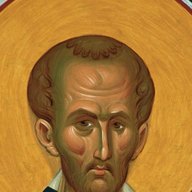
St. John ChrysostomHomily 10 on Acts · on Acts 4:1
Ere yet they had time to take breath after their first trials, straightway they enter into others. And observe how the events are disposed. First, they were all mocked together; this was no small trial: secondly, they enter into dangers. And these two things do not take place in immediate succession; but when first…
St. John ChrysostomHomily 10 on Acts · on Acts 4:2
"Being grieved that they taught the people." Not merely because they taught, but because they declared, not alone that Christ Himself was risen from the dead, but moreover, that we through Him do rise again. "Because they taught the people, and preached through Jesus the resurrection of the dead." So mighty was His…
St. John ChrysostomHomily 10 on Acts · on Acts 4:2
So then at first they did all for the sake of man's opinion or glory: but now another motive was added: that they should not be thought guilty of murder, as they said subsequently, "Do ye wish to bring this man's blood on us?" O the folly! Persuaded that He was risen, and having received this proof of it, they…
St. John ChrysostomHomily 10 on Acts · on Acts 4:3
"And they laid hands on them, and put them in hold unto the next day; for it was now eventide." What impudence! They feared not the multitude; for this also the captain of the temple was with them: they had their hands still reeking with the blood of the former victim. "For it was now eventide," it is said. It was…
St. John ChrysostomHomily 10 on Acts · on Acts 4:3
"By their teaching the people." For already they were in ill repute with them by reason of what they had done to Christ; so that they were rather increasing their own obloquy. "And they laid hands on them, and put them in hold until the morrow; for it was now eventide." In the case of Christ, however, they did not so;…
St. John ChrysostomHomily 10 on Acts · on Acts 4:4
"Howbeit, many having heard the word, believed; and the number of the men was about five thousand." How was this? Did they see them in honor? Did they not behold them put in bonds? How then did they believe? Do you see the evident efficacy? And yet even those that believed already might well have become weaker. But…
St. John ChrysostomHomily 40 on Acts · on Acts 4:4
Once there were three thousand - there were five thousand - and yet they had all one soul: but now each knows not his brother, and is not ashamed to lay the blame on the number, because it is so great!
St. John ChrysostomHomily 10 on Acts · on Acts 4:5–6
"And it came to pass on the morrow, that their rulers, and elders, and scribes, and Annas the High Priest, and Caiaphas, and John, and Alexander, and as many as were of the kindred of the High Priest, were gathered together at Jerusalem." For now along with the other evils of the times, the Law was no longer observed.…
St. John ChrysostomHomily 10 on Acts · on Acts 4:5–6
"And it came to pass on the morrow, that their rulers, and elders, and scribes were gathered together at Jerusalem." Again in Jerusalem: and there it is that men's blood is poured out; no reverence for their city either; "And Annas, and Caiaphas," etc. "And Annas," it says, "and Caiaphas." His maid-servant it was that…
And Annas the high priest, and Caiaphas, and John, and Alexander, and as many as were of the kindred of the high priest, were gathered together at Jerusalem.
St. John ChrysostomHomily 10 on Acts · on Acts 4:7
"And when they had set them in the midst, they asked, By what power, or by what name, have ye done this?" And yet they knew it well; for it was because they were "grieved that they preached through Jesus the resurrection" that they arrested them. Then for what purpose do they question them? They expected the numbers…
St. John ChrysostomHomily 10 on Acts · on Acts 4:7
His maid-servant it was that questioned Peter, and he could not bear it: in his house it was that Peter denied, when Another was in bonds there: but now, when he has come into the midst of them all, see how he speaks! "By what name have ye done this?" Why dost thou not speak it, what it is, but keepest that out of…
St. John ChrysostomHomily 10 on Acts · on Acts 4:8–9
Observe what they say: "And by what name have ye done this? Then Peter, filled with the Holy Ghost, said unto them." And now, I pray you, call to mind Christ's saying; "When they deliver you up unto the synagogues, take ye no thought how or what thing ye shall speak; for it is the Spirit of your Father which speaketh…
St. John ChrysostomHomily 10 on Acts · on Acts 4:8–9
"Ye rulers of the people," etc. Observe his wisdom: he does not say outright, "In the Name of Jesus we did it," but how? "In His Name this man"-He does not say, "was made whole by us;" but-"doth stand here before you whole." And again, "If we be examined concerning the good deed done to the impotent man." He hits them…
Be it known unto you all, and to all the people of Israel, that by the name of Jesus Christ of Nazareth, whom ye crucified, whom God raised from the dead, even by him doth this man stand here before you whole.
St. John ChrysostomHomily 10 on Acts · on Acts 4:10
"By what means this man is made whole: be it known unto you all, and to all the people Israel; that by the Name of Jesus Christ of Nazareth"-this is what would vex them most. For this was that which Christ had told the disciples, "What ye hear in the ear that preach ye upon the housetops."-"That in the name of Jesus…
St. John ChrysostomHomily 10 on Acts · on Acts 4:10
"Be it known unto you all," etc. Whereby he shows them that they rather do, in spite of themselves, preach Christ; themselves extol the doctrine, by their examining and questioning. O exceeding boldness-"Whom ye crucified! Whom God raised up"-this is bolder still! Think not that we hide what there is to be ashamed of.…
St. John ChrysostomHomily 10 on Acts · on Acts 4:11
"This is the stone," he says, "which was set at nought of you builders, which is become the head of the corner." He reminds them also of a saying which was enough to frighten them. For it had been said, "Whosoever shall fall on this stone shall be broken; but on whomsoever it shall fall, it will grind him to powder."
St. John ChrysostomHomily 10 on Acts · on Acts 4:11
"This," says he, "is the Stone which was set at naught by you builders;" and then he goes on to teach them, saying in addition, "Which is made the head of the corner"; that is to say, that the Stone is indeed approved! Great was the boldness they now had, in consequence of the miracle.
St. John ChrysostomHomily 10 on Acts · on Acts 4:12
"Neither is there salvation in any other," Peter says. What wounds, think you, must these words inflict on them! "For there is none other name," he continues, "under heaven given among men, whereby we must be saved." Here he utters also lofty words. For when the object is, not to carry some point successfully, but…
St. John ChrysostomHomily 10 on Acts · on Acts 4:12
And when there was need to teach, observe how they speak and allege many prophecies; but when the point was to use boldness of speech, then they only speak peremptorily. Thus "Neither," says he, "is there any other name under heaven given among men whereby we must be saved." It is manifest to all, he says, because not…
Now when they saw the boldness of Peter and John, and perceived that they were unlearned and ignorant men, they marvelled; and they took knowledge of them, that they had been with Jesus.
St. John ChrysostomHomily 10 on Acts · on Acts 4:13
"Now when they saw the boldness of Peter and John, and perceived that they were unlearned and ignorant men, they marvelled and they took knowledge of them, that they had been with Jesus." The two unlearned men beat down with their rhetoric them and the chief priests. For it was not they that spake, but the grace of…
St. John ChrysostomHomily 10 on Acts · on Acts 4:13
Behold another miracle not less than the former. "And beholding the boldness of Peter and John," etc. "And they took knowledge of them that they had been with Jesus." Not without a meaning has the Evangelist set down this passage; but in saying, "they recognized them that they had been with Jesus," he means, in His…
St. John ChrysostomHomily 10 on Acts · on Acts 4:14
"And beholding the man which was healed standing with them, they could say nothing against it." Great was the boldness of the man; that even in the judgment-hall he has not left them. For had they said that the fact was not so, there was he to refute them.
St. John ChrysostomHomily 10 on Acts · on Acts 4:14
But not less than the voice of these, the miracle uttered a voice of its own: and that sign itself stopped their mouths. "And beholding the man," etc. So that they would have been peremptory with them, if the man had not been with them. "We cannot deny it." So that they would have denied it, if the thing had not been…
St. John ChrysostomHomily 10 on Acts · on Acts 4:15–17
"But when they had commanded them to go aside out of the council, they conferred among themselves, saying, What are we to do to these men?" See the difficulty they are in, and how the fear of men again does everything. As in the case of Christ, they were not able (as the saying is) to undo what is done, nor to cast it…
Saying, What shall we do to these men? for that indeed a notable miracle hath been done by them is manifest to all them that dwell in Jerusalem; and we cannot deny it.
St. John ChrysostomHomily 10 on Acts · on Acts 4:16
"What shall we do?" O the folly! to suppose that those who had tasted of the conflict, would now take fright at it: to expect, impotent as their efforts had proved in the beginning, to effect something new, after such a specimen of oratory as had been exhibited! The more they wished to hinder, the more the business…
St. John ChrysostomHomily 10 on Acts · on Acts 4:17
"But that it spread no further among the people." And yet it was palpable to all men! But such is the nature of wickedness: everywhere it is shamed. "Let us straitly threaten them." What sayest thou? Threaten? And expect ye to stop the preaching? And yet all beginnings are hard and trying. Ye slew the Master, and did…
St. John ChrysostomHomily 10 on Acts · on Acts 4:18
"And they called them, and commanded them not to speak at all, nor teach, in the name of Jesus." See what effrontery is shown by these, and what greatness of mind by the Apostles.
St. John ChrysostomHomily 10 on Acts · on Acts 4:19–20
"But Peter and John answered and said unto them, Whether it be right in the sight of God to hearken unto you more than unto God, judge ye. For we cannot but speak the things which we have seen and heard. So when they had further threatened them, they let them go, finding nothing how they might punish them, because of…
St. John ChrysostomHomily 10 on Acts · on Acts 4:19–20
"And Peter and John answered and said unto them, Whether it be right in the sight of God to hearken unto you more than unto God, judge ye." When the terror was abated (for that command was tantamount to their being dismissed), then also the Apostles speak more mildly: so far were they from mere bravery: "Whether it be…
St. John ChrysostomHomily 10 on Acts · on Acts 4:19–20
Already these as martyrs have borne testimony: set in the battle against all, they said, "We cannot but speak the things we have seen and heard." If the things we speak be false, reprehend them; if true, why hinderest thou? Such is philosophy! Those, in perplexity, these in gladness: those covered with exceeding…
St. John ChrysostomHomily 10 on Acts · on Acts 4:20
"For we cannot but speak the things we have seen and heard:" so that we are witnesses who have a right to be believed. Already these as martyrs have borne testimony: set in the battle against all, they said, "We cannot but speak the things we have seen and heard." If the things we speak be false, reprehend them; if…
So when they had further threatened them, they let them go, finding nothing how they might punish them, because of the people: for all men glorified God for that which was done.
St. John ChrysostomHomily 10 on Acts · on Acts 4:21
"So when they had further threatened them, they let them go, finding nothing how they might punish them, because of the people: for all men glorified God for that which was done." Again they threatened in vain. So then the people glorified God, but these endeavored to destroy them: such fighters against God were they!…
St. John ChrysostomHomily 10 on Acts · on Acts 4:22
The miracles shut their mouths: they would not so much as let them finish their speech, but cut them short in the middle, most insolently. "For all men glorified God for that which was done. For the man was above forty years old, on whom this miracle of healing was showed."
St. John ChrysostomHomily 11 on Acts · on Acts 4:23
Not for their own glory did they tell the tale-how should such be their motive?-but what they displayed was the proofs therein exhibited of the grace of Christ. All that their adversaries had said, this they told; their own part, it is likely, they omitted: this made the hearers all the more courageous. What then?…
St. John ChrysostomHomily 11 on Acts · on Acts 4:23
See the unostentatious conduct of the Apostles, and their largeness of mind. They did not go about boasting, and say, "How we served the priests!" nor were they ambitious of honor: but, we read, "they came unto their own company." Observe how they do not cast themselves upon temptations, but when the temptations…
And when they heard that, they lifted up their voice to God with one accord, and said, Lord, thou art God, which hast made heaven, and earth, and the sea, and all that in them is:
St. John ChrysostomHomily 11 on Acts · on Acts 4:24
"And when they heard that," it is said, "with one accord they lifted up their voice to God, and said:" and with great earnestness, for it is no prayer made at random. Observe with what exquisite propriety their prayers are framed: thus, when they besought to be shown who was meet for the Apostleship, they said, "Thou,…
St. John ChrysostomHomily 11 on Acts · on Acts 4:24
That shout proceeded from delight and great emotion. Such indeed are the prayers which do their work, prayers replete with true philosophy, prayers offered up for such objects, by such persons, on such occasions, in such a manner; whereas all others are abominable and profane. "Lord, Thou the God that madest heaven…
St. John ChrysostomHomily 11 on Acts · on Acts 4:25
It is to sue God, as one may say upon His own covenants, that they thus produce this prophecy: and at the same time to comfort themselves with the thought, that in vain are all the imaginations of their foes. This then is what they say: Bring those words into accomplishment, and show that they "imagine vain things."
St. John ChrysostomHomily 11 on Acts · on Acts 4:26–27
Scripture is wont thus to speak of one as of many. "For of a truth, Lord, against Thy Holy Child Jesus, Whom Thou didst anoint, both Herod and Pontius Pilate, etc." Observe how, even in prayer, they circumstantially describe the Passion, and refer all to God.
For of a truth against thy holy child Jesus, whom thou hast anointed, both Herod, and Pontius Pilate, with the Gentiles, and the people of Israel, were gathered together,
St. John ChrysostomHomily 11 on Acts · on Acts 4:27–28
Not they had power to do this: but Thou didst it all, Thou that didst permit, that dost call to account, and yet didst bring to accomplishment, Thou the All-skilful and Wise, that didst serve Thee of Thine enemies for Thine own pleasure. "For to do whatever Thy hand," etc. Here they discourse of His exceeding Skill…
St. John ChrysostomHomily 11 on Acts · on Acts 4:27–28
"For to do whatsoever Thy hand and Thy purpose determined before to be done." What means, "Thy hand?" Here he seems to me to denote one and the same thing by power and purpose, meaning that for Thee it is enough but to will: for it is not by power that one determines. "Whatsoever Thy hand," etc. i.e. Whatsoever Thou…
St. John ChrysostomHomily 11 on Acts · on Acts 4:29
Observe their largeness of mind. These are not words of imprecation. In saying, "their threatenings," they do not mean this or that thing specifically threatened, but only in general, the fact of their threatening, perhaps, as being formidable. In fact, the writer is concise in his narrative. And observe, they do not…
St. John ChrysostomHomily 11 on Acts · on Acts 4:29
"And now, Lord, regard their threatenings." As at that time, it is said, they "imagined vain things," so "now," grant that their imaginations may be in vain: i.e. let not their threatenings come into accomplishment. And this they said not because they would themselves deprecate any hardship, but for the preaching's…
St. John ChrysostomHomily 11 on Acts · on Acts 4:30
"By stretching forth Thine hand to heal, and that signs and wonders may be done by the Name of Thy holy Child Jesus." If in that Name the mighty deeds are wrought, great will be the boldness.
St. John ChrysostomHomily 11 on Acts · on Acts 4:30
But they pray that signs may be wrought "by stretching forth Thy hand to heal, and that signs and wonders may be done:" for without these, however great the zeal they showed, they would be striving to no purpose. God assented to their prayer, and manifested this, by shaking the place.
And when they had prayed, the place was shaken where they were assembled together; and they were all filled with the Holy Ghost, and they spake the word of God with boldness.
St. John ChrysostomHomily 11 on Acts · on Acts 4:31
"And when they had prayed, the place was shaken where they were assembled together." This was the proof that they were heard, and of His visitation. "And they were all filled with the Holy Ghost." What means, "They were filled?" It means, They were inflamed; and the Gift burned up within them. "And they spake the word…
St. John ChrysostomHomily 11 on Acts · on Acts 4:31
"For when they had prayed," it is said, "the place was shaken." And wherefore this was done, hear from the prophet, when he says, "He looketh on the earth, and maketh it to tremble." For by this He made it manifest that He is present to their prayers. And again, another prophet saith, "The earth was shaken, and did…
St. John ChrysostomHomily 11 on Acts · on Acts 4:31
"The place was shaken," and that made them all the more unshaken. For this is sometimes a token of wrath, sometimes of favor and providence, but on the present occasion, of wrath. For in those times it took place in an unusual manner. Thus, at the Crucifixion, the earth was shaken: and the Lord Himself says, "Then…
And the multitude of them that believed were of one heart and of one soul: neither said any of them that ought of the things which he possessed was his own; but they had all things common.
St. John ChrysostomHomily 11 on Acts · on Acts 4:32
Do you see that together with the grace of God they also contributed their part? For everywhere it ought to be well observed, that together with the grace of God they do their part likewise. Just as Peter said above, "Silver and gold have I none"; and again, that "they were all together." But in this place, having…
St. John ChrysostomHomily 11 on Acts · on Acts 4:32
Now say, did their love beget their poverty, or the poverty the love? In my opinion, the love begat the poverty, and then the poverty drew tight the cords of love. For observe what he says: "They were all of one heart and of one soul." Behold, heart and soul are what make the "together." "Neither said any of them that…
St. John ChrysostomHomily 11 on Acts · on Acts 4:32
Great, you perceive, is the virtue of this thing, seeing their was need of this grace even in that Company. For this is the foundation of all that is good, this of which he now for the second time makes mention, exhorting all men to the contempt of riches: "Neither said any of them that aught of the things he…
St. John ChrysostomHomily 11 on Acts · on Acts 4:33
"And with great power the Apostles rendered their testimony of the resurrection." The phrase betokens them to be as persons put in trust with a deposit: he speaks of it as a debt or obligation: that is, their testimony they with boldness did render, or pay off, to all. "And great grace was upon them all."
St. John ChrysostomHomily 11 on Acts · on Acts 4:33
"And with great power gave the Apostles witness," etc. Not in word, but with power the Apostles exhibited their testimony of the Resurrection: just as Paul saith, "And my preaching was not with persuasive words of human wisdom, but with manifestation of the Spirit and of power." And it is not merely, With power, but,…
Neither was there any among them that lacked: for as many as were possessors of lands or houses sold them, and brought the prices of the things that were sold,
St. John ChrysostomHomily 11 on Acts · on Acts 4:34–35
"Neither was there any among them that lacked." Their feeling was just as if they were under the paternal roof, all for awhile sharing alike. It is not to be said, that though indeed they maintained the rest, yet they did it with the feeling that the means whereof they maintained them were still their own. No, the…
St. John ChrysostomHomily 11 on Acts · on Acts 4:34–35
"For as many as were possessors of lands or houses sold them, and brought the price of the things that were sold, and laid them down at the Apostles' feet; and distribution was made unto every man according as he had need." A great mark of honor this, that "they laid them at the Apostles' feet." To them they left it…
St. John ChrysostomHomily 11 on Acts · on Acts 4:34–35
"And great grace," it says, "was upon them all; for neither was there any among them that lacked." This is why the grace was upon them all, for that "there was none that lacked:" that is, from the exceeding ardor of the givers, none was in want. For they did not give in part, and in part reserve: nor yet in giving…
St. John ChrysostomHomily 11 on Acts · on Acts 4:34–35
If this were done now, we should live more pleasant lives, both rich and poor, nor would it be more pleasant to the poor than to the rich themselves. And if you please, let us now for awhile depict it in words, and derive at least this pleasure from it, since you have no mind for it in your actions. For at any rate…
St. John ChrysostomHomily 11 on Acts · on Acts 4:34–35
How much gold think you would be collected? For my part, I conjecture-for of course it is not possible to speak exactly-that supposing all here, men and women, to empty out their whole property, lands, possessions, houses,-for I will not speak of slaves, since at that time there was no such thing, but doubtless such…
St. John ChrysostomHomily 11 on Acts · on Acts 4:34–35
But, you will ask, what should we do after the money was spent? And do you think it ever could be spent? Would not the grace of God be ten thousand fold greater? Would not the grace of God be indeed richly poured out? Nay, should we not make it a heaven upon earth? If, where the numbers were three thousand and five…
St. John ChrysostomHomily 11 on Acts · on Acts 4:34–35
But, to show that it is the living separately that is expensive and causes poverty, let there be a house in which are ten children: and the wife and the man, let the one work at her wool, the other bring his earnings from his outdoor occupation: now tell me, in which way would these spend most? by taking their meals…
St. John ChrysostomHomily 12 on Acts · on Acts 4:36–37
The writer is now about to relate the affair of Ananias and Sapphira, and in order to show that the man's sin was of the worst description, he first mentions him who performed the virtuous deed; that, there being so great a multitude all doing the same, so great grace, so great miracles, he, taught by none of these,…
St. John ChrysostomHomily 11 on Acts · on Acts 4:36–37
"And Joses, who by the Apostles was surnamed Barnabas, which is, being interpreted, The son of consolation." I do not think that this is the same with the companion of Matthias; for that person was also called Justus and Barsabas, but this, Joses and "Barnabas" ["son of consolation"]. I suppose he also received the…
Every note is a real passage, quoted word for word from a published English translation, with its source. Nothing here is summarised or written by us. Some verses have many notes and some have none, because the Fathers wrote more on some passages than others.
St. John Chrysostom, Homilies on Acts, Nicene and Post-Nicene Fathers, series 1, vol. 11 (1888–1889).
Scripture: the King James Version (1611); the Greek (tap Ελ) is the 1904 Patriarchal text of the Ecumenical Patriarchate.
All of these translations are in the public domain. The passages were matched to their verses by the Historical Christian Commentaries project, which also hosts the full texts we link to. The Fathers are a treasury of the Church's mind, and they are best read alongside the life of the Church: if a passage raises a question, bring it to your priest.