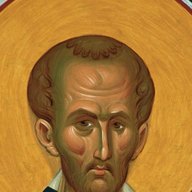
St. John ChrysostomHomily 21 on Hebrews · on Hebrews 11:1–2
"Now faith is the substance of things hoped for, the evidence of things not seen. For by it the elders obtained a good report." O what an expression has he used, in saying, "an evidence of things not seen." For we say there is "evidence," in the case of things that are very plain. Faith then is the seeing things not…
St. John ChrysostomHomily 22 on Hebrews · on Hebrews 11:3
Faith needs a generous and vigorous soul, and one rising above all things of sense, and passing beyond the weakness of human reasonings. For it is not possible to become a believer, otherwise than by raising one's self above the common customs of the world.
St. John ChrysostomHomily 22 on Hebrews · on Hebrews 11:3
What then does Paul do? He encourages them by the fathers; and before that by the common notions of mankind. For tell me, he says, since Faith is calumniated as being a thing without demonstration and rather a matter of deceit, therefore he shows that the greatest things are attained through faith and not through…
St. John ChrysostomHomily 22 on Hebrews · on Hebrews 11:3
Therefore the philosophers expressly say that "nothing comes out of things that are not" being "sensual" (Jude 19), and trusting nothing to Faith. And yet these same men, when they happen to say anything great and noble, are caught entrusting it to Faith. For instance, that "God is without beginning, and unborn"; for…
St. John ChrysostomHomily 22 on Hebrews · on Hebrews 11:3
Whence does it appear, he would say, that God made these things? Reason does not suggest it; no one was present when it was done. Whence is it shown? It is plainly the result of faith. "Through faith we understand that the worlds were made." Why "through faith"? Because "the things that are seen were not made of…
By faith Abel offered unto God a more excellent sacrifice than Cain, by which he obtained witness that he was righteous, God testifying of his gifts: and by it he being dead yet speaketh.
St. John ChrysostomHomily 22 on Hebrews · on Hebrews 11:4
And observe whom he puts first, him who was ill-treated, and that by a brother. It was their own affliction, "For you also" (he says) "have suffered like things of your own countrymen." (1 Thess. ii. 14.) And by a brother who had been nothing wronged, but who envied him on God's account; showing that they also are…
St. John ChrysostomHomily 22 on Hebrews · on Hebrews 11:4
And we cannot say (he says) that it was not accepted. He did accept it, and said unto Cain, "Hast thou not sinned, if thou rightly offer, but dost not rightly divide?" (Gen. iv. 7 LXX.) So then Abel both rightly offered, and rightly divided. Nevertheless for this, what recompense did he receive? He was slain by his…
St. John ChrysostomHomily 22 on Hebrews · on Hebrews 11:4
And he did these things rightly looking to no man. For to whom could he look, when he so honored God? To his father and his mother? But they had outraged Him in return for His benefits. To his brother then? But he also had dishonored God. So that by himself he sought out what was good.
St. John ChrysostomHomily 22 on Hebrews · on Hebrews 11:4
And he that is worthy of so great honor, what does he suffer? He is put to death. And how too was he otherwise "testified of that he was righteous"? It is said, that fire came down and consumed the sacrifices. For instead of "And the Lord had respect to Abel and to his sacrifices" (Gen. iv. 4), the Syriac said, "And…
St. John ChrysostomHomily 22 on Hebrews · on Hebrews 11:4
But your case is not such: for how could it be? You who have both prophets and examples, and encouragements innumerable, and signs and miracles accomplished? Hence that was faith indeed. For what miracles did he see, that he might believe he should have any recompense of good things? Did he not choose virtue from…
St. John ChrysostomHomily 22 on Hebrews · on Hebrews 11:4
What is, "and by it he being dead yet speaketh"? That he might not cast them into great despondency, he shows that he has in part obtained a recompense. How? "The influence coming from him is great, he means, and he yet speaketh"; that is, Cain slew him, but he did not with him slay his glory and memory. He is not…
St. John ChrysostomHomily 22 on Hebrews · on Hebrews 11:4
How does he "yet speak"? This is a sign both of his being alive, and of his being by all celebrated, admired, counted blessed. For he who encourages others to be righteous, speaks. For no speech avails so much, as that man's suffering. As then heaven by its mere appearance speaks, so also does he by being had in…
By faith Enoch was translated that he should not see death; and was not found, because God had translated him: for before his translation he had this testimony, that he pleased God.
St. John ChrysostomHomily 22 on Hebrews · on Hebrews 11:5
"By faith Enoch was translated, that he should not see death, and was not found, because God had translated him." This man displayed greater faith than Abel. How (you ask)? Because, although he came after him, yet what befell Abel was sufficient to guide him back. How? God foreknew that Abel would be killed. For He…
St. John ChrysostomHomily 22 on Hebrews · on Hebrews 11:5
How was it "by faith" that "Enoch was translated"? Because his pleasing God was the cause of his translation, and faith the cause of his pleasing Him. For if he had not known that he should receive a reward, how could he have pleased Him? "But without faith it is impossible to please" Him. How? If a man believe that…
St. John ChrysostomHomily 22 on Hebrews · on Hebrews 11:5
But many ask whither Enoch was translated, and why he was translated, and why he did not die, neither he nor Elijah, and, if they are still alive, how they live, and in what form. But to ask these things is superfluous. For that the one was translated, and that the other was taken up, the Scriptures have said; but…
St. John ChrysostomHomily 22 on Hebrews · on Hebrews 11:5
Therefore he added, he was translated alive, because he was well-pleasing unto God. For just as a Father when he has threatened his son, wishes indeed immediately after he has threatened, to relax his threat, but endures and continues resolute, that for a time he may chasten and correct him, allowing the threat to…
But without faith it is impossible to please him: for he that cometh to God must believe that he is, and that he is a rewarder of them that diligently seek him.
St. John ChrysostomHomily 22 on Hebrews · on Hebrews 11:6
It is necessary to "believe that He is," not "what He is." If "that He is" needs Faith, and not reasonings; it is impossible to comprehend by reasoning "what He is." If that "He is a rewarder" needs Faith and not reasonings, how is it possible by Reasoning to compass His essence? For what Reasoning can reach this? For…
St. John ChrysostomHomily 22 on Hebrews · on Hebrews 11:6
Wherefore they who say that all things are ruled and governed of themselves, and do not expect a reward, are not well-pleasing; as neither are the heathen. For "He becomes a rewarder of them that diligently seek Him" by works and by knowledge.
St. John ChrysostomHomily 22 on Hebrews · on Hebrews 11:6
Since then we have "a rewarder," let us do all things that we may not be deprived of the rewards of virtue. For indeed the neglecting such a recompense, the scorning such a reward, is worthy of many tears. For as to "those who diligently seek Him," He is a rewarder, so to those who seek Him not, the contrary.
By faith Noah, being warned of God of things not seen as yet, moved with fear, prepared an ark to the saving of his house; by the which he condemned the world, and became heir of the righteousness which is by faith.
St. John ChrysostomHomily 23 on Hebrews · on Hebrews 11:7
"By faith" (he says) "Noah being warned of God." As the Son of God, speaking of His own coming, said, "In the days of Noah they married and were given in marriage," therefore the Apostle also recalled to their mind an appropriate image. For the example of Enoch, was an example only of Faith; that of Noah, on the other…
By faith Abraham, when he was called to go out into a place which he should after receive for an inheritance, obeyed; and he went out, not knowing whither he went.
St. John ChrysostomHomily 23 on Hebrews · on Hebrews 11:8
"By faith Abraham when he was called to go out into a place which he should after receive for an inheritance, obeyed; and he went out not knowing whither he went." "By faith": for (tell me) whom did he see to emulate? He had for father a Gentile, and an idolater; he had heard no prophets; he knew not whither he was…
By faith he sojourned in the land of promise, as in a strange country, dwelling in tabernacles with Isaac and Jacob, the heirs with him of the same promise:
St. John ChrysostomHomily 23 on Hebrews · on Hebrews 11:9
"By faith he sojourned in the land of promise, as in a strange country, dwelling in tabernacles, with Isaac and Jacob, the heirs with him of the same promise." And what marvel, if he himself were so, when his seed also dwelt in this same way? For seeing the promise disproved (since He had said, "To thee will I give…
St. John ChrysostomHomily 23 on Hebrews · on Hebrews 11:10
"For they looked" (he says) "for the city which hath foundations, whose builder and maker is God." Seest thou that they received them in this sense, in their already accepting them and being confident respecting them. If then to be confident is to receive, it is in your power also to receive. For these, although they…
Through faith also Sara herself received strength to conceive seed, and was delivered of a child when she was past age, because she judged him faithful who had promised.
St. John ChrysostomHomily 23 on Hebrews · on Hebrews 11:11
"By faith also Sarah herself," he says. Here he began speaking in a way to put them to shame, in case, that is, they should show themselves more faint-hearted than a woman. But possibly some one might say, How "by faith," when she laughed? Nay, while her laughter indeed was from unbelief, her fear was from Faith, for…
Therefore sprang there even of one, and him as good as dead, so many as the stars of the sky in multitude, and as the sand which is by the sea shore innumerable.
St. John ChrysostomHomily 23 on Hebrews · on Hebrews 11:12
"Wherefore even from one they" all "sprang, as the stars of the sky, and as the sand which is by the sea-shore." "Wherefore" (he says) "even from one they" all "sprang." Here he not only says that she bare a child, but that she also became mother of so many as not even fruitful wombs are mothers of. "As the stars," He…
These all died in faith, not having received the promises, but having seen them afar off, and were persuaded of them, and embraced them, and confessed that they were strangers and pilgrims on the earth.
St. John ChrysostomHomily 24 on Hebrews · on Hebrews 11:13
The first virtue, yea the whole of virtue, is to be a stranger to this world, and a sojourner, and to have nothing in common with things here, but to hang loose from them, as from things strange to us; as those blessed disciples did, of whom he says, "They wandered about in sheepskins, and in goat-skins, being…
St. John ChrysostomHomily 24 on Hebrews · on Hebrews 11:13
The saints were "strangers and sojourners." How and in what way? And where does Abraham confess himself "a stranger and a sojourner"? Probably indeed he even himself confessed it: but David both confessed "I am a stranger" and what? "As all my fathers were." For they who dwell in tents, they who purchase even burial…
St. John ChrysostomHomily 23 on Hebrews · on Hebrews 11:13
"These all died in faith," he says, "not having obtained the promises." At this place it is worth while to make two enquiries; how, after saying that God "translated Enoch, and he was not found, so that he did not see death," does he say, "These all died in Faith." And again, after saying, "they not having obtained…
St. John ChrysostomHomily 24 on Hebrews · on Hebrews 11:14
And these things (he says) they said, "seeking" their "own country." Ah! how great is the difference! They indeed were in travail-pains each day, wishing to be released from this world, and to return to their country. But we, on the contrary, if a fever attack us neglecting everything, weeping like little children,…
St. John ChrysostomHomily 24 on Hebrews · on Hebrews 11:15
What sort of "country" was this? Was it that which they had left? By no means. For what hindered them if they wished, from returning again, and becoming citizens? But they sought that which is in Heaven. Thus they desired their departure hence, and so they pleased God; for "God was not ashamed to be called their God."
St. John ChrysostomHomily 24 on Hebrews · on Hebrews 11:16
Ah! how great a dignity! He vouchsafed "to be called their God." What dost thou say? He is called the God of the earth, and the God of Heaven, and hast thou set it down as a great thing that "He is not ashamed to be called their God"? Great and truly great this is, and a proof of exceeding blessedness. How? Because He…
St. John ChrysostomHomily 24 on Hebrews · on Hebrews 11:16
Now that they called themselves "strangers" in this sense is manifest. But supposing that they said they were "strangers" on account of the strange land, why did David also call himself a stranger? Was not he a king? Was not he a prophet? Did he not spend his life in his own country? Why then does he say, "I am a…
St. John ChrysostomHomily 25 on Hebrews · on Hebrews 11:17
And he shows another thing too, by saying, that "God tempted Abraham." What then? Did not God know that the man was noble and approved? Why then did He tempt him? Not that He might Himself learn, but that He might show to others, and make his fortitude manifest to all. And here also he shows the cause of trials, that…
St. John ChrysostomHomily 25 on Hebrews · on Hebrews 11:17–18
Great indeed was the faith of Abraham. For while in the case of Abel, and of Noah, and of Enoch, there was an opposition of reasonings only, and it was necessary to go beyond human reasonings; in this case it was necessary not only to go beyond human reasonings, but to manifest also something more. For what was of God…
St. John ChrysostomHomily 25 on Hebrews · on Hebrews 11:17–18
He heard the opposite of the promises from Him who had made them; and yet he was not disturbed, but did them as if they had been in harmony therewith. For they were in harmony; being opposed indeed according to human calculations, but in harmony when viewed by Faith.
St. John ChrysostomHomily 25 on Hebrews · on Hebrews 11:18
No one could allege, that he had another son, and expected the promise to be fulfilled from him, and therefore confidently offered up this one. "And" (his words are) "he offered up his only-begotten, who had received the promises." Why sayest thou "only-begotten"? What then? Of whom was Ishmael sprung? I mean…
St. John ChrysostomHomily 25 on Hebrews · on Hebrews 11:19
And how this was, the Apostle himself has taught us, by saying, "accounting that God was able to raise Him up, even from the dead." By the same faith (he means) by which he believed that God gave what was not, and raised up the dead, by the same was he persuaded that He would also raise him up after he had been slain…
St. John ChrysostomHomily 25 on Hebrews · on Hebrews 11:19
And hence he was not afraid to say, that God was "able to raise him up, even from the dead." "From whence also he received him in a figure," that is in idea, by the ram, he means. How? The ram having been slain, he was saved: so that by means of the ram he received him again, having slain it in his stead. But these…
St. John ChrysostomHomily 26 on Hebrews · on Hebrews 11:20
"By Faith, Isaac blessed Jacob and Esau concerning things to come" (and yet Esau was the elder; but he puts Jacob first for his excellence). Seest thou how great was his Faith? Whence did he promise to his sons so great blessings? Entirely from his having faith in God.
St. John ChrysostomHomily 26 on Hebrews · on Hebrews 11:21
"By Faith, Jacob when he was a dying, blessed both the sons of Joseph." Here we ought to set down the blessings entire, in order that both his faith and his prophesying may be made manifest. "And worshiped leaning," he says, "upon the top of his staff." Here, he means, he not only spoke, but was even so confident…
St. John ChrysostomHomily 26 on Hebrews · on Hebrews 11:22
The things also which concern Joseph are of Faith only. Joseph heard that God had made a promise to Abraham, that He had engaged His word "to thee and to thy seed will I give this land;" and though in a strange land, and not yet seeing the engagement fulfilled, but never faltered even so, but so believed as even to…
By faith Moses, when he was born, was hid three months of his parents, because they saw he was a proper child; and they were not afraid of the king’s commandment.
St. John ChrysostomHomily 26 on Hebrews · on Hebrews 11:23
"By faith, Moses when he was born, was hid three months of his parents." Dost thou see that in this case they hoped for things on the earth after their death? And many things were fulfilled after their death. This is for some who say, "After death those things were done for them, which they did not obtain while alive;…
St. John ChrysostomHomily 26 on Hebrews · on Hebrews 11:24
Next again an example appropriate to them, or rather greater than that. For, saith he, "by faith Moses when he was come to years, refused to be called the son of Pharaoh's daughter, choosing rather to suffer affliction with the people of God than to enjoy the pleasures of sin for a season; esteeming the reproach of…
St. John ChrysostomHomily 26 on Hebrews · on Hebrews 11:25
"Choosing rather" (he says) "to suffer affliction with the people of God." For ye indeed suffer on your own account, but he "chose" to suffer for others; and voluntarily threw himself into so many dangers, when it was in his power both to live religiously, and to enjoy good things. "Than" (he says) "to enjoy the…
St. John ChrysostomHomily 26 on Hebrews · on Hebrews 11:26
And see how admirably Paul has put it. He did not say, "Esteeming heaven, and the things in heaven," "greater riches than the treasures of Egypt," but what? "The reproach of Christ." For the being reproached for the sake of Christ he accounted better than being thus at ease; and this itself by itself was reward. But…
St. John ChrysostomHomily 26 on Hebrews · on Hebrews 11:27
"By faith he forsook Egypt not fearing the wrath of the king; for he endured as seeing Him who is Invisible." What dost thou say? That he did not fear? And yet the Scripture says, that when he heard, he "was afraid," and for this cause provided for safety by flight, and stole away, and secretly withdrew himself; and…
St. John ChrysostomHomily 27 on Hebrews · on Hebrews 11:28
But what is "the sprinkling of blood"? A lamb was slain in every household, and the blood was smeared on the door-posts, and this was a means of warding off the Egyptian destruction. If then the blood of a lamb preserved the Jews unhurt in the midst of the Egyptians, and under so great a destruction, much more will…
St. John ChrysostomHomily 27 on Hebrews · on Hebrews 11:29
"By faith, they passed through the Red Sea as by dry land." Again he compares one whole people with another, lest they should say, we cannot be as the saints. "By faith" (he says) "they passed through the Red Sea, as by dry land, which the Egyptians assaying to do, were drowned." Here he leads them also to a…
St. John ChrysostomHomily 27 on Hebrews · on Hebrews 11:30
"By faith, the walls of Jericho fell down, after they had been compassed about for seven days." For assuredly the sound of trumpets is not able to throw down stones, though one blow for ten thousand years; but Faith can do all things. Seest thou that in all cases it is not by natural sequence, nor yet by any law of…
St. John ChrysostomHomily 27 on Hebrews · on Hebrews 11:31
"By faith, the harlot Rahab perished not with them that believed not, having received the spies with peace." It would then be disgraceful, if you should appear more faithless even than a harlot. Yet she merely heard what the men related, and forthwith believed. Whereupon the end also followed; for when all perished,…
And what shall I more say? for the time would fail me to tell of Gedeon, and of Barak, and of Samson, and of Jephthae; of David also, and Samuel, and of the prophets:
St. John ChrysostomHomily 27 on Hebrews · on Hebrews 11:32
"And what shall I more say? For the time would fail me to tell." After this he no longer puts down the names: but having ended with an harlot, and put them to shame by the quality of the person, he no longer enlarges on the histories, lest he should be thought tedious. However he does not set them aside, but runs over…
St. John ChrysostomHomily 27 on Hebrews · on Hebrews 11:33
"And the prophets," he says, "who through faith subdued kingdoms." Thou seest that he does not here testify to their life as being illustrious; for this was not the point in question: but the enquiry thus far was about their faith. For tell me whether they did not accomplish all by faith? "By faith," he says, "they…
Quenched the violence of fire, escaped the edge of the sword, out of weakness were made strong, waxed valiant in fight, turned to flight the armies of the aliens.
St. John ChrysostomHomily 27 on Hebrews · on Hebrews 11:34
"Stopped the mouths of lions, quenched the violence of fire, escaped the edge of the sword." See how they were in death itself, Daniel encompassed by the lions, the three children abiding in the furnace, the Israelites, Abraham, Isaac, Jacob, in divers temptations; and yet not even so did they despair. For this is…
St. John ChrysostomHomily 27 on Hebrews · on Hebrews 11:35
"Women received their dead raised to life again." He here speaks of what occurred in regard to the prophets, Elisha, and Elijah; for they raised the dead. "And others were tortured, not accepting deliverance, that they might obtain a better resurrection." But we have not obtained a Resurrection. I am able however, he…
St. John ChrysostomHomily 27 on Hebrews · on Hebrews 11:36
"And others had trial of cruel mockings and scourgings, yea moreover of bonds and imprisonment." He ends with these; with things that come nearer home. For these examples especially bring consolation, when the distress is from the same cause, since even if you mention something more extreme, yet unless it arise from…
They were stoned, they were sawn asunder, were tempted, were slain with the sword: they wandered about in sheepskins and goatskins; being destitute, afflicted, tormented;
St. John ChrysostomHomily 27 on Hebrews · on Hebrews 11:37
Wherefore he added, "They were slain with the sword." What sayest thou? Some "escaped the edge of the sword," and some "were slain by the sword." What is this? Which dost thou praise? Which dost thou admire? The latter or the former? Nay, he says: the former indeed, is appropriate to you, and the latter, because Faith…
St. John ChrysostomHomily 28 on Hebrews · on Hebrews 11:37–38
For "they wandered about" (he says) "in sheep-skins, and goat-skins, being destitute, afflicted, tormented, of whom this world was not worthy." They had not even raiment, he says, through the excess of affliction, no city, no house, no lodging-place; the same which Christ said, "but the Son of Man hath not where to…
St. John ChrysostomHomily 27 on Hebrews · on Hebrews 11:38
And thou canst not say (he says) that these were sinners and worthless. For even if you put the whole world against them, I find that they weigh down the beam and are of greater value. What then were they to receive in this life? Here he raises up their thoughts, teaching them not to be riveted to things present, but…
St. John ChrysostomHomily 28 on Hebrews · on Hebrews 11:39–40
What then is the reward of so great a change? What is the recompense? They have not yet received it, but are still waiting; and after thus dying in so great tribulation, they have not yet received it. They gained their victory so many ages ago, and have not yet received their reward. And you who are yet in the…
Every note is a real passage, quoted word for word from a published English translation, with its source. Nothing here is summarised or written by us. Some verses have many notes and some have none, because the Fathers wrote more on some passages than others.
St. John Chrysostom, Homilies on Hebrews, Nicene and Post-Nicene Fathers, series 1, vol. 14 (1888–1889).
Scripture: the King James Version (1611); the Greek (tap Ελ) is the 1904 Patriarchal text of the Ecumenical Patriarchate.
All of these translations are in the public domain. The passages were matched to their verses by the Historical Christian Commentaries project, which also hosts the full texts we link to. The Fathers are a treasury of the Church's mind, and they are best read alongside the life of the Church: if a passage raises a question, bring it to your priest.