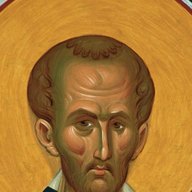
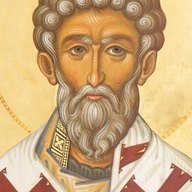
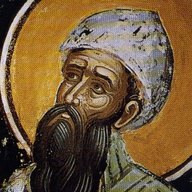
St. John ChrysostomHomily 59 on John · on John 10:1–5
And not without a cause hath the Evangelist mentioned, that they of the Pharisees who were with Him heard these things, and said, "Are we blind also?" but to remind thee that these were the men who first withdrew from and then stoned Him, for they were persons who followed Him superficially, and who easily changed to…
Blessed AugustineTractate 45 on John · on John 10:1
Our Lord's discourse to the Jews began in connection with the man who was born blind and was restored to sight. Your Charity therefore ought to know and be advised that today's lesson is interwoven with that one. For when the Lord had said, "For judgment I am come into this world; that they who see not might see, and…
St. Cyril of AlexandriaCommentary on John, Book 6 · on John 10:1
Very probably it may seem to those who listen carelessly that the language of the parable before us is not introduced very appositely: because after a discussion on blindness and recovery of sight, we straightway come upon statements about sheep, and a fold, and a door. But he in whom dwells a wise mind, which hastens…
St. Cyril of AlexandriaCommentary on John, Book 6 · on John 10:3
And He intimates by the words before us, that if they would take pleasure in being rulers of the people they must believe and must receive through Him the Divine call to undertake this dignity, in order that they might have their rule unshaken and well established; which of course was the case with the holy Apostles,…
St. Cyril of AlexandriaCommentary on John, Book 6 · on John 10:6
Simple is the language of the saints, and far removed from the elaborateness of the Greeks: for God chose the foolish things of the world, according to the word of Paul, that He might put to shame them that are wise. He used therefore the name of proverb, for thus he designates the parable, perhaps because the…
Blessed AugustineTractate 20 on John · on John 10:7
Return then with me to what I was saying, in case it is so to be understood that we may both escape from the question. For I see how I, according to the catholic faith, may escape without tripping or stumbling; whilst thou, on the other hand, shut in on every side, art seeking a way of escape. See by what way thou…
St. Cyril of AlexandriaCommentary on John, Book 6 · on John 10:7
He most thoroughly knew, being by nature God, and beholding that which lies in the depth, that the Pharisees understood none of His sayings, although accustomed to pride themselves greatly on their learning in the Law, and excessively supercilious in thinking themselves wise. Therefore He gives them a very clear…
St. Cyril of AlexandriaCommentary on John, Book 6 · on John 10:7
Jesus sees that the foolish Pharisees wanted to be rulers and that they were unwisely boastful of the name and character of leadership. And so it is good that he teaches them that he himself is the one who confers leadership in the church. And he bestows this authority without difficulty. For since Jesus is "the door"…
Blessed AugustineTractate 45 on John · on John 10:8
"All that ever came are thieves and robbers." What is this, Lord, "All that ever came"? How so hast Thou not come? But understand; I said, "All that ever came," meaning, of course, exclusive of myself. Let us recollect then. Before His coming came the prophets: were they thieves and robbers? God forbid. They did not…
St. Cyril of AlexandriaCommentary on John, Book 6 · on John 10:8
Practising all kinds of enchantment upon the obstinate mind of the Pharisees, and trying to turn them to sound reason, He attempts to show them that it is a bootless and perilous thing to dare to act as leaders, without the election from above or the Divine counsel, but thinking that rule may be obtained by human…
Blessed AugustineTractate 45 on John · on John 10:9
By this, then, which the Lord hath explained, that He Himself is the door, let us find entrance to what He has set forth, but not explained. And indeed who it is that is the Shepherd, although He hath not told us in the lesson we have read to-day, yet in that which follows He very plainly tells us: "I am the good…
St. Cyril of AlexandriaCommentary on John, Book 6 · on John 10:9
After His usual manner, He moulds the form of His speech to a spiritual application as though it arose naturally from the course of His story, and seems to treat things which are simple to look at and contain nothing difficult of comprehension, as images of things more obscure. For the thieves, He saith, and robbers,…
St. Cyril of AlexandriaCommentary on John, Book 6 · on John 10:10
While Our Saviour Christ was saying He Himself was the Door, and teaching that it was His both to admit those whom He would and to keep outside him who is unfit and quite useless for shepherd's work; and moreover, in addition to this, had denounced as thieves and robbers those who were self-appointed to an honour not…
St. John ChrysostomHomily 60 on John · on John 10:11–13
A Great matter, beloved, a great matter it is to preside over a Church: a matter needing wisdom and courage as great as that of which Christ speaketh, that a man should lay down his life for the sheep, and never leave them deserted or naked; that he should stand against the wolf nobly. For in this the shepherd differs…
Blessed AugustineTractate 46 on John · on John 10:11
The Lord Jesus is speaking to His sheep-to those already so, and to those yet to become such-who were then present; for in the place where they were, there were those who were already His sheep, as well as those who were afterwards to become so: and He likewise shows to those then present and those to come, both to…
St. Cyril of AlexandriaCommentary on John, Book 6 · on John 10:11
Having previously well and clearly shown how grievously those who lived in earlier times suffered from the hypocrisy of the false prophets and false shepherds, and having made manifest the advantages to be brought about by His own coming; having now also shown His own superiority by comparing the future destinies of…
St. Cyril of AlexandriaCommentary on John, Book 6 · on John 10:11
He explains the proper method of testing a good shepherd, for He teaches that in a struggle for the salvation of the flock such a one ought not to hesitate to give up even life itself freely, a condition which was of course fulfilled by Christ. For man, having yielded to an inclination for sin, at once wandered away…
But he that is an hireling, and not the shepherd, whose own the sheep are not, seeth the wolf coming, and leaveth the sheep, and fleeth: and the wolf catcheth them, and scattereth the sheep.
St. Cyril of AlexandriaCommentary on John, Book 6 · on John 10:12
Having made a skilful comparison between the prating speeches and lawless daring of some and the splendour of His own works, and having characterised and described the former as thieves and robbers and climbers into the sheepfold by some other way, and Himself as the really Good Shepherd; He now passes on to speak of…
St. John ChrysostomHomily 60 on John · on John 10:14
From both Christ distinguisheth Himself; from those who came to spoil, by saying, "I am come that they might have life, and that they might have more abundantly"; and from those who cared not for the sheep being carried away by wolves, by never deserting them, but even laying down His life for them, that the sheep…
St. John ChrysostomHomily 60 on John · on John 10:14–15
Then because He said above "And the sheep hear his voice, and follow him," lest any should say, "What then is this to those who believe not?" hear what He addeth "And I know My sheep, and am known of Mine." As Paul declared when he said, "God hath not rejected His people whom He foreknew"; and Moses, "The Lord knew…
Blessed AugustineTractate 47 on John · on John 10:14–15
When He saith, "As the Father knoweth me, even so know I the Father," who can be ignorant of His meaning? For He knoweth the Father by Himself, and we by Him. That He hath knowledge by Himself, we know already: that we also have knowledge by Him, we have likewise learned, for this also we have learned of Him. For He…
St. Cyril of AlexandriaCommentary on John, Book 6 · on John 10:14
Again He exults in having gained the victory and obtained the suffrages [of His hearers to the effect] that He ought to be acknowledged as ruler of the Jews, suffrages not expressed by the open testimony of any, but arising from the investigation of facts which has just been undertaken. For just as after He contrasted…
St. Cyril of AlexandriaCommentary on John, Book 6 · on John 10:14
When Jesus says, "I know my own and my own know me, as the Father knows me and I know the Father," it is equivalent to saying, I shall enter into a close relationship with my sheep, and my sheep shall be brought into a close relationship with me, according to the manner in which the Father is intimate with me, and…
St. John ChrysostomHomily 60 on John · on John 10:15
Then because His words appeared to be unsupported by testimony, (for though the, "I lay down My life," was not long after proved, yet the, "that they might have life, and that they might have more abundantly," was to come to pass after their departure hence in the life to come,) what doth He? He proveth one from the…
St. John ChrysostomHomily 60 on John · on John 10:15
"I lay down My life." This He saith continually, to show that He is no deceiver. So also the Apostle, when he desired to show that he was a genuine teacher, and was arguing against the false apostles, established his authority by his dangers and deaths, saying, "In stripes above measure, in deaths oft." For to say, "I…
St. Cyril of AlexandriaCommentary on John, Book 6 · on John 10:15
And I know Mine own, and Mine own know Me, even as the Father knoweth Me, and I know the Father. Without sufficient thought any one might say that by these words the Lord wished to signify nothing more than this:----that He would be well-known to His own people, and would freely bestow knowledge concerning Himself…
St. Cyril of AlexandriaCommentary on John, Book 6 · on John 10:15
And I lay down My life for the sheep. Thus He was prepared on behalf of those who were now His friends and relations to afford protection in every way, and He promises even willingly to incur peril, giving a proof in fact by taking this upon Himself that He really is the Good Shepherd. For some, abandoning the sheep…
St. Cyril of AlexandriaCommentary on John, Book 6 · on John 10:15
Christ did not endure death against his will on our behalf and for our sakes. Rather, we see him go toward it voluntarily, although he could easily escape the suffering if he did not want to suffer. Therefore, in his willingness even to suffer for us, we shall see the excellent quality of his love toward us and the…
And other sheep I have, which are not of this fold: them also I must bring, and they shall hear my voice; and there shall be one fold, and one shepherd.
St. John ChrysostomHomily 60 on John · on John 10:16
Observe again, the word "must," here used, doth not express necessity, but is declaratory of something which will certainly come to pass. As though He had said, "Why marvel ye if these shall follow Me, and if My sheep shall hear My voice? When ye shall see others also following Me and hearing My voice, then shall ye…
Blessed AugustineTractate 47 on John · on John 10:16
But of the one sheepfold and of the one Shepherd, you are now indeed being constantly reminded; for we have commended much the one sheepfold, preaching unity, that all the sheep should enter by Christ, and none of them should follow Donatus. Nevertheless, for what particular reason this was said by the Lord, is…
St. Cyril of AlexandriaCommentary on John, Book 6 · on John 10:16
In divers manners He rattles His blows around the lawless Pharisees; for that they would almost immediately be thrust out from the charge of the sheep and that in their stead He Himself would govern and lead them, He intimates by many sayings. And He throws out hints that, having joined the flocks of the Gentiles to…
St. John ChrysostomHomily 60 on John · on John 10:17
"Therefore doth My Father love Me, because I lay down My life, that I might take it again." What could be more full of humanity than this saying, if so be that on our account our Lord shall be beloved, because He dieth for us? What then? tell me, was He not beloved during the time before this; did the Father now begin…
Blessed AugustineTractate 47 on John · on John 10:17
Hear also what follows. "Therefore doth my Father love me," He saith, "because I lay down my life. that I might take it again." What is this that He says? "Therefore doth my Father love me": because I die, that I may rise again. For the "I" is uttered with special emphasis: "Because I lay down," He saith, "I lay down…
St. Cyril of AlexandriaCommentary on John, Book 6 · on John 10:17
He replies oftentimes not only to the words uttered at the time with the tongue, but to the reasonings in the depth [of the heart]; for being Very God, He has a clear knowledge of all things. Accordingly, when the unholy Jews mocked at His words, especially because He promised that He would struggle on behalf of His…
St. Cyril of AlexandriaCommentary on John, Book 6 · on John 10:17
If we see ourselves in our own child, we are drawn to an intensity of love whenever we see that child. In the same way, I think God the Father is said to love his own Son, who lays down his own life for us and takes it again. For it is a work of love to have chosen to suffer—and to suffer shamefully—for the salvation…
No man taketh it from me, but I lay it down of myself. I have power to lay it down, and I have power to take it again. This commandment have I received of my Father.
St. John ChrysostomHomily 60 on John · on John 10:18
"No man taketh it from Me, but I lay it down of Myself. I have power to lay it down, and I have power to take it again." Because they often took counsel to kill Him, He telleth them, "Except I will, your labor is unavailing." And by the first He proveth the second, by the Death, the Resurrection. For this is the…
St. John ChrysostomHomily 60 on John · on John 10:18
Having therefore said that, "No man taketh it from Me," He addeth, "I have power to lay down My life," that is, "I alone can decide as to laying it down," a thing which doth not rest with us, for many others also are able to take it from us. Now this He said not at first, (since the assertion would not have seemed…
St. John ChrysostomHomily 60 on John · on John 10:18
"This commandment have I received of My Father." What commandment was this? To die for the world. Did He then wait first to hear, and then choose, and had He need of learning it? Who that had sense would assert this? But before when He said, "Therefore doth My Father love Me," He showed that the first motion was…
St. John ChrysostomHomily 60 on John · on John 10:18
Then lest on hearing that, "I have received a command from the Father," thou shouldest deem that the achievement doth not belong to Him, He hath said preventing thee, "The good Shepherd layeth down His life for the sheep"; showing by this that the sheep were His, and that all which took place was His achievement, and…
St. Cyril of AlexandriaCommentary on John, Book 7 · on John 10:18
This commandment received I from My Father. For lest any one should say that against the will of the Son the Father is not able to take away His life, and hence introduce discord and variance into the One Godhead of the Father and the Son; by these words which He says: I received commandment, He shows that the Father…
St. Cyril of AlexandriaCommentary on John, Book 7 · on John 10:18
No man taketh it from Me, but I lay it down of Myself. I have power to lay it down, and I have power to take it again. In this place He teaches that He is not only a Good Shepherd enduring peril for the sake of His flock, but also in His Nature God. Therefore He would not have suffered death, had He not been willing,…
St. John ChrysostomHomily 60 on John · on John 10:19–21
"There was a division therefore among the Jews. And some said, He hath a devil and is mad. Others said, These are not the words of him that hath a devil: can a devil open the eyes of the blind?" For because His words were greater than belonged to man, and not of common use, they said that He had a devil, calling Him…
St. John ChrysostomHomily 60 on John · on John 10:19–21
What then did Christ? He answered nothing to these things. Before this He had replied, "I have not a devil"; but not so now; for since He had afforded proof by His actions, He afterwards held His peace. For neither were they worthy of an answer, who said that He was possessed of a devil, on account of those actions…
Blessed AugustineTractate 47 on John · on John 10:19–21
But while the Lord thus spake, for the light was shining in the darkness, and the darkness comprehended it not, "there was a dissension again created among the Jews for these sayings, and many of them said, He hath a devil, and is mad: why hear ye him?" This was the thickest darkness. Others said, "These are not the…
St. Cyril of AlexandriaCommentary on John, Book 7 · on John 10:19
The words of the Saviour go down into the hearts of His hearers, and those whom they find gentle and yielding they immediately mould and transform to a good condition, but those whom they find hard they recoil from or in some manner turn away from. So that he who has his mind somewhat prepared for fair reason will…
St. John ChrysostomHomily 61 on John · on John 10:22–23
"It was," It saith, "at Jerusalem, the Feast of the dedication, and it was winter." This feast was a great and national one. For they celebrated with great zeal the day on which the Temple was rebuilt, on their return from their long captivity in Persia. At this feast Christ also was present, for henceforth He…
Blessed AugustineTractate 48 on John · on John 10:22
Listen to the Gospel: "And it was at Jerusalem the Encoenia." Encoenia was the festival of the dedication of the temple. For in Greek kainos means new; and whenever there was some new dedication, it was called Encoenia. And now this word is come into common use; if one puts on a new coat, he is said "encoeniare" (to…
St. Cyril of AlexandriaCommentary on John, Book 7 · on John 10:22
But the Lord was not present at the feasts as one Who would share the feasting, for how could He? He Who said: I hate, I reject your feast days: but in order that He might speak His most profitable words in the presence of many people, showing Himself openly to the Jews, and to mingle Himself with them without being…
Blessed AugustineTractate 48 on John · on John 10:23–24
"It was winter. And Jesus walked in the temple in Solomon's porch. Then came the Jews round about Him, and said unto Him, How long dost thou keep our mind in suspense? If thou be the Christ, tell us plainly." They were not desiring the truth, but preparing a calumny. "It was winter," and they were chill; because they…
St. John ChrysostomHomily 61 on John · on John 10:24
"If thou be the Christ, tell us plainly." He did not reply, "What enquire ye of Me? Often have ye called Me demoniac, madman, and Samaritan, and have deemed me an enemy of God, and a deceiver, and ye said but now, Thou bearest witness of thyself, thy witness is not true; how is it then that ye seek and desire to learn…
St. Cyril of AlexandriaCommentary on John, Book 7 · on John 10:24
The envy which embitters them takes away all keenness to perceive what might lead to faith, but the greatness of the works He performed forces them to admiration. Nevertheless they find fault with His words, and say that the obscurity of His teaching stood in the way of their being able to understand what they ought…
St. John ChrysostomHomily 61 on John · on John 10:25–26
"I told you often," He saith, "and ye believe not: the works that I do in My Father's Name, they are they that bear witness of Me." A remark which the more tolerable among them continually made to one another; "A man that is a sinner cannot do such miracles." And again, "A devil cannot open the eyes of the blind":…
Blessed AugustineTractate 48 on John · on John 10:25–26
"Jesus answered them, I tell you, and ye believe not: the works that I do in my Father's name, they bear witness of me: but ye believe not; because ye are not of my sheep." Ye have already learned above who the sheep are: be ye sheep. They are sheep through believing, sheep in following the Shepherd, sheep in not…
St. Cyril of AlexandriaCommentary on John, Book 7 · on John 10:25
Even Christ therefore considered it superfluous to say the same things over again to those who had often heard them and had not been persuaded by them. For every one's nature ought to be estimated from the quality of his works, and we ought by no means to look [solely] at his words. And He says of Himself that He…
St. John ChrysostomHomily 61 on John · on John 10:27
Observe how in renouncing He exciteth them to follow Him. "Ye hear Me not," He saith, "for neither are ye sheep, but they who follow, these are of the flock." This He said, that they might strive to become sheep. Then by mentioning what they should obtain, He maketh these men jealous, so as to rouse them, and cause…
Blessed AugustineTractate 48 on John · on John 10:27
"My sheep hear my voice, and I know them, and they follow me: and I give unto them eternal life." This is the pasture. "I will give," He says, "unto them," unto my sheep, "eternal life." Ye are on the search for calumnies, just because your only thoughts are of the life that is present.
St. Cyril of AlexandriaCommentary on John, Book 7 · on John 10:27
A willing readiness to obey characterises the sheep of Christ, as disobedience marks those that are not His. For thus we understand the word "hear," as equivalent to "obey," namely, the words that are spoken: and they who thus hear God are known by Him, and "known" signifies "brought into friendly relationship:" for…
St. John ChrysostomHomily 61 on John · on John 10:28–30
"What then? Is it through the power of the Father that no man plucketh them away, and hast thou no strength, but art too weak to guard them?" By no means. And in order that thou mayest learn that the expression, "The Father which gave them to Me," is used on their account, that they might not again call Him an enemy…
Blessed AugustineTractate 48 on John · on John 10:28
"And they shall never perish." Hear the undertone, as if He had said to them, Ye shall perish for ever, because ye are not of my sheep. "No one shall pluck them out of my hand." Give still greater heed to this.
St. Cyril of AlexandriaCommentary on John, Book 7 · on John 10:28
And He says that He gives to those that follow Him as a recompense and reward, eternal life and exemption from death, or corruption, and from the torments that will be brought upon the transgressors by the Judge. And by the fact of His giving life, He shews that He is in His Nature Life, and that He furnishes this…
St. Cyril of AlexandriaCommentary on John, Book 7 · on John 10:28
The faithful also have the succour of Christ, the devil not being able to snatch them; and they who have an endless enjoyment of good things, remain in it, no one henceforth snatching them away from the bliss that is given to them into punishment or torments. For it is not possible that they who are in Christ's hand…
Blessed AugustineTractate 48 on John · on John 10:29
"That which my Father gave me is greater than all." Give still greater heed to this. What did the Father give to the Son that was greater than all? To be His own only-begotten Son. In what sense, then, did He say "gave"? Was He to whom He gave previously existent, or gave He in the act of begetting? For if He…
St. Cyril of AlexandriaCommentary on John, Book 7 · on John 10:29
The faithful also have the succour of Christ, the devil not being able to snatch them; and they who have an endless enjoyment of good things, remain in it, no one henceforth snatching them away from the bliss that is given to them into punishment or torments. For it is not possible that they who are in Christ's hand…
Blessed AugustineTractate 20 on John · on John 10:30
How are the Father and the Son inseparable, since Himself said, "I and the Father are one?" Because the Father and the Son are not two Gods, but one God, the Word and He whose the Word is, One and the Only One, Father and Son bound together by charity, One God, and the Spirit of Charity also one, so that Father, Son,…
Blessed AugustineTractate 48 on John · on John 10:30
But that there may be no more room for hesitation, hear what follows: "I and my Father are one." Up to this point the Jews were able to bear Him; they heard, "I and my Father are one," and they bore it no longer; and hardened in their own way, they had recourse to stones. "They took up stones to stone Him." ...And…
St. Cyril of AlexandriaCommentary on John, Book 7 · on John 10:30
For Christ, having admitted what pertained to His humanity, recurs to His God-befitting dignity, taking pleasure in the advantages of His Nature for the profit of the faithful and for the sake of sound faith, which is, never at all to suspect that the Son is inferior to the Father. For thus He is shown to be the…
St. Cyril of AlexandriaCommentary on John, Book 7 · on John 10:30
We say the Son and the Father "are one," not to blend their individuality by the use of that number, as some do who say that the Father and the Son are the same [person]. Rather, we believe that the Father and the Son are two unique persons, and we regard the two together in one identical essence, knowing that they…
Blessed AugustineTractate 48 on John · on John 10:31
"They took up stones to stone Him." "The Jews took up stones to stone Him. Jesus answered them, Many good works have I showed you from my Father; for which of those works do ye stone me? And they answered, For a good work we stone thee not, but for blasphemy, and because that thou, being a man, makest thyself God."…
St. Cyril of AlexandriaCommentary on John, Book 7 · on John 10:31
For not refraining themselves from Him, when He said that Himself was One with the Father, they rush to kill Him; although each of the works wrought by Him proclaimed that He was in His Nature God. And not only now, but on other occasions also when they took up stones to kill Him, they stood motionless through the…
St. John ChrysostomHomily 61 on John · on John 10:33–36
When they said, "For a good work we stone thee not, but for blasphemy; and because that thou being a man makest thyself God"; hear His answer; "If the Scripture called them gods unto whom the word of God came, how say ye that I blaspheme, because I said, I am the Son of God?" What He saith is of this kind: "If those…
St. Cyril of AlexandriaCommentary on John, Book 7 · on John 10:33
For a good work we stone Thee not, but for blasphemy. Having a zeal for God, but not according to knowledge, they became angry when they heard Christ saying: I and the Father are One. For what was the impediment to His being One with the Father, if they believed that He was God by Nature? Wherefore also they attempt…
St. Cyril of AlexandriaCommentary on John, Book 7 · on John 10:33
But this also we must understand, in opposition to the Arians, that in His saying: I and the Father are One, there is signified, not the proof of sameness of will, but the Oneness of their Essence. For indeed the Jews understood that in saying this, He said that Himself was God and equal to the Father; and Christ did…
Blessed AugustineTractate 48 on John · on John 10:34–36
But see what answer the Lord gave to their dull apprehension. He saw that they could not bear the brilliance of the truth, and He tempered it with words. "Is it not written in your law," that is, as given to you, "that I said, Ye are gods?" And the Lord called all the Scriptures generally, the law. "If He calleth them…
St. Cyril of AlexandriaCommentary on John, Book 7 · on John 10:34–35
I said, Ye are gods, ... Since therefore the Father called certain men gods, and of necessity the honourable name was something external, super-added to them, for He Who is God by Nature is One only; lest Jesus also should be deemed to be one of that class----clothed in the glory of the Godhead, not as essentially His…
St. Cyril of AlexandriaCommentary on John, Book 7 · on John 10:36
But perhaps when the Divine Scripture saith that the Son was sent from the Father, the heretic straightway deems the expression a support to his own error, and will say in all probability: "Ye who refuse to speak of the Son as inferior to the Father, do ye not see that He was sent from Him, as from a superior and a…
St. John ChrysostomHomily 61 on John · on John 10:37–38
What He saith is of this kind: "If those who have received this honor by grace, are not found fault with for calling themselves gods, how can He who hath this by nature deserve to be rebuked?" Yet He spake not so, but proved it at a later time, having first relaxed and yielded somewhat in His discourse, and said,…
Blessed AugustineTractate 48 on John · on John 10:37
"If I do not the works of my Father, believe me not. But if I do, though ye will not believe me, believe the works; that ye may know and believe that the Father is in me, and I in Him." The Son says not, "the Father is in me, and I in Him," as men can say it. For if we think well, we are in God; and if we live well,…
St. Cyril of AlexandriaCommentary on John, Book 7 · on John 10:37
What He says is this. Though it is easy for any one to call God Father, yet to demonstrate the fact by works is hard and impossible to a creature. By works however of a God-befitting character, He says, I am seen to be equal to God the Father: and there is no defence for your unbelief since you have learnt that I am…
St. Cyril of AlexandriaCommentary on John, Book 7 · on John 10:38
Therefore, as there is but One Godhead in Father and Son and Holy Spirit, we say that the Father is seen in the Son, and the Son in the Father. And it is necessary to know this other point also, that it is not the wishing the same things as the Father, nor the possessing one will with Him, that makes the Son say: I am…
Blessed AugustineTractate 48 on John · on John 10:40–42
"And He went away again beyond Jordan, into the place where John at first baptized; and there He abode. And many resorted unto Him, and said, John, indeed; did no miracle." You remember what was said of John, that he was a light, and bore witness to the day. Why, then, say these among themselves, "John did no…
St. Cyril of AlexandriaCommentary on John, Book 7 · on John 10:40
Leaving Jerusalem, the Saviour seeks a refuge in a place possessing springs of water, that He might signify obscurely as in a type how He would leave Judaea and go over to the Church of the Gentiles which possesses the fountains of Baptism: there also many approach unto Him crossing through the Jordan; for this is…
St. John ChrysostomHomily 61 on John · on John 10:41–42
"Therefore they sought again to take Him, but He escaped out of their hands, and went away again beyond Jordan, into the place where John at first baptized. And many resorted unto Him, and said, John did no miracle, but all things that John spake of this man were true." When He hath uttered anything great and sublime,…
Every note is a real passage, quoted word for word from a published English translation, with its source. Nothing here is summarised or written by us. Some verses have many notes and some have none, because the Fathers wrote more on some passages than others.
St. John Chrysostom, Homilies on the Gospel of John, Nicene and Post-Nicene Fathers, series 1, vol. 14 (1888–1889).
Blessed Augustine, Tractates on the Gospel of John, tr. John Gibb and James Innes, Nicene and Post-Nicene Fathers, series 1, vol. 7 (1888).
St. Cyril of Alexandria, Commentary on the Gospel according to S. John, tr. P. E. Pusey and T. Randell, Library of the Fathers (1874–1885).
Scripture: the King James Version (1611); the Greek (tap Ελ) is the 1904 Patriarchal text of the Ecumenical Patriarchate.
St. Cyril's Books 7 and 8 on John survive only in fragments.
All of these translations are in the public domain. The passages were matched to their verses by the Historical Christian Commentaries project, which also hosts the full texts we link to. The Fathers are a treasury of the Church's mind, and they are best read alongside the life of the Church: if a passage raises a question, bring it to your priest.