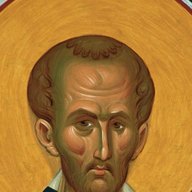
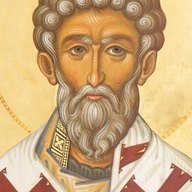
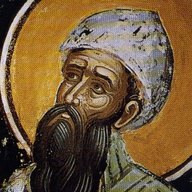
St. John ChrysostomHomily 80 on John · on John 17:1
"Father, the hour is come; glorify Thy Son, that Thy Son also may glorify Thee." Again He showeth us, that not unwilling He cometh to the Cross. For how could He be unwilling, who prayed that this might come to pass, and called the action "glory," not only for Himself the Crucified, but also for the Father? since this…
Blessed AugustineTractate 104 on John · on John 17:1
Before these words, which we are now, with the Lord's help, to make the subject of discourse, Jesus had said, "These things have I spoken unto you, that in me ye might have peace;" which we are to consider as referring, not to the later words uttered by Him immediately before, but to all that He had addressed to them,…
Blessed AugustineTractate 104 on John · on John 17:1
Fitly therewith did He bring His words to a close, which were proverbs to the disciples, who as yet had little understanding, but would afterwards understand them, when He had given them the Holy Spirit of promise, of whom He had said before: "These things have I spoken unto you being yet present with you. But the…
Blessed AugustineTractate 104 on John · on John 17:1
When, therefore, He had told them on what account He had spoken all things, namely, that in Him they might have peace while having distress in the world, and had exhorted them to be of good cheer, because He had overcome the world; having thus finished His discourse to them, He then directed His words to the Father,…
Blessed AugustineTractate 104 on John · on John 17:1
Wherefore in saying this, "Father, the hour is come; glorify Thy Son," He showed that all time, and every occasion when He did anything or suffered anything to be done, were arranged by Him who was subject to no time: since those things, which were individually future in point of time, have their efficient causes in…
Blessed AugustineTractate 104 on John · on John 17:1
The glorification of the Son by the Father is understood by some to consist in this, that He spared Him not, but delivered Him up for us all. But if we say that He was glorified by His passion, how much more was He so by His resurrection! For in His passion our attention is directed more to His humility than to His…
Blessed AugustineTractate 104 on John · on John 17:1
In order, then, that the Mediator between God and men, the man Christ Jesus, might be made lustrous or glorious by His resurrection, He was first humbled by suffering; for had He not died, He would not have risen from the dead. Humility is the earning of glory; glory, the reward of humility. This, however, was done in…
Blessed AugustineTractate 105 on John · on John 17:1
That the Son was glorified by the Father in His form of a servant, which the Father raised from the dead and set at His own right hand, is indicated by the event itself, and is nowhere doubted by the Christian. But as He not only said, "Father, glorify Thy Son," but likewise added, "that Thy Son may glorify Thee," it…
St. Cyril of AlexandriaCommentary on John, Book 11 · on John 17:1
CHAPTER III. That no man should consider that the Son has any lack of God-befitting glory, though He be found to say, Father, glorify Thy Son. Having given His disciples a sufficiency of things necessary for salvation, and incited them by fitting words and arguments to a more accurate apprehension of His doctrines,…
St. Cyril of AlexandriaCommentary on John, Book 11 · on John 17:1
So it best befits us, when occasion calls us to prayer, to pray for what redounds to God's glory before what concerns ourselves, as indeed Christ also Himself enjoins us when He says: After this manner pray ye: Our Father Which art in heaven, Hallowed be Thy Name. Thy kingdom come.… The Saviour indeed spake these…
St. John ChrysostomHomily 80 on John · on John 17:2
"As Thou hast given Him power over all flesh." He now showeth, that what belongs to the preaching is not confined to the Jews alone, but is extended to all the world, and layeth down beforehand the first invitations to the Gentiles. And since He had said, "Go not into the way of the Gentiles" (Matt. x. 5), and after…
St. John ChrysostomHomily 80 on John · on John 17:2
"Of all flesh"? For certainly not all believed. Yet, for His part, all believed; and if men gave no heed to His words, the fault was not in the Teacher, but in those who received them not.
St. John ChrysostomHomily 80 on John · on John 17:2
"That He should give eternal life to as many as Thou hast given Him." If here also He speaketh in a more human manner, wonder not. For He doth so both on account of the reasons I have given, and to avoid the saying anything great concerning Himself; since this was a stumblingblock to the hearers because as yet they…
Blessed AugustineTractate 105 on John · on John 17:2
And then expanding still further how it was that the Father should be glorified by the Son, He says: "As Thou hast given Him power over all flesh, that He should give eternal life to all that Thou hast given Him." By all flesh, He meant every man, signifying the whole by a part; as, on the other hand, the whole man is…
St. Cyril of AlexandriaCommentary on John, Book 11 · on John 17:2
CHAPTER IV. That it will in no way damage the glory of the Son, when He is said to have received aught from God the Father, since for this we can assign a pious reason. In these words Christ expounds once more to us the kind of glory whereby God will exalt and glorify His own Son; and He will also Himself be glorified…
St. John ChrysostomHomily 80 on John · on John 17:3
"And this is life eternal, that they might know Thee the only true God, and Jesus Christ whom Thou hast sent." "The only true God," He saith, by way of distinction from those which are not gods; for He was about to send them to the Gentiles. But if they will not allow this, but on account of this word "only" reject…
St. John ChrysostomHomily 80 on John · on John 17:3
Why, when Paul saith, "Or I only and Barnabas" (1 Cor. ix. 6), doth he exclude Barnabas? Not at all; for the "only" is put by way of distinction from others. And, if He be not true God, how is He "Truth"? for truth far surpasses what is true. What shall we call the not being a "true" man, tell me? shall we not call it…
Blessed AugustineTractate 105 on John · on John 17:3
"And this," He adds, "is eternal life, that they may know Thee, the only true God, and Jesus Christ, whom Thou hast sent." The proper order of the words is, "That they may know Thee and Jesus Christ, whom Thou hast sent, as the only true God." Consequently, therefore, the Holy Spirit is also understood, because He is…
St. Cyril of AlexandriaCommentary on John, Book 11 · on John 17:3
CHAPTER V. That the Son will not be excluded from being true God, even though He named God the Father the only true God. He defines faith as the mother of eternal life, and says that the power of the true knowledge of God will be such as to cause us to remain for ever in a state of incorruption, and blessedness, and…
St. Cyril of AlexandriaCommentary on John, Book 11 · on John 17:3
Are we saying that knowledge is eternal life? Are we saying that to know the one true and living God will suffice to give us complete security for the future without need of anything else? Then how is "faith apart from works dead"? When we speak of faith, we mean the true knowledge of God and nothing else, since…
St. John ChrysostomHomily 80 on John · on John 17:4
"I have glorified Thee on the earth." Well said He, "on the earth"; for in heaven He had been already glorified, having His own natural glory, and being worshiped by the Angels. Christ then speaketh not of that glory which is bound up with His Essence, (for that glory, though none glorify Him, He ever possesseth in…
St. John ChrysostomHomily 80 on John · on John 17:4
"I have finished the work which Thou gavest Me that I should do it." And yet the action was still but beginning, or rather was not yet beginning. How then said He, "I have finished"? Either He meaneth, that "I have done all My part"; or He speaketh of the future, as having already come to pass; or, which one may say…
Blessed AugustineTractate 105 on John · on John 17:4
But God is first of all glorified here, while He is being made known to men by word of mouth, and preached through the faith of believers. Wherefore, He says, "I have glorified Thee on the earth: I have finished the work which Thou gavest me to do." He does not say, Thou orderedst; but, "Thou gavest:" where the…
Blessed AugustineTractate 105 on John · on John 17:4–5
In a way similar, also, to this, He proceeds to say: "And now, O Father, glorify thou me with Thine own self with the glory which I had with Thee before the world was." For He had said above, "Father, the hour is come; glorify Thy Son, that Thy Son may glorify Thee:" in which arrangement of the words He had shown that…
St. Cyril of AlexandriaCommentary on John, Book 11 · on John 17:4
CHAPTER VI. That the Son is not bare of God-befitting glory, even though He is found saying to the Father, And now glorify Me with the glory which I had... Our Saviour's speech now intertwines the human element in His Nature with the Divine, and is of composite nature, looking both ways; not merging overmuch the…
St. John ChrysostomHomily 80 on John · on John 17:5
"And now, O Father, glorify Thou Me with Thine Own Self, with the glory which I had with Thee before the world was." Where is that glory? For allowing that He was with reason unhonored among men, because of the covering which was put around Him; how seeketh He to be glorified with the Father? What then saith He here?…
Blessed AugustineTractate 105 on John · on John 17:5
But this predestination He still more clearly disclosed in respect of His own glorification, wherewith He was glorified by the Father, when He added, "With the glory which I had, before the world was, with Thee." The proper order of the words is, "which I had with Thee before the world was." To this apply His words,…
Blessed AugustineTractate 105 on John · on John 17:5
But perhaps we shall have some fear in saying that He was predestinated, because the apostle seems to have said so only in reference to our being made conformable to His image. As if, indeed, any one, faithfully considering the rule of faith, were to deny that the Son of God was predestinated, who yet cannot deny that…
St. John ChrysostomHomily 81 on John · on John 17:6
"Messenger of great counsel" (Isa. ix. 6, LXX.), the Son of God is called, because of the other things which He taught, and principally because He announced the Father to men, as also now He saith, "I have manifested Thy Name unto the men." For after having said, "I have finished Thy work," He next explaineth it in…
Blessed AugustineTractate 106 on John · on John 17:6
In this discourse we purpose speaking, as He gives us grace, on these words of the Lord which run thus: "I have manifested Thy name unto the men whom Thou gavest me out of the world." If He said this only of those disciples with whom He had supped, and to whom, before beginning His prayer, He had said so much, it can…
Blessed AugustineTractate 106 on John · on John 17:6
But what follows makes it more credible that His words, "I have manifested Thy name to the men whom Thou gavest me out of the world," were spoken by Him of those who were already His disciples, and not of all who were yet to believe on Him. For after these words, He added: "Thine they were, and Thou gavest them me;…
Blessed AugustineTractate 106 on John · on John 17:6
Accordingly, let us now see what He says about those disciples of His who were then listening to Him. "I have manifested," He says. "Thy name unto the men whom Thou gavest me." Did they not, then, know the name of God when they were Jews? And what of that which we read, "God is known in Judah; His name is great in…
Blessed AugustineTractate 106 on John · on John 17:6
But what are we to make of the words. "Whom Thou gavest me out of the world"? For it is said of them that they were not of the world. But this they attained to by regeneration, and not by generation. And what, also, of that which follows, "Thine they were, and Thou gavest them me"? Was there a time when they belonged…
St. Cyril of AlexandriaCommentary on John, Book 11 · on John 17:6
CHAPTER VII. That the fact that something is said to have been given to the Son from the Father does not rob Him of God-befitting dignity; but He plainly appears to be Consubstantial, and of the Father, even if He is said to receive aught. I have previously stated with reference to the passages I have just examined,…
St. Cyril of AlexandriaCommentary on John, Book 11 · on John 17:6
When the Savior declares that he has made known the name of God the Father, it is the same as saying that he has shown the whole world his glory. How did he do this? By making himself known through his wonderful works. The Father is glorified in the Son as in an image and type of his own form, for the beauty of the…
Now they have known that all things whatsoever thou hast given me are of thee.
νῦν ἔγνωκαν ὅτι πάντα ὅσα δέδωκάς μοι παρὰ σοῦ ἐστιν·
St. John ChrysostomHomily 81 on John · on John 17:7–8
"And they have kept Thy word." "Now they have known that all things whatsoever Thou hast given Me are of Thee." How did they "keep Thy word"? "By believing in Me, and giving no heed to the Jews. For he that believeth in Him, it saith, 'hath set to his seal that God is true.'" (c. iii. 33.) Some read, "Now I know that…
Blessed AugustineTractate 106 on John · on John 17:7–8
He proceeds to say, "And they have kept Thy word: now they have known that all things, whatsoever Thou hast given me, are of Thee;" that is, they have known that I am of Thee. For the Father gave all things at the very time when He begat Him who was to have all things. "For I have given unto them," He says, "the words…
St. Cyril of AlexandriaCommentary on John, Book 11 · on John 17:7
And therefore He saith: All things whatsoever Thou hast given Me are from Thee. For in a special and peculiar sense all things are God's, and are given to us His creatures. Universal possession and power are most appropriate to God, but to us it is most fitting to receive. He bore witness, however, before His devout…
For I have given unto them the words which thou gavest me; and they have received them, and have known surely that I came out from thee, and they have believed that thou didst send me.
Blessed AugustineTractate 106 on John · on John 17:8
But what human language will suffice to explain how the Father gave those words to the Son? The question, of course, will appear easier if we suppose Him to have received such words in His capacity as the Son of man. And yet, although thus born of the Virgin, who will undertake to relate when and how it was that He…
St. Cyril of AlexandriaCommentary on John, Book 11 · on John 17:8
He testified then to those who love Him, that they received and kept the words given Him by the Father, and were besides satisfied that He came, and was sent, from God; while those who were diseased with the contrary opinion were otherwise minded. For they who neither received His words nor kept their minds open to…
St. John ChrysostomHomily 81 on John · on John 17:9
"I pray for them." "What sayest Thou?" "Dost Thou teach the Father, as though He were ignorant? Dost Thou speak to Him as to a man who knoweth not?" "What then meaneth this distinction?" Seest thou that the prayer is for nothing else than that they may understand the love which He hath towards them? For He who not…
Blessed AugustineTractate 107 on John · on John 17:9–10
When the Lord was speaking to the Father of those whom He already had as disciples, He said this also among other things: "I pray for them. I pray not for the world, but for those whom Thou hast given me." By the world, He now wishes to be understood those who live according to the lust of the word, and stand not in…
St. Cyril of AlexandriaCommentary on John, Book 11 · on John 17:9
CHAPTER VIII. That nothing which is spoken of as belonging to the Father will be excluded from the kingdom of the Son, for Both alike rule over all. He once more mediates as Man, the Reconciler and Mediator of God and men; and being our truly great and all-holy High Priest, by His own prayers He appeases the anger of…
St. Cyril of AlexandriaCommentary on John, Book 11 · on John 17:9
Christ, who manifested himself in the last times above the types and figures of the Law, at once our high priest and mediator, prays for us as man. And at the same time he is ever ready to cooperate with God the Father, who distributes good gifts to those who are worthy. Paul showed us this most plainly in the words…
St. John ChrysostomHomily 81 on John · on John 17:10
"All Mine are Thine, and Thine are Mine; and I am glorified in them." Seest thou the equality of honor? For lest on hearing, "Thou hast given them Me," thou shouldest deem that they were alienated from the authority of the Father, or before this from that of the Son, He removed both difficulties by speaking as He did.…
Blessed AugustineTractate 107 on John · on John 17:10
But when He says, speaking of the Holy Ghost, "All things that the Father hath are mine; therefore said I, that He shall take of mine, and shall show it unto you," He referred to those things which concern the actual deity of the Father, and in which He is equal to Him, in having all that He has. And no more was it of…
St. Cyril of AlexandriaCommentary on John, Book 11 · on John 17:10
Those then who have been given to Christ are the Father's, but are not therefore removed from Christ. For God the Father reigneth with Him, and through Him ruleth over His own. For the Holy and Consubstantial Trinity share the same kingdom, and their universal dominion is one and the same; and whatever is the Son's…
And now I am no more in the world, but these are in the world, and I come to thee. Holy Father, keep through thine own name those whom thou hast given me, that they may be one, as we are.
St. John ChrysostomHomily 81 on John · on John 17:11
"And now I am no more in the world, but these are in the world." That is, "Although I appear no longer in the flesh, yet by these am I glorified." But why doth He say continuously, that, "I am not in the world"; and that, "because I leave them I commit them to Thee"; and that, "when I was in the world I kept them"?…
Blessed AugustineTractate 107 on John · on John 17:11
"And now," He adds, "I am no more in the world, and these are in the world." If your thoughts turn to the very hour in which He was speaking, both were still in the world; to wit, He Himself, and those of whom He was so speaking: for it is not in respect of the tendency of heart and life that we can or ought to…
Blessed AugustineTractate 107 on John · on John 17:11
Accordingly He commends to the Father's care those whom He was about to leave by His bodily absence, saying: "Holy Father, keep through Thine own name those whom Thou hast given me." That is to say, as man He prays to God in behalf of His disciples, whom He has received from God. But attend to what follows: "That they…
St. Cyril of AlexandriaCommentary on John, Book 11 · on John 17:11
Holy Father, keep them in Thy Name which Thou hast given Me, that they may be one, even as We are. CHAPTER IX. That the dignity of Godhead is inherent in the Son; even though He is said to have received this from the Father, because of His humanity and the form of His humiliation. He still preserves the blending of…
St. Cyril of AlexandriaCommentary on John, Book 11 · on John 17:11
And I am no more in the world, and these are in the world, and I come to Thee. What then is His request, and why does He endeavour to obtain God's favour for His followers? I am no more in the world, He says, and these are in the world, and, I come to Thee. For while He yet lived in converse with His holy Apostles in…
St. Cyril of AlexandriaCommentary on John, Book 11 · on John 17:11
He wishes indeed the disciples to be kept in unity of mind and purpose, being blended, as it were, with one another in soul and spirit and the bond of brotherly love; and to be linked together in an unbroken chain of affection, so that their unity may be so far perfected as that their elective affinity may resemble…
St. Cyril of AlexandriaCommentary on John, Book 11 · on John 17:11
Showing Himself, then, to them as at the same time both God and Man, He, as it were, induces His disciples to reflect that absent, as well as present, He would work the things which made for their salvation in God; and that, as He had them in His keeping while He was yet with them on the earth in the form of Man, so…
While I was with them in the world, I kept them in thy name: those that thou gavest me I have kept, and none of them is lost, but the son of perdition; that the scripture might be fulfilled.
St. John ChrysostomHomily 81 on John · on John 17:12
"While I was with them in the world, I kept them in Thy Name." Again He speaketh as a man and as a Prophet, since nowhere doth He appear to have done anything by the Name of God.
St. John ChrysostomHomily 81 on John · on John 17:12
"Those that Thou gavest Me I have kept, and none of them is lost, but the son of perdition, that the Scripture might be fulfilled." And in another place He saith, "Of all that Thou gavest Me, I will surely lose nothing." (c. vi. 39.) Yet not only was he lost, but also many afterwards; how then saith He, "I will in…
St. John ChrysostomHomily 81 on John · on John 17:12
But after having said that "none of them was lost but the son of perdition," He added, "that the Scripture might be fulfilled." Of what Scripture doth He speak? That which foretelleth many things concerning Him. Not that He perished on that account, in order that the Scripture might be fulfilled. But we have before…
Blessed AugustineTractate 107 on John · on John 17:12
But here He proceeds: "While I was with them, I kept them in Thy name." Since I am coming, He says, to Thee, keep them in Thy name, in which I myself have kept them while I was with them. In the Father's name, the Son as man kept His disciples, when placed side by side with them in human presence; but the Father also,…
Blessed AugustineTractate 107 on John · on John 17:12
The Son therefore goes on to say: "Those that Thou gavest me, I have kept, and none of them is lost, but the son of perdition; that the Scripture might be fulfilled." The betrayer of Christ was called the son of perdition, as foreordained to perdition, according to the Scripture, where it is specially prophesied of…
St. Cyril of AlexandriaCommentary on John, Book 11 · on John 17:12
Our Saviour's speech soon proceeds to illustrate His meaning more plainly; and while at the first dark hints were given, it is now proclaimed and revealed like a storm breaking into sunshine. For the disciples thought that our Saviour's abandonment of them,----I mean in the flesh,----would inflict on them great loss;…
St. John ChrysostomHomily 81 on John · on John 17:13
"But now I come to thee." Seest thou that the discourse is composed rather in a human manner? So that should any wish from these words to lower the Son, he will lower the Father also. Observe, in proof of this, how from the beginning He speaketh partly as though informing and explaining to Him, partly as enjoining.…
Blessed AugustineTractate 107 on John · on John 17:13
"And now," He says, "come I to Thee; and these things I speak in the world, that they may have my joy fulfilled in themselves." See! He says that He speaketh in the world, when He had said only a little before, "I am no more in the world:" the reason of which we have there explained, or rather have shown that He…
St. Cyril of AlexandriaCommentary on John, Book 11 · on John 17:13
Keep in mind once more what we were just now saying, and you will easily understand the drift of the passage. For He on all occasions preserved the juxtaposition of the two aspects of His character, at the same time displaying the Divine majesty for which He was pre-eminent, and not discarding the proper limitations…
St. John ChrysostomHomily 82 on John · on John 17:14
When having become virtuous we are persecuted by the wicked, or when being desirous of virtue we are mocked at by them, let us not be distracted or angry. For this is the natural course of things, and everywhere virtue is wont to engender hatred from wicked men. For envying those who desire to live properly, and…
Blessed AugustineTractate 108 on John · on John 17:14
While the Lord is still speaking to the Father, and praying for His disciples, He says: "I have given them Thy saying; and the world hath hated them." That hatred they had not yet experienced in those sufferings of their own, which afterwards overtook them; but He speaks thus in His usual way, foretelling the future…
St. Cyril of AlexandriaCommentary on John, Book 11 · on John 17:14
He says that He Himself is not of the world, and that we are even as He is, since His Divine Word has taken up its abode in our hearts. Furthermore, He declares that as the world hated Him so will it also hate them. The world indeed hateth Christ, because it is in conflict with His words, and accepts not His teaching,…
St. John ChrysostomHomily 82 on John · on John 17:15
"I pray not that Thou shouldest take them out of the world, but that Thou shouldest keep them from the evil." Again He simplifieth His language; again He rendereth it more clear; which is the act of one showing, by making entreaty for them with exactness, nothing else but this, that He hath a very tender care for…
Blessed AugustineTractate 108 on John · on John 17:15
"I pray not," He adds, "that thou shouldest take them out of the world, but that Thou shouldest keep them from the evil." For they still accounted it necessary to be in the world, although they were no longer of it.
St. Cyril of AlexandriaCommentary on John, Book 11 · on John 17:15
Christ does not wish them to be quit of human affairs, or to be rid of life in the body, when they have not yet finished the course of their apostleship, or distinguished themselves by the virtues of a godly life; but he wishes them, after they have lived their lives in the company of men in the world, and have guided…
St. Cyril of AlexandriaCommentary on John, Book 11 · on John 17:15–17
By these words He indicates once more, and makes clear to us, the reason why He requires to ascend to God the Father, and why so to do becomes Him, while He is still our Mediator, and High Priest, and Advocate, according to the Holy Scripture; and shows us that it is in order that, if at any time we encounter failure,…
St. John ChrysostomHomily 82 on John · on John 17:16
"They are not of the world, even as I am not of the world." How then saith He in another place, "Which Thou gavest Me out of the world; Thine they were"? There He speaketh of their nature; here of wicked actions. And He putteth together a long encomium of them; first, that "they were not of the world"; then, that "the…
Blessed AugustineTractate 108 on John · on John 17:16
Then He repeats the same statement: "They are not of the world, even as I am not of the world. Sanctify them in the truth." For thus are they kept from the evil, as He had previously prayed that they might be. But it may be inquired how they were no more of the world, if they were not yet sanctified in the truth; or,…
St. John ChrysostomHomily 82 on John · on John 17:17
"Sanctify them through Thy truth." "Make them holy by the gift of the Spirit, and of right doctrines." As when He saith, "Ye are clean through the word which I spake unto you," so now He saith the same thing, "Instruct them, teach them the truth." "And yet He saith that the Spirit doth this. How then doth He now ask…
Blessed AugustineTractate 108 on John · on John 17:17
The heirs therefore of the New Testament are sanctified in that truth which was adumbrated in the purifications of the Old Testament; and when they are sanctified in the truth, they are in other words sanctified in Christ, who said in truth "I am the way, and the truth, and the life." As also when He said, "The truth…
St. Cyril of AlexandriaCommentary on John, Book 11 · on John 17:17–18
CHAPTER X. That Christ is not holy from participation in anything different from Himself; and that the sanctification through the Spirit is not alien to His Substance. After giving the Father here especially the name of Holy, and praying that the disciples might be kept in the truth, that is, in His Spirit (for the…
St. John ChrysostomHomily 82 on John · on John 17:18
"As Thou hast sent Me into the world, even so have I also sent them into the world." As Paul also saith, "Having put in us the word of reconciliation." For the same end for which Christ came, for the same did these take possession of the world. In this place again the "as" is not put to signify resemblance in the case…
Blessed AugustineTractate 108 on John · on John 17:18
But now He still goes on to speak of the apostles, for He proceeds to add, "As Thou hast sent me into the world, even so have I also sent them into the world." Whom did He so send but His apostles? For even the very name of apostles, which is a Greek word, signifies in Latin nothing more than, those that are sent.…
St. John ChrysostomHomily 82 on John · on John 17:19
"And for their sakes I sanctify Myself, that they also might be sanctified in the truth." What is, "I sanctify Myself"? "I offer to Thee a sacrifice." Now all sacrifices are called "holy," and those are specially called "holy things," which are laid up for God. For whereas of old in type the sanctification was by the…
Blessed AugustineTractate 108 on John · on John 17:19
But since, on the ground that the Mediator between God and men, the man Christ Jesus, has become Head of the Church, they are His members; therefore He says in the words that follow, "And for their sakes I sanctify myself." For what means He by the words, "And for their sakes I sanctify myself," but I sanctify them in…
St. Cyril of AlexandriaCommentary on John, Book 11 · on John 17:19
And if we may sum up in brief the whole matter, Christ called down upon us the ancient gift of humanity, that is, sanctification through the Spirit and communion with the Divine Nature, His disciples being the first to receive it; for the saying is true, that the husbandman that laboureth must be the first to partake…
St. John ChrysostomHomily 82 on John · on John 17:20
"Neither pray I for these alone, but for them also who shall believe." For since He was dying for them, and said, that "For their sakes I sanctify Myself," lest any one should think that He did this for the Apostles only, He added, "Neither pray I for these only, but for them also who believe on Me through their…
Blessed AugustineTractate 109 on John · on John 17:20
The Lord Jesus, in the now close proximity of His passion, after praying for His disciples, whom He also named apostles, with whom He had partaken of that last supper from which His betrayer had taken his departure on being revealed by the sop of bread, and with whom, after the latter's departure, and before beginning…
Blessed AugustineTractate 109 on John · on John 17:20
In this prayer, therefore, Jesus may seem to have omitted praying for some of His own, unless we carefully examine His words in the prayer itself. For if He prayed first for those, as we have already shown, who were then with Him, and afterwards for those also who should believe on Him through their word, it may be…
Blessed AugustineTractate 109 on John · on John 17:20
We are therefore to understand that their faith in Him was not yet such as He wished it to be, inasmuch as even Peter himself, to whom, on making the confession, "Thou art the Christ, the Son of the living God," He had borne so excellent a testimony, was disposed rather to hinder Him from dying than to believe in His…
Blessed AugustineTractate 109 on John · on John 17:20
But we have still in reserve for the further solution of this question the blessed apostle, and that robber who was a villain in wickedness, but a believer on the cross. For the Apostle Paul tells us that he was made an apostle not of men, nor by man, but by Jesus Christ: and speaking of his own gospel, he says, "For…
Blessed AugustineTractate 109 on John · on John 17:20
Accordingly it remains that if we are to believe that the Lord Jesus, in this prayer, prayed for all of His own who either then were or should thereafter be in this life, which is a state of trial upon earth, we must so understand the expression, "through their word," as to believe that it here signified the word of…
Blessed AugustineTractate 109 on John · on John 17:20
And once more, when murmuring arose among the Grecian widows in reference to the serving of the tables, previous to the time when Paul was brought to the faith of Christ, the reply given by the apostles, who before then had adhered to the Lord, was: "It is not good that we should leave the word of God, and serve…
St. Cyril of AlexandriaCommentary on John, Book 11 · on John 17:20
CHAPTER XI. That the Son is naturally One with God His Father; and that He is in the Father and the Father in Him, according to the essential bond and character of their Unity; and that likewise also we ourselves, when we receive faith in Him, are proved one with each other and with God, both in a corporeal and in a…
That they all may be one; as thou, Father, art in me, and I in thee, that they also may be one in us: that the world may believe that thou hast sent me.
St. John ChrysostomHomily 82 on John · on John 17:21
After having thus spoken concerning their salvation, and their being sanctified by faith and the Sacrifice, He afterwards speaketh of concord, and finally closeth his discourse with this, having begun with it and ended in it. For at the beginning He saith, "A new commandment I give unto you"; and here, "That they all…
St. John ChrysostomHomily 82 on John · on John 17:21
But what is, "In Us"? In the faith which is on Us. Because nothing so offends all men as divisions, He provideth that they should be one. "What then," saith some one, "did He effect this?" Certainly He effected it. For all who believe through the Apostles are one, though some from among them were torn away. Nor did…
Blessed AugustineTractate 110 on John · on John 17:21
After the Lord Jesus had prayed for His disciples whom He had with Him at the time, and had conjoined with them others who were also His own, by saying, "Neither pray I for these alone, but for them also who shall believe on me through their word," as if we were inquiring what or wherefore He prayed for them, He…
Blessed AugustineTractate 110 on John · on John 17:21
But then after saying, "That they also may be one in us," He added, "That the world may believe that Thou hast sent me." What does He mean by this? Is it that the world will then be brought to the faith, when we shall all be one in the Father and Son? Is not such a state the everlasting peace, and the reward of faith,…
Blessed AugustineTractate 110 on John · on John 17:21
How, then, are we to understand Him when He says, "That they also may be one in us, that the world may believe that Thou hast sent me," but just in this way, that He did not assign the cause of the world believing to the fact that those others are one, as if it believed on the ground that it saw them to be one; for…
St. Cyril of AlexandriaCommentary on John, Book 11 · on John 17:21
Our Lord Jesus Christ, then, prays not for the twelve Apostles alone, but rather for all who were destined in every age to yield to and obey the words that exhort those who hear to receive that sanctification that is through faith, and to that purification which is accomplished in them through partaking of the…
St. John ChrysostomHomily 82 on John · on John 17:22
"And the glory which Thou gavest Me, I have given them." That by miracles, that by doctrines, and, that they should be of one soul; for this is glory, that they should be one, and greater even than miracles. As men admire God because there is no strife or discord in That Nature, and this is His greatest glory, "so too…
Blessed AugustineTractate 110 on John · on John 17:22
Furthermore, our Saviour in thus praying to the Father showed Himself to be man; while He now also shows that He Himself, as being God along with the Father, doeth that which He prayeth for, when He says, "And the glory which Thou gavest me, I have given them." And what was that glory but immortality, which human…
St. Cyril of AlexandriaCommentary on John, Book 11 · on John 17:22
CHAPTER XII. That the Son is by Nature One with God His Father, though He says that He received, as by way of grace, His being One with the Father. We say, and therein we are justified, that the Only-begotten hath an essential and natural unity with His Father, insomuch as He was both in the true sense begotten, and…
I in them, and thou in me, that they may be made perfect in one; and that the world may know that thou hast sent me, and hast loved them, as thou hast loved me.
St. John ChrysostomHomily 82 on John · on John 17:23
"I in them, and Thou in Me." "How gave He the glory?" By being in them, and having the Father with Him, so as to weld them together. But in another place He speaketh not so; He saith not that the Father cometh by Him, but, "that He and the Father come, and take up their abode with him," "there" removing the suspicion…
St. John ChrysostomHomily 82 on John · on John 17:23
"That they may be made perfect in one, and that the world may know that Thou hast sent Me." He saith these latter words immediately after the other, to show that peace hath more power to attract men than a miracle; for as it is the nature of strife to separate, so it is that of agreement to weld together. "And I have…
Blessed AugustineTractate 110 on John · on John 17:23
And then He added: "I in them, and Thou in me, that they may be made perfect in one." Here He briefly intimated Himself as the Mediator between God and men. Nor was this said in any such way as if the Father were not in us, or we were not in the Father; since He had also said in another place, "We will come unto him,…
Blessed AugustineTractate 110 on John · on John 17:23
And had He said, That they may know that Thou hast sent me, it would be just of the same force as what He actually does say, "that the world may know." For they are the world that abideth not in enmity, as doth the world that is foreordained to damnation; but one that out of an enemy has been transformed into a…
Blessed AugustineTractate 110 on John · on John 17:23
The love, therefore, wherewith God loveth, is incomprehensible and immutable. For it was not from the time that we were reconciled unto Him by the blood of His Son that He began to love us; but He did so before the foundation of the world, that we also might be His sons along with His Only-begotten, before as yet we…
St. Cyril of AlexandriaCommentary on John, Book 11 · on John 17:23
For we are made one with each other after the manner already indicated, and we are also made one with God. And in what sense we are made one with Him, the Lord very clearly explained, and to make the benefit of His teaching plain, added the words: I in them, and Thou in Me, that they may be made perfected into one.…
St. Cyril of AlexandriaCommentary on John, Book 11 · on John 17:23
The Son dwells in us in a corporeal sense as man, commingled and united with us by the mystery of the Eucharist. And also [he dwells with us] in a spiritual sense as God, by the effectual working and grace of his own Spirit, building up our spirit into newness of life and making us partakers of his divine nature.…
Father, I will that they also, whom thou hast given me, be with me where I am; that they may behold my glory, which thou hast given me: for thou lovedst me before the foundation of the world.
St. John ChrysostomHomily 82 on John · on John 17:24
"Father," He saith, "I will that they also whom Thou hast given Me, be with Me where I am." "Then dost Thou gain by prayer, and dost Thou not yet possess that concerning which they enquired continually, saying, 'Whither goest Thou?' What sayest Thou? How then didst Thou say to them, 'Ye shall sit upon twelve thrones'?…
St. John ChrysostomHomily 82 on John · on John 17:24
"That they may behold My glory which Thou hast given Me." This again is a sign of His being of one mind with the Father, of a higher character than those former, for He saith, "Before the foundation of the world," yet hath it also a certain condescension; for, "Thou hast given Me," He saith. Now if this be not the…
St. John ChrysostomHomily 82 on John · on John 17:24
But why said He not, "That they may share My glory," instead of, "That they may behold My glory"? Here He implieth, that all that rest is, the looking on the Son of God. This certainly it is which causes them to be glorified; as Paul saith, "With open face mirroring the glory of the Lord." For as they who look on the…
Blessed AugustineTractate 111 on John · on John 17:24
The Lord Jesus raises up His people to a great hope, than which there could not possibly be a greater. Listen and rejoice in hope, that, since the present is not a life to be loved, but to be tolerated, you may have the power of patient endurance amid all its tribulation. Listen, I say, and weigh well to what it is…
Blessed AugustineTractate 111 on John · on John 17:24
For so He says in the beginning of this prayer: "Thou hast given Him power over all flesh," that is, over every man, "that He should give eternal life to as many as Thou hast given Him." Here He makes it clear that He has indeed received power over all men, that, as the future Judge of quick and dead, He may deliver…
Blessed AugustineTractate 111 on John · on John 17:24
For the words that we read of Him as uttering on the eve of His passion, "Yet not, Father, as I will, but as Thou wilt," as if the Father has or had one will, and the Son another, are the echo of our infirmity, however faith-pervaded, which our Head transfigured in His own person, when He likewise bare our iniquities.…
Blessed AugustineTractate 111 on John · on John 17:24
But as we have already, in a way proportionate to the brevity of our discourse, spoken of the objects of the promise, and of its own stability; let us now look at this one point, as far as we are able, what it is that He was pleased to promise when He said, "I will that they also whom Thou hast given me be with me…
Blessed AugustineTractate 111 on John · on John 17:24
Because of the same blessed hope the apostle also says: "But God, who is rich in mercy, for His great love wherewith He loved us, even when we were dead in sins, hath quickened us together with Christ; by whose grace we are saved; and hath raised us up together, and made us sit together in heavenly places in Christ…
Blessed AugustineTractate 111 on John · on John 17:24
But if it is in respect of the form of God, wherein He is equal to the Father, that we would be inclined to understand His words, "I will that they also be with me, where I am," let our mind get quit of every thought of material images: whatever the soul has had presented to it, that is endowed with length, or…
Blessed AugustineTractate 111 on John · on John 17:24
On this account, doubtless, it was not enough for Him to say, "I will that they also be where I am;" but He added, "with me." For to be with Him is the chief good. For even the miserable can be where He is, since wheresoever any are, there is He also; but the blessed only are with Him, because it is only of Him that…
Blessed AugustineTractate 111 on John · on John 17:24
Let no one disturb the clearness of the meaning by any cloudy contradiction; but let what follows furnish its testimony to the words that precede. For after saying, "I will that they also be with me where I am," He went on immediately to add, "That they may behold my glory, which Thou gavest me: for Thou lovedst me…
Blessed AugustineTractate 111 on John · on John 17:24
If, then, it is in reference to His Godhead as the Son of God, equal and co-eternal with the Father, that we take the words, "I will that they also be with me where I am," we shall be with Christ in the Father; but He in His own way, we in ours, wherever we may be in body. For if localities are to be understood, and…
Blessed AugustineTractate 111 on John · on John 17:24
How, then, shall we not be with Christ where He is, when we shall be with Him in the Father in whom He is? On this, also, the apostle is not without something to say to us, although we are not yet in possession of the reality, but only cherishing the hope. For he says, "If ye be risen with Christ, seek those things…
St. Cyril of AlexandriaCommentary on John, Book 11 · on John 17:24
After having prayed for His disciples, or rather all those who come to Him through faith, and having required of the Father that they may have union with Him, and love, and sanctification, He proceeds at once to add these words; showing that to live with Him and to be deemed worthy to see His glory, belongeth only to…
St. Cyril of AlexandriaCommentary on John, Book 11 · on John 17:24
He shows that to live with him and to be considered worthy to see his glory is something that belongs only to those who have been already united to the Father through him and have obtained his love—a love that he must be conceived to enjoy from the Father. For we are loved by God the Father as children inasmuch as we…
O righteous Father, the world hath not known thee: but I have known thee, and these have known that thou hast sent me.
πάτερ δίκαιε, καὶ ὁ κόσμος σε οὐκ ἔγνω, ἐγὼ δέ σε ἔγνων, καὶ οὗτοι ἔγνωσαν ὅτι σύ με ἀπέστειλας·
St. John ChrysostomHomily 82 on John · on John 17:25
"O righteous Father, the world hath not known Thee." What meaneth this? What connection hath it? He here showeth that no man knoweth God, save those only who have come to know the Son. And what He saith is of this kind: "I wished all to be so, yet they have not known Thee, although they had no complaint against Thee."…
St. John ChrysostomHomily 82 on John · on John 17:25
"And these have known that Thou hast sent Me." Seest thou that He alludeth to those, who said that He was not from God, and all is finally summed up to meet this argument?
Blessed AugustineTractate 111 on John · on John 17:25
"O righteous Father," He saith, "the world hath not known Thee." Just because Thou art righteous it hath not known Thee. It is as that world which has been predestined to condemnation really deserved, that it hath not known Him; while the world which He hath reconciled unto Himself through Christ hath known Him not of…
St. Cyril of AlexandriaCommentary on John, Book 11 · on John 17:25
He here calls the Father righteous, where He might have used another title. For He is holy, pure, undefiled, Maker and Creator of the world, and whatever else befits the Ruler of the Universe. It is very desirable, then, to inquire why Christ entitled Him righteous, when He might have given Him another name. It will,…
St. Cyril of AlexandriaCommentary on John, Book 11 · on John 17:25
Christ calls the Father righteous with good reason. For by the Father's approval and consent the Son became man that he might endow human nature, which was created for good works, with sanctification through the Spirit, and union with God and an abiding place in the mansions above where he will live and reign with…
St. John ChrysostomHomily 82 on John · on John 17:26
"And I have declared unto them Thy Name, and will declare it." "Yet thou sayest that perfect knowledge is from the Spirit." "But the things of the Spirit are Mine." "That the love wherewith Thou hast loved Me may remain in them, and I in them." "For if they learn who Thou art, then they shall know that I am not…
Blessed AugustineTractate 111 on John · on John 17:26
"And I have made known to them," He says, "Thy name, and will make it known." I have made it known by faith, I will make it known by sight: I have made it known to those whose present sojourn in a strange land has its appointed end, I will make it known to those whose reign as kings shall be endless. "That the love,"…
St. Cyril of AlexandriaCommentary on John, Book 11 · on John 17:26
He says that knowledge of God the Father was at once in Him and in the disciples who attended Him. And, lest any man should be beguiled into gross extravagances of opinion, and think that His disciples had this knowledge in an equal degree with Himself, Christ at once distinguishes between them and Himself, and makes…
Every note is a real passage, quoted word for word from a published English translation, with its source. Nothing here is summarised or written by us. Some verses have many notes and some have none, because the Fathers wrote more on some passages than others.
St. John Chrysostom, Homilies on the Gospel of John, Nicene and Post-Nicene Fathers, series 1, vol. 14 (1888–1889).
Blessed Augustine, Tractates on the Gospel of John, tr. John Gibb and James Innes, Nicene and Post-Nicene Fathers, series 1, vol. 7 (1888).
St. Cyril of Alexandria, Commentary on the Gospel according to S. John, tr. P. E. Pusey and T. Randell, Library of the Fathers (1874–1885).
Scripture: the King James Version (1611); the Greek (tap Ελ) is the 1904 Patriarchal text of the Ecumenical Patriarchate.
St. Cyril's Books 7 and 8 on John survive only in fragments.
All of these translations are in the public domain. The passages were matched to their verses by the Historical Christian Commentaries project, which also hosts the full texts we link to. The Fathers are a treasury of the Church's mind, and they are best read alongside the life of the Church: if a passage raises a question, bring it to your priest.