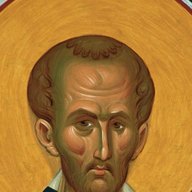
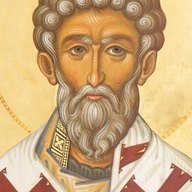
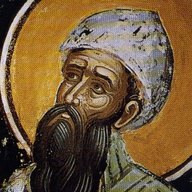
St. John ChrysostomHomily 87 on John · on John 21:1
Seest thou that He remaineth not with them continually, nor as before? He appeared, for instance, in the evening, and flew away; then after eight days again once, and again flew away; then after these things by the sea, and again with great terror. But what is the, "showed"? From this it is clear that He was not seen…
Blessed AugustineTractate 122 on John · on John 21:1–3
The narrative itself begins in this way: "After these things Jesus showed Himself again to the disciples at the sea of Tiberias; and on this wise showed He (Himself). There were together Simon Peter, and Thomas called Didymus, and Nathanael of Cana in Galilee, and the sons of Zebedee, and two other of His disciples.…
Blessed AugustineTractate 122 on John · on John 21:1–11
But some one will reply, And why did he not find them, when the Lord had promised, saying, "Seek first the kingdom and righteousness of God, and all these things shall be added unto you"? Precisely also in this very way did the Lord fulfill His promise. For who else placed there the fishes that were to be caught, but…
Blessed AugustineTractate 122 on John · on John 21:1–11
This is a great mystery in the great Gospel of John; and to commend it the more forcibly to our attention, the last chapter has been made its place of record. Accordingly, inasmuch as there were seven disciples taking part in that fishing, Peter, and Thomas, and Nathanael, and the two sons of Zebedee, and two others…
Blessed AugustineTractate 122 on John · on John 21:1–11
That, however, is a parable in word, not one embodied in outward action; and just as in the passage before us the Lord indicated by an outward action the kind of character the Church would have in the end of the world, so in the same way, by that other fishing, He indicated its present character. In doing the one at…
Simon Peter saith unto them, I go a fishing. They say unto him, We also go with thee. They went forth, and entered into a ship immediately; and that night they caught nothing.
St. John ChrysostomHomily 87 on John · on John 21:3
Simon, therefore, comes to fish. For since neither was He with them continually, nor was the Spirit yet given, nor they at that time yet entrusted with anything, having nothing to do, they went after their trade.
St. John ChrysostomHomily 87 on John · on John 21:3
Having then nothing to do, they went to their fishing, and this same they did by night, because they were greatly afraid. This Luke also mentions; but this is not the same occasion, but a different one. And the other disciples followed, because they were henceforth bound to one another, and at the same time desired to…
St. John ChrysostomHomily 87 on John · on John 21:4
As they then were laboring and wearied, Jesus presenteth Himself before them, and doth not at once reveal Himself, so that they enter into converse with Him.
St. John ChrysostomHomily 87 on John · on John 21:5
As they then were laboring and wearied, Jesus presenteth Himself before them, and doth not at once reveal Himself, so that they enter into converse with Him. He therefore saith to them, "Have ye any meat?" For a time He speaketh rather after a human manner, as if about to buy somewhat of them. But when they made signs…
St. John ChrysostomHomily 87 on John · on John 21:5–6
For a time He speaketh rather after a human manner, as if about to buy somewhat of them. But when they made signs that they had none, He bade them cast their nets to the right; and on casting they obtained a haul.
And he said unto them, Cast the net on the right side of the ship, and ye shall find. They cast therefore, and now they were not able to draw it for the multitude of fishes.
Blessed AugustineTractate 122 on John · on John 21:6
On that previous occasion Jesus stood not, as here, on the shore, when He gave orders for the taking of the fish, but "entered into one of the ships, which was Simon's, and prayed him that he would thrust out a little from the land; and He sat down therein, and taught the crowds. And when He had left speaking, He said…
St. Cyril of AlexandriaCommentary on John, Book 12 · on John 21:6
Our Lord Jesus Christ once more gladdens His disciples with the enjoyment of the sight of Himself, Whom they so greatly longed to see, and vouchsafes unto them a third visit, in addition to the other two, in order that He might confirm their minds, and render them unchangeably steadfast in faith towards Him. For how…
Therefore that disciple whom Jesus loved saith unto Peter, It is the Lord. Now when Simon Peter heard that it was the Lord, he girt his fisher’s coat unto him, (for he was naked,) and did cast himself into the sea.
St. John ChrysostomHomily 87 on John · on John 21:7
But when they recognized Him, the disciples Peter and John again exhibited the peculiarities of their several tempers. The one was more fervent, the other more lofty; the one more keen, the other more clear-sighted. On this account John first recognized Jesus, Peter first came to Him.
St. John ChrysostomHomily 87 on John · on John 21:7–9
For no ordinary signs were they which had taken place. What were they? First, that so many fish were caught; then, that the net did not break; then, that before they landed, the coals had been found, and fish laid thereon, and bread. For He no longer made things out of matter already subsisting, as, through a certain…
St. Cyril of AlexandriaCommentary on John, Book 12 · on John 21:7
Again, in this passage, the writer of this book calls himself the beloved disciple----and he would seem to have been thus well beloved on account of his great discernment and purity of mind, and the keenness of his mental vision, and a disposition which enabled him readily to grasp the truth. And, in fact, he seized…
St. Cyril of AlexandriaCommentary on John, Book 12 · on John 21:9–10
Then they see a fire of coals, for the Saviour had kindled a fire miraculously, and put a fish upon it that He had caught by His ineffable power; and this too He had done of design. For it was not the hand of the holy Apostles, or the preaching of these spiritual fishermen among men, but the power of the Saviour that…
Simon Peter went up, and drew the net to land full of great fishes, an hundred and fifty and three: and for all there were so many, yet was not the net broken.
Blessed AugustineTractate 122 on John · on John 21:11
For if we determine on the number that should indicate the law, what else can it be but ten? For we have absolute certainty that the Decalogue of the law, that is, those ten well-known precepts, were first written by the finger of God on two tables of stone. But the law, when it is not aided by grace, maketh…
St. John ChrysostomHomily 87 on John · on John 21:12–13
What then doth Jesus? "Come," He saith, "dine." "And none of them durst ask Him." For they no longer had the same boldness, nor were they so confident, nor did they now approach Him with speech, but with silence and great fear and reverence, sat down giving heed to Him. "For they knew that it was the Lord." And…
Blessed AugustineTractate 123 on John · on John 21:12
When the fishing was over, "Jesus saith unto them, Come [and] dine. And none of those who sat down dared to ask Him, Who art Thou? knowing that it was the Lord." If, then, they knew, what need was there to ask? and if there was no need wherefore is it said, "they dared not," as if there were need, but, from some fear…
St. John ChrysostomHomily 87 on John · on John 21:13
And He biddeth them "to bring of the fish," to show that what they saw was no appearance. But here indeed it saith not that He ate with them, but Luke, in another place, saith that He did; for "He was eating together with them." But the, "how," it is not ours to say; for these things came to pass in too strange a…
Blessed AugustineTractate 123 on John · on John 21:13
"And Jesus cometh, and taketh bread, and giveth them, and fish likewise." We are likewise told here, you see, on what they dined; and of this dinner we also will say something that is sweet and salutary, if we, too, are made by Him to partake of the food. At the Lord's command they likewise brought of the fishes which…
St. John ChrysostomHomily 87 on John · on John 21:14
For here He no more looketh to heaven, nor performeth those human acts, showing that those also which He did were done by way of condescension. And to show that He remained not with them continually, nor in like manner as before, It saith that, "This was the third time that Jesus appeared to them, after that He arose…
Blessed AugustineTractate 123 on John · on John 21:14
"This was now," he says, "the third time that Jesus showed Himself to His disciples after that He was risen from the dead." And this we are to refer not to the manifestations themselves, but to the days; that is to say, taking the first day when He rose again, and the [second] eight days after, when the disciple…
So when they had dined, Jesus saith to Simon Peter, Simon, son of Jonas, lovest thou me more than these? He saith unto him, Yea, Lord; thou knowest that I love thee. He saith unto him, Feed my lambs.
St. John ChrysostomHomily 88 on John · on John 21:15
There are indeed many other things which are able to give us boldness towards God, and to show us bright and approved, but that which most of all brings good will from on high, is tender care for our neighbor. Which therefore Christ requireth of Peter. And why, having passed by the others, doth He speak with Peter on…
St. John ChrysostomHomily 88 on John · on John 21:15–17
There are indeed many other things which are able to give us boldness towards God, and to show us bright and approved, but that which most of all brings good will from on high, is tender care for our neighbor. Which therefore Christ requireth of Peter.
Blessed AugustineTractate 123 on John · on John 21:15–17
"So when they had dined, He saith to Simon Peter, Simon, [son] of John, lovest thou me more than these? He saith unto Him, Yea, Lord; Thou knowest that I love Thee. He saith unto him, Feed my lambs." To the threefold denial there is now appended a threefold confession, that his tongue may not yield a feebler service…
Blessed AugustineTractate 123 on John · on John 21:15–17
We have it also demonstrated here that love and liking are one and the same thing; for the Lord also in the last question said not Diligis me? but, Amas me? Let us, then, love not ourselves, but Him; and in feeding His sheep, let us be seeking the things which are His, not the things which are our own. For in some…
St. Cyril of AlexandriaCommentary on John, Book 12 · on John 21:15
Peter started to reach Jesus before the rest, disdaining, as it appears, to go by boat, because of the incomparable fervour and admirable zeal of his love towards Christ. Therefore He comes first to land, and draws up the net; for he was always an impressionable man, easily excited to enthusiasm both in speech and…
He saith to him again the second time, Simon, son of Jonas, lovest thou me? He saith unto him, Yea, Lord; thou knowest that I love thee. He saith unto him, Feed my sheep.
St. John ChrysostomHomily 88 on John · on John 21:16–17
When then having been asked once and again, he called Him to witness who knoweth the secrets of the heart, and then was asked even a third time, he was troubled, fearing a repetition of what had happened before, (for then, having been strong in assertion, he was afterwards convicted,) and therefore he again betaketh…
He saith unto him the third time, Simon, son of Jonas, lovest thou me? Peter was grieved because he said unto him the third time, Lovest thou me? And he said unto him, Lord, thou knowest all things; thou knowest that I love thee. Jesus saith unto him, Feed my sheep.
St. Cyril of AlexandriaCommentary on John, Book 12 · on John 21:17
Herein, also, is a type given to the Churches, that they ought thrice to ask for a confession of Christ from those who have chosen to love Him by coming to Him in Holy Baptism. And, by dwelling on this passage, instructors in religion may arrive at the knowledge that they cannot please the Chief Shepherd, that is…
Verily, verily, I say unto thee, When thou wast young, thou girdedst thyself, and walkedst whither thou wouldest: but when thou shalt be old, thou shalt stretch forth thy hands, and another shall gird thee, and carry thee whither thou wouldest not.
St. John ChrysostomHomily 88 on John · on John 21:18–19
And having spoken to him concerning the love towards Himself, He foretelleth to him the martyrdom which he should undergo, showing that He said not to Him what he said as distrusting, but as greatly trusting him; wishing besides to point out a proof of love towards Him, and to instruct us in what manner especially we…
St. John ChrysostomHomily 88 on John · on John 21:18–19
And yet this he did will, and desired; on which account also He hath revealed it to him. For since Peter had continually said, "I will lay down my life for Thee", and, "Though I should die with Thee, yet will I not deny Thee": He hath given him back his desire. What then is the, "Whither thou willest not"? He speaketh…
St. John ChrysostomHomily 88 on John · on John 21:18–19
But how after having said, "When thou wast young," doth He again say, "When thou art old"? For this is the expression of one declaring that he was not then young; (nor was he; nor yet old, but a man of middle age.) Wherefore then did He recall to his memory his former life? Signifying, that this is the nature of what…
St. John ChrysostomHomily 88 on John · on John 21:18–19
Then the Evangelist, to rouse the hearer, has added, "This spake He, signifying by what death he should glorify God." He said not, "Should die," but, "Should glorify God," that thou mayest learn, that to suffer for Christ, is glory and honor to the sufferer.
St. John ChrysostomHomily 88 on John · on John 21:18–19
"And when He had spoken this, He saith, Follow Me." Here again He alludeth to his tender carefulness, and to his being very closely attached to Himself. And if any should say, "How then did James receive the chair at Jerusalem?" I would make this reply, that He appointed Peter teacher, not of the chair, but of the…
Blessed AugustineTractate 123 on John · on John 21:18–19
Such was the end reached by that denier and lover; elated by his presumption, prostrated by his denial, cleansed by his weeping, approved by his confession, crowned by his suffering, this was the end he reached, to die with a perfected love for the name of Him with whom, by a perverted forwardness, he had promised to…
Blessed AugustineTractate 123 on John · on John 21:18–19
"Verily, verily, I say unto thee, When thou wast young thou girdedst thyself, and walkedst whither thou wouldest: but when thou shall be old, thou shalt stretch forth thy hands, and another shall gird thee, and carry thee whither thou wilt not. And this spake He, signifying by what death he should glorify God." "Thou…
Blessed AugustineTractate 123 on John · on John 21:18–19
For our consolation the Saviour Himself transfigured also the same feeling in His own person when He said, "Father, if it be possible, let this cup pass from me;" and He certainly had come to die without having any necessity, but only the willingness to die, with power to lay down His life, and with power to take it…
St. Cyril of AlexandriaCommentary on John, Book 12 · on John 21:18
With great kindness and tenderness our Lord Jesus Christ testifies to the fervour of the love which His disciple bore unto Him, and the high honour of his piety and endurance, tried to the uttermost. For He tells him clearly what would be the issue of his apostleship, and what would be the end of his life. For He…
Blessed AugustineTractate 124 on John · on John 21:19
Why is it said to Peter, "Follow me," and not to the others who were likewise present? Surely the disciples followed Him also as their Master. But if it is to be understood only in reference to his suffering, was Peter the only one that suffered for the truth of Christianity? Was there not present there amongst those…
Blessed AugustineTractate 124 on John · on John 21:19–22
It is no unimportant question why the Lord, when He manifested Himself for the third time to the disciples, said unto the Apostle Peter, "Follow me;" but of the Apostle John, "Thus I wish him to remain till I come, what is that to thee?" When the Lord, then, had announced beforehand to Peter by what death he was to…
Blessed AugustineTractate 124 on John · on John 21:19–22
There are two states of life, therefore, preached and commended to herself from heaven, that are known to the Church, whereof the one is in faith, the other in sight; one in the temporal sojourn in a foreign land, the other in the eternity of the [heavenly] abode; one in labor, the other in repose; one on the way, the…
Blessed AugustineTractate 124 on John · on John 21:19–22
The whole of the one is passed here to the end of this world, and there finds its termination, the other is deferred for its completion till after the end of this world, but has no end in the world to come. Hence it is said to the latter, "Follow me;" but of the former, "Thus I will that he tarry till I come, what is…
Blessed AugustineTractate 124 on John · on John 21:19–22
Let no one, however, separate these distinguished apostles. In that which was signified by Peter, they were both alike; and in that which was signified by John, they will both be alike hereafter. In their representative character, the one was following, the other tarrying; but in their personal faith they were both of…
Then Peter, turning about, seeth the disciple whom Jesus loved following; which also leaned on his breast at supper, and said, Lord, which is he that betrayeth thee?
St. John ChrysostomHomily 88 on John · on John 21:20
Wherefore hath he reminded us of that reclining? Not without cause or in a chance way, but to show us what boldness Peter had after the denial. For he who then did not dare to question Jesus, but committed the office to another, was even entrusted with the chief authority over the brethren, and not only doth not…
Blessed AugustineTractate 124 on John · on John 21:20
There are some who have entertained the idea-and those, too, who are no contemptible handlers of sacred eloquence-that the Apostle John was more loved by Christ on the ground that he never married a wife, and lived in perfect chastity from early boyhood. There is, indeed, no distinct evidence of this in the canonical…
St. John ChrysostomHomily 88 on John · on John 21:21–22
Wherefore hath he reminded us of that reclining? Not without cause or in a chance way, but to show us what boldness Peter had after the denial. For he who then did not dare to question Jesus, but committed the office to another, was even entrusted with the chief authority over the brethren, and not only doth not…
St. John ChrysostomHomily 88 on John · on John 21:22
Since he spake from strong affection, and wishing not to be torn away from him, Christ, to show that however much he might love, he could not go beyond His love, saith, "If I will that he tarry - what is that to thee?" By these words teaching us not to be impatient, nor curious beyond what seemeth good to Him. For…
Blessed AugustineTractate 124 on John · on John 21:22–23
"Then went this saying abroad among the brethren, that that disciple dieth not: yet Jesus said not unto him, He dieth not; but, Thus do I wish him to remain till I come, what is that to thee?" You see the great extent in this Gospel of a question which, by its depth, must exercise in no ordinary way the mind of the…
St. Cyril of AlexandriaCommentary on John, Book 12 · on John 21:22
The inspired Evangelist points to himself obscurely, but still sufficiently to indicate who is meant. For he it was who was the beloved disciple, and who leaned upon Christ's Breast at the last Supper, and asked who it was that should betray Him. Peter, then, observing him, longed for information, and sought to know…
Then went this saying abroad among the brethren, that that disciple should not die: yet Jesus said not unto him, He shall not die; but, If I will that he tarry till I come, what is that to thee?
St. John ChrysostomHomily 88 on John · on John 21:23
"Then went this saying abroad among the brethren, that that disciple should not die; yet Jesus said not that he shall not die; but, If I will that he tarry till I come, what is that to thee?" "Do not thou on any account suppose," He saith, "that I order your matters after a single rule." And this He did to withdraw…
St. John ChrysostomHomily 88 on John · on John 21:23
And observe, I pray thee, here also the absence of pride in the Evangelist; for having mentioned the opinion of the disciples, he corrects it, as though they had not comprehended what Jesus meant. "Jesus said not," he tells us, "that he shall not die, but, If I will that he tarry."
St. John ChrysostomHomily 88 on John · on John 21:24
"This is the disciple which testifieth of these things, and wrote these things, and we know that his testimony is true." Why is it, that then, when none of the others do so, he alone uses these words, and that for the second time, witnessing to himself? for it seems to be offensive to the hearers. What then is the…
St. John ChrysostomHomily 88 on John · on John 21:24
"Whence it is clear that I could not have written to court favor; for I who, when the miracles were so many, have not even related so many as the others have, but omitting most of them, have brought forward the plots of the Jews, the stonings, the hatred, the insults, the revilings, and have shown how they called Him…
St. Cyril of AlexandriaCommentary on John, Book 12 · on John 21:24
I think no wise man will doubt that the Lord would not have loved John if he had not been specially remarkable for virtue, and apt and perfectly equipped for every good work. For God can never be found to be inclined by any irrational leanings to those unworthy of His love, for such affections are more worthy of men.…
And there are also many other things which Jesus did, the which, if they should be written every one, I suppose that even the world itself could not contain the books that should be written. Amen.
St. John ChrysostomHomily 88 on John · on John 21:25
"There are also many other things which Jesus did, the which, if they should be written every one, I suppose that even the world itself could not contain the books that should be written." "Whence it is clear that I could not have written to court favor; for I who, when the miracles were so many, have not even related…
St. John ChrysostomHomily 88 on John · on John 21:25
And besides, he was present at all, and did not desert Him even when being crucified, and had His mother entrusted to him; all which things are signs of his love for Him, and of his knowing all things exactly. And if he has said that so many miracles had taken place, marvel thou not, but, considering the ineffable…
Blessed AugustineTractate 124 on John · on John 21:25
"This is the disciple who testifieth of these things, and wrote these things; and we know that his testimony is true. And there are also," he adds, "many other things which Jesus did, the which, if they should be written every one, I suppose that even the world itself could not contain the books that should be…
St. Cyril of AlexandriaCommentary on John, Book 12 · on John 21:25
Very great, then, says the Apostle, will the number of the miracles that God hath wrought, and altogether without number will the list of His deeds be seen to be, and out of many thousands have these that are recorded been taken, as not being inadequate to profit to the uttermost those who read them. And let no one…
Every note is a real passage, quoted word for word from a published English translation, with its source. Nothing here is summarised or written by us. Some verses have many notes and some have none, because the Fathers wrote more on some passages than others.
St. John Chrysostom, Homilies on the Gospel of John, Nicene and Post-Nicene Fathers, series 1, vol. 14 (1888–1889).
Blessed Augustine, Tractates on the Gospel of John, tr. John Gibb and James Innes, Nicene and Post-Nicene Fathers, series 1, vol. 7 (1888).
St. Cyril of Alexandria, Commentary on the Gospel according to S. John, tr. P. E. Pusey and T. Randell, Library of the Fathers (1874–1885).
Scripture: the King James Version (1611); the Greek (tap Ελ) is the 1904 Patriarchal text of the Ecumenical Patriarchate.
St. Cyril's Books 7 and 8 on John survive only in fragments.
All of these translations are in the public domain. The passages were matched to their verses by the Historical Christian Commentaries project, which also hosts the full texts we link to. The Fathers are a treasury of the Church's mind, and they are best read alongside the life of the Church: if a passage raises a question, bring it to your priest.