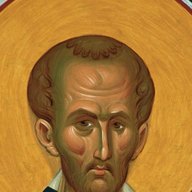
St. John ChrysostomHomily 39 on Matthew · on Matthew 12:1
"At that time Jesus went on the Sabbath day through the corn; and His disciples were a hungered, and began to pluck the ears of corn, and to eat." But Luke saith, "On a double Sabbath." Now what is a double Sabbath? When the cessation from toil is twofold, both that of the regular Sabbath, and that of another feast…
St. John ChrysostomHomily 39 on Matthew · on Matthew 12:2
What then do the Pharisees? "When they saw it," it is said, "they said unto Him, Behold, Thy disciples do that which is not lawful to do upon the Sabbath day." Now here indeed with no great vehemence yet surely that would have been consistent in them)-nevertheless they are not vehemently provoked, but simply find…
St. John ChrysostomHomily 39 on Matthew · on Matthew 12:3–4
How then doth Jesus defend His disciples? "Have ye not read," saith He, "what David did in the temple, when he was an hungered, himself and all they that were with him? how he entered into the house of God, and did eat the show-bread, which was not lawful for him to eat, neither for them which were with him, but only…
How he entered into the house of God, and did eat the shewbread, which was not lawful for him to eat, neither for them which were with him, but only for the priests?
St. John ChrysostomHomily 39 on Matthew · on Matthew 12:5
Afterwards again He refutes it in another way also. For as at first He brought in David, by the dignity of the person quelling their pride; so when He had stopped their mouths, and had put down their boasting, then He adds also the more appropriate refutation. And of what sort is this? "Know ye not, that in the temple…
But I say unto you, That in this place is one greater than the temple.
λέγω δὲ ὑμῖν ὅτι τοῦ ἱεροῦ μεῖζόν ἐστιν ὧδε.
St. John ChrysostomHomily 39 on Matthew · on Matthew 12:6
Wherefore He said also, "But I say unto you, That in this place is one greater than the temple." Nevertheless, great as the sayings were which they heard, they made no reply, for the salvation of men was not their object.
St. John ChrysostomHomily 39 on Matthew · on Matthew 12:7
Then, because to the hearers it would seem harsh, He quickly draws a veil over it, giving His discourse, as before, a lenient turn, yet even so expressing Himself with a rebuke. "But if ye had known what this meaneth, I will have mercy and not sacrifice, ye would not have condemned the guiltless." Seest thou how again…
St. John ChrysostomHomily 39 on Matthew · on Matthew 12:8
After this He mentions another reason likewise; "For the Son of man," saith He, "is Lord of the Sabbath day;" speaking it of Himself. But Mark relates Him to have said this of our common nature also; for He said, "The Sabbath was made for man, not man for the Sabbath." Wherefore then was he punished that was gathering…
St. John ChrysostomHomily 40 on Matthew · on Matthew 12:9–10
Again He heals on a Sabbath day, vindicating what had been done by His disciples. And the other evangelists indeed say, that He "set" the man "in the midst," and asked them, "If it was lawful to do good on the Sabbath days." See the tender bowels of the Lord. "He set him in the midst," that by the sight He might…
And, behold, there was a man which had his hand withered. And they asked him, saying, Is it lawful to heal on the sabbath days? that they might accuse him.
St. John ChrysostomHomily 40 on Matthew · on Matthew 12:10
And while the other evangelists say, He asked the question, this one saith, it was asked of Him. "And they asked Him," so it stands, "saying, Is it lawful to heal on the Sabbath days? that they might accuse Him." And it is likely that both took place. For being unholy wretches, and well assured that He would doubtless…
And he said unto them, What man shall there be among you, that shall have one sheep, and if it fall into a pit on the sabbath day, will he not lay hold on it, and lift it out?
St. John ChrysostomHomily 40 on Matthew · on Matthew 12:11–12
"What man is there among you that shall have one sheep, and if this fall into a pit on the Sabbath days, will he not lay hold of it, and lift it out? How much then is a man better than a sheep? Wherefore it is lawful to do well on the Sabbath days." Thus, lest they have ground of obstinacy, and of accusing him again…
St. John ChrysostomHomily 40 on Matthew · on Matthew 12:13
And yet here He speaks only; whereas elsewhere in many cases He heals by laying on of hands also. But nevertheless none of these things made them meek; rather, while the man was healed, they by his health became worse. For His desire indeed was to cure them before him, and He tried innumerable ways of healing, both by…
St. John ChrysostomHomily 40 on Matthew · on Matthew 12:14
What then did they? They go forth, it is said, and take counsel together to slay Him. For "the Pharisees," saith the Scripture, "went out and held a council against Him, how they might destroy Him." They had received no injury, yet they went about to slay Him. So great an evil is envy. For not against strangers only,…
St. John ChrysostomHomily 40 on Matthew · on Matthew 12:15–16
"But when Jesus knew their devices, He withdrew Himself," it is said, "from them." Where now are they who say, miracles ought to be done? Nay, by these things He signified, that the uncandid soul is not even thereby persuaded; and He made it plain that His disciples too were blamed by them without cause. This however…
St. John ChrysostomHomily 40 on Matthew · on Matthew 12:17
Then, lest thou shouldest be confounded at what is going on, and at their strange frenzy, He introduces the prophet also, foretelling all this. For so great was the accuracy of the prophets, that they omit not even these things, but foretell His very journeyings, and changes of place, and the intent with which He…
Behold my servant, whom I have chosen; my beloved, in whom my soul is well pleased: I will put my spirit upon him, and he shall shew judgment to the Gentiles.
St. John ChrysostomHomily 40 on Matthew · on Matthew 12:18
The prophet celebrates His meekness, and His unspeakable power, and opens to the Gentiles "a great door and effectual;" he foretells also the ills that are to overtake the Jews, and signifies His unanimity with the Father. For "behold," saith He, "my servant, whom I have chosen, my beloved, in whom my soul is well…
St. John ChrysostomHomily 40 on Matthew · on Matthew 12:19
Then proclaiming His meekness, he saith, "He shall not strive nor cry." For His desire indeed was to heal in their presence; but since they thrust Him away, not even against this did He contend.
St. John ChrysostomHomily 40 on Matthew · on Matthew 12:20
And intimating both His might, and their weakness, he saith, "A bruised reed shall He not break." For indeed it was easy to break them all to pieces like a reed, and not a reed merely, but one already bruised. "And smoking flax shall He not quench." Here he sets forth both their anger that is kindled, and His might…
St. John ChrysostomHomily 40 on Matthew · on Matthew 12:21
But not to this will His dispensation be confined, to the punishment of unbelievers only, but He will also win to Himself the whole world. Wherefore He added, "And in His name shall the Gentiles trust." Then, to inform thee that this too is according to the purpose of the Father, in the beginning the prophet had…
St. John ChrysostomHomily 40 on Matthew · on Matthew 12:22
"Then they brought unto Him one possessed with a devil, blind and dumb, and He healed him, insomuch that the blind and dumb both spake and saw." O wickedness of the evil spirit! he had barred up both entrances, whereby that person should have believed, as well sight as hearing; nevertheless, both did Christ open.
St. John ChrysostomHomily 40 on Matthew · on Matthew 12:23–24
"And all the people were amazed, saying, Is not this the Son of David? But the Pharisees said, This fellow doth not cast out devils, but by Beelzebub, the prince of the devils." And yet what great thing had been said? Nevertheless, not even this did they endure: to such a degree, as I have already remarked, are they…
And Jesus knew their thoughts, and said unto them, Every kingdom divided against itself is brought to desolation; and every city or house divided against itself shall not stand:
St. John ChrysostomHomily 41 on Matthew · on Matthew 12:25–26
Even before now they had accused Him of this, that "by Beelzebub He casteth out the devils." But whereas then He did not rebuke them, allowing them both to know His power by His more numerous miracles, and by His teaching to learn His majesty: now, since they continued saying the same, He proceeds also to rebuke them,…
St. John ChrysostomHomily 41 on Matthew · on Matthew 12:27–28
This then being the first refutation, the next after it is that which relates to the disciples. For not always in one way only, but also in a second and third, He solves their objections, being minded most abundantly to silence their shamelessness. Which sort of thing He did also with respect to the Sabbath, bringing…
St. John ChrysostomHomily 41 on Matthew · on Matthew 12:29
Having then uttered His second refutation, He adds also a third, thus saying: "How can one enter into the strong man's house, and spoil his goods, except he first bind the strong man, and then spoil his goods?" For that Satan cannot possibly cast out Satan is evident from what hath been said; but that neither in any…
St. John ChrysostomHomily 41 on Matthew · on Matthew 12:30
"He that is not with me is against me, and he that gathereth not with me scattereth abroad." Behold also a fourth refutation. For what is my desire? saith He. To bring men to God, to teach virtue, to proclaim the kingdom. What, that of the devil, and the evil spirits? The contrary to these. How then should he that…
Wherefore I say unto you, All manner of sin and blasphemy shall be forgiven unto men: but the blasphemy against the Holy Ghost shall not be forgiven unto men.
St. John ChrysostomHomily 41 on Matthew · on Matthew 12:31–32
Thus having defended Himself, and refuted their objection, and proved the vanity of their shameless dealings, He proceeds to alarm them. For this too is no small part of advice and correction, not only to plead and persuade, but to threaten also; which He doth in many passages, when making laws and giving counsel. And…
And whosoever speaketh a word against the Son of man, it shall be forgiven him: but whosoever speaketh against the Holy Ghost, it shall not be forgiven him, neither in this world, neither in the world to come.
St. John ChrysostomHomily 42 on Matthew · on Matthew 12:33
Again in another way He shames them, and is not content with His former refutations. But this He doth, not freeing Himself from accusations, (for what went before was quite enough), but as wishing to amend them. Now His meaning is like this: none of you hath either found fault about the persons healed, as not being…
St. John ChrysostomHomily 42 on Matthew · on Matthew 12:34
Then since He is arguing not for Himself, but for the Spirit, He hath dealt out His reproof even as a torrent, saying, "O generation of vipers, how can ye, being evil, speak good things?" Now this is at once to accuse, and to give demonstration of His own sayings from their case. For behold, saith He, ye being evil…
St. John ChrysostomHomily 42 on Matthew · on Matthew 12:35
"A good man out of his good treasure," saith He, "bringeth forth good things, and an evil man out of his evil treasure bringeth forth evil things." For think not by any means, saith He, that it is so in respect of wickedness only, for in goodness also the same occurs: for there too the virtue within is more than the…
St. John ChrysostomHomily 42 on Matthew · on Matthew 12:36
Then again He fences them in with great terror. For think not at all, saith He, that the thing stops at this, that is, at the condemnation of the multitude; nay, for all that do wickedly in such things shall suffer the utmost punishment. And He said not, "ye," partly in order to instruct our whole race, partly to make…
St. John ChrysostomHomily 42 on Matthew · on Matthew 12:36–37
Then again He fences them in with great terror. For think not at all, saith He, that the thing stops at this, that is, at the condemnation of the multitude; nay, for all that do wickedly in such things shall suffer the utmost punishment. And He said not, "ye," partly in order to instruct our whole race, partly to make…
St. John ChrysostomHomily 42 on Matthew · on Matthew 12:37
"For by thy words thou shall be justified, and by thy words thou shall be condemned." Seest thou how far the tribunal is from invidiousness? how favorable the account required? For not upon what another hath said of thee, but from what thou hast thyself spoken, will the Judge give His sentence; which is of all things…
St. John ChrysostomHomily 43 on Matthew · on Matthew 12:38
Could then anything be more foolish than these men (not more impious only), who after so many miracles, as though none had been wrought, say, "We would see a sign from Thee?" With what intent then did they so speak? That they might lay hold of Him again. For since by His words He had stopped their mouths, once and…
But he answered and said unto them, An evil and adulterous generation seeketh after a sign; and there shall no sign be given to it, but the sign of the prophet Jonas:
St. John ChrysostomHomily 43 on Matthew · on Matthew 12:39
Wherefore also He rebukes them severely. And when they were questioning Him roughly and insulting Him, He reasoned with them gently; when they were flattering; reproachfully, and with great severity; implying that He is superior to either passion, and is neither at the one time moved to anger, nor at the other…
St. John ChrysostomHomily 88 on Matthew · on Matthew 12:39
This is the sign which before He had promised to give them when they asked it, saying, "An evil and adulterous generation seeketh after a sign, and there shall no sign be given to it, but the sign of the prophet Jonas;" meaning His cross, and His death, His burial, and His resurrection. And again, declaring in another…
St. John ChrysostomHomily 43 on Matthew · on Matthew 12:40
"For as Jonas," saith He, "was three days and three nights in the whale's belly, so shall the Son of Man be three days and three nights in the heart of the earth." Thus, He said not indeed openly that He should rise again, since they would have even laughed Him to scorn, but He intimated it in such manner, that they…
The men of Nineveh shall rise in judgment with this generation, and shall condemn it: because they repented at the preaching of Jonas; and, behold, a greater than Jonas is here.
St. John ChrysostomHomily 43 on Matthew · on Matthew 12:41
For what saith He? "The men of Nineveh shall rise up, and shall condemn this generation, because they repented at the preaching of Jonas, and, behold, a greater than Jonas is here." For he was a servant, but I am the Master; and he came forth from the whale, but I rose from death; and he proclaimed destruction, but I…
St. John ChrysostomHomily 43 on Matthew · on Matthew 12:41–42
For to hinder thy supposing that the result would be such with the Jews as with the Ninevites; that they would be converted, and that as in their case He established the tottering city, and converted the barbarians, so these too should turn unto Him after His resurrection; hear how He declares altogether the contrary.…
The queen of the south shall rise up in the judgment with this generation, and shall condemn it: for she came from the uttermost parts of the earth to hear the wisdom of Solomon; and, behold, a greater than Solomon is here.
St. John ChrysostomHomily 43 on Matthew · on Matthew 12:42
But He stops not even at this, but adds also another example, saying, "And the queen of the south shall rise up in judgment with this generation, and shall condemn them, because she came from the uttermost parts of the earth to hear the wisdom of Solomon, and behold a greater than Solomon is here." This was more than…
St. John ChrysostomHomily 43 on Matthew · on Matthew 12:43–45
When therefore He had condemned them, having proved most amply that they were sinning inexcusably, and that their disobedience arose from their own perverseness not from their Teacher's inability, and when He had demonstrated this as well by many other arguments, as also by the Ninevites, and by the queen: then He…
Then goeth he, and taketh with himself seven other spirits more wicked than himself, and they enter in and dwell there: and the last state of that man is worse than the first. Even so shall it be also unto this wicked generation.
St. John ChrysostomHomily 44 on Matthew · on Matthew 12:46–50
That which I was lately saying, that when virtue is wanting all things are vain, this is now also pointed out very abundantly. For I indeed was saying, that age and nature, and to dwell in the wilderness, and all such things, are alike unprofitable, where there is not a good mind; but to-day we learn in addition…
St. John ChrysostomHomily 44 on Matthew · on Matthew 12:50
Knowing therefore these things, let us neither pride ourselves on children that are of good report, unless we have their virtue; nor upon noble fathers, unless we be like them in disposition. For it is possible, both that he who begat a man should not be his father, and that he who did not beget him should be.…
Every note is a real passage, quoted word for word from a published English translation, with its source. Nothing here is summarised or written by us. Some verses have many notes and some have none, because the Fathers wrote more on some passages than others.
St. John Chrysostom, Homilies on the Gospel of Matthew, Nicene and Post-Nicene Fathers, series 1, vol. 10 (1888–1889).
Scripture: the King James Version (1611); the Greek (tap Ελ) is the 1904 Patriarchal text of the Ecumenical Patriarchate.
All of these translations are in the public domain. The passages were matched to their verses by the Historical Christian Commentaries project, which also hosts the full texts we link to. The Fathers are a treasury of the Church's mind, and they are best read alongside the life of the Church: if a passage raises a question, bring it to your priest.