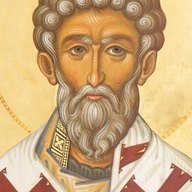
Blessed AugustineExposition on Psalm 101 · on Psalm 101:2–3
"Hear my prayer, O Lord: and let my crying come unto You". "Hear my prayer, O Lord," is the same as, "Let my crying come unto You:" the feeling of the suppliant is shown by the repetition. "Turn not Your face away from me." When did God turn away His Face from His Son? When did the Father turn away His Face from…
Blessed AugustineExposition on Psalm 101 · on Psalm 101:4
"For my days are consumed away like smoke" (ver. 3). O days! if days: for where day is heard of, light is understood. "My days," my times; wherefore, "like smoke," unless from the puffing up of pride? ...See smoke, like pride, ascending, swelling, vanishing: deservedly therefore failing, and not stedfast. "And my…
Blessed AugustineExposition on Psalm 101 · on Psalm 101:5
Look back to Adam, whence the human race sprung. For how but from him was misery propagated? whence but from him is this hereditary poverty? Let him then, who in his own body was at one time in despair, now that he is set in Christ's body, say with hope, "My heart is smitten down, and withered like grass" (ver. 4).…
Blessed AugustineExposition on Psalm 101 · on Psalm 101:6
"For the voice of my groaning, the bones cleave unto my flesh" (ver. 5). For many groan, and I also groan; even for this I groan, because they groan for a wrong cause. That man hath lost a piece of money, he groaneth: he hath lost faith, he groaneth not: I weigh the money and the faith, and I find more cause for…
Blessed AugustineExposition on Psalm 101 · on Psalm 101:7
"I have become like a pelican in the wilderness, and like an owl among ruined walls". Behold three birds and three places: the pelican, the owl, and the sparrow; and the three places are severally, the wilderness, the ruined walls, and the house-top. The pelican in the wilderness, the owl in the ruined walls, and the…
Blessed AugustineExposition on Psalm 101 · on Psalm 101:8
"And that because of your indignation and wrath: because you have taken me up, you have cast me down". This is your wrath, O Lord, in Adam: that wrath in which we were all born, which cleaves unto us by our birth; the wrath from the stock of iniquity, the wrath from the mass of sin: according to what the Apostle says,…
Blessed AugustineExposition on Psalm 101 · on Psalm 101:8
"My days have declined like a shadow"....He had said above, "My days are consumed away like smoke;" and he now says, "My days have declined like a shadow." In this shadow, day must be recognised; in this shadow, light must be discerned; lest afterward it be said in late and fruitless repentance, "What has pride…
Blessed AugustineExposition on Psalm 101 · on Psalm 101:8
For not because I have fallen, have You grown old: for You are strong to set me free, who hast been strong to humble me. "But You, O Lord, endurest for ever: and Your remembrance throughout all generations". "Your remembrance," because Thou dost not forget: "throughout all generations," forasmuch as we know the…
Blessed AugustineExposition on Psalm 101 · on Psalm 101:8
"Thou shalt arise, and have mercy upon Sion: for it is time that Thou have mercy upon her". What time? "But when the fulness of time was come, God sent forth His Son, made of a woman, made under the Law." And where is Sion? "To redeem them that were under the Law." First then were the Jews: for thence were the…
Blessed AugustineExposition on Psalm 101 · on Psalm 101:8
Here therefore what says he? "For your servants take pleasure in her stones". In whose stones? In the stones of Sion? But there are those there that are not stones. Not stones of what? What then follows? "and pity the dust thereof." I understand by the stones of Sion all the Prophets: there was the voice of preaching…
Blessed AugustineExposition on Psalm 101 · on Psalm 101:8
"The heathen shall fear Your Name, O Lord; and all the kings of the earth Your Majesty". Now that You have pitied Sion, now that Your servants have taken pleasure in her stones, by acknowledging the foundation of the Apostles and Prophets; now that they have pitied her dust; so that man is formed, or rather re-formed,…
Blessed AugustineExposition on Psalm 101 · on Psalm 101:8
"For the Lord shall build up Sion". This work is going on now. O you living stones, run to the work of building, not to ruin. Sion is in building, beware of the ruined walls: the tower is building, the ark is in building; remember the deluge. This work is in progress now; but when Sion is built, what will happen? "And…
Blessed AugustineExposition on Psalm 101 · on Psalm 101:8
"He has turned Him unto the prayer of the poor destitute, and despised not their desire". This is going on now in the building of Sion: the builders of Sion pray, they groan: He is the one poor, because the poor are many; because the thousands among so many nations are one in Him, because He is the unity of the peace…
Blessed AugustineExposition on Psalm 101 · on Psalm 101:8
"Let these things be written for those that come after". When these words were written, they profited not so much those among whom they were written for they were written to prophesy the New Testament, among men who lived according to the Old Testament. But God had both given that Old Testament, and had settled in…
Blessed AugustineExposition on Psalm 101 · on Psalm 101:8
"Out of the heaven did the Lord look down upon the earth": "that He might hear the mournings of such as are in fetters, and deliver the children of such as are put to death". We have found it said in another Psalm, "O let the sorrowful sighs of the fettered come before You;" and in a passage where the voice of the…
Blessed AugustineExposition on Psalm 101 · on Psalm 101:8
"That the name of the Lord may be declared in Sion". For at first, when the fettered were appointed unto death, the Church was oppressed: since these tribulations the Name of the Lord has been declared in Sion, with great freedom, in the Church herself. For she is Sion: not that one spot, at first proud, afterwards…
Blessed AugustineExposition on Psalm 101 · on Psalm 101:8
And how is it declared? "In the nations gathering together in one, and the kingdoms, that they may serve the Lord". How is this accomplished, unless by the blood of the slain? How accomplished, but by the groans of the fettered? Those therefore who were in tribulation and humility have been heard; that in our times…
Blessed AugustineExposition on Psalm 101 · on Psalm 101:8
"She answered Him in the way of His strength"....The preceding words show, that either "His praise," or "Jerusalem," answered: for it was said, "And His praise in Jerusalem; in the nations gathering together in one, and the kingdoms, that they may serve the Lord. Respondit ei." We cannot say, "the kingdoms answered,"…
Blessed AugustineExposition on Psalm 101 · on Psalm 101:8
Let not therefore heretics flatter themselves against me, because I said, "the shortness of my days," as if they would not last down to the end of the world. For what has he added? "O my God, take me not away in the midst of my days". Deal Thou not with me according as heretics speak. Lead me on unto the end of the…
Blessed AugustineExposition on Psalm 101 · on Psalm 101:8
"You, Lord, in the beginning hast laid the foundation of the earth: and the Heavens are the work of Your hands"....God laid the foundation of the earth, we know: the heavens are the works of His hands. For do not imagine that God does one thing with His hand, another by His word. What He does by His word, He does by…
Blessed AugustineExposition on Psalm 101 · on Psalm 101:8
"They shall perish, but Thou shalt endure". The Apostle Peter saith this openly: "By the word of God the heavens were of old," etc. He hath said then that the heavens have already perished by the flood: and we know that the heavens perished as far as the extent of this atmosphere of ours. For the water increased, and…
Blessed AugustineExposition on Psalm 101 · on Psalm 101:8
Perhaps by the heavens we here may understand, without being far-fetched, the righteous themselves, the saints of God, abiding in whom God has thundered in His commandments, lightened in His miracles, watered the earth with the wisdom of truth, for "The heavens have declared the glory of God." But shall they perish?…
Blessed AugustineExposition on Psalm 101 · on Psalm 101:8
"The children of Thy servants shall dwell there: and their seed shall stand fast for ages" (ver. 28): for the age of ages, the age of eternity, the age that abideth. But, "the children," he saith, "of Thy servants:" is it to be feared lest we be the servants of God, and our children, and not ourselves, dwell there? Or…
Blessed AugustineExposition on Psalm 101 · on Psalm 101:8
...Let us not pass over what is said, or even read, of this bird, that is, the pelican; not rashly asserting anything, but yet not passing over what has been left to be read and uttered by those who have written it. Do ye so hear, that if it be true, it may agree; if false, it may not hold. These birds are said to…
Blessed AugustineExposition on Psalm 101 · on Psalm 101:8
"Mine enemies revile me all day, and they that praised me are sworn together against me". With their mouth they praised, in their heart they were laying snares for me. Hear their praise: "Master, we know that You are true, and teachest the way of God in truth, neither carest Thou for any man. Is it lawful to give…
Blessed AugustineExposition on Psalm 101 · on Psalm 101:8
"I have eaten ashes as it were bread: and mingled my drink with weeping" (ver. 9). Because He chose to have among His members these kinds of men, that they should be healed and set free, thence is the evil repute. Now at this day what is the character of Pagan calumny against us? what, brethren, do ye conceive they…
Every note is a real passage, quoted word for word from a published English translation, with its source. Nothing here is summarised or written by us. Some verses have many notes and some have none, because the Fathers wrote more on some passages than others.
Blessed Augustine, Expositions on the Book of Psalms, tr. A. Cleveland Coxe from the Oxford translation, Nicene and Post-Nicene Fathers, series 1, vol. 8 (1888).
Scripture: the Septuagint, in the translation of Sir Lancelot Brenton (1851), with spelling updated by Adam Boyd (2020); the Greek is Brenton's Septuagint text.
All of these translations are in the public domain. The passages were matched to their verses by the Historical Christian Commentaries project, which also hosts the full texts we link to. The Fathers are a treasury of the Church's mind, and they are best read alongside the life of the Church: if a passage raises a question, bring it to your priest.