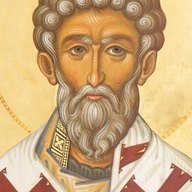
Blessed AugustineExposition on Psalm 111 · on Psalm 111:1
"Blessed is the man that feareth the Lord: he will have great delight in His commandments". God, who alone judgeth both truthfully and mercifully, will see how far he obeyeth His commandments: since "the life of man on earth is a temptation," as holy Job saith. But "He who judgeth us is the Lord." ...He therefore will…
Blessed AugustineExposition on Psalm 111 · on Psalm 111:2
Next follows, "His seed shall be mighty upon earth" (ver. 2). The Apostle witnesseth, that the works of mercy are the seed of the future harvest, when he saith, "Let us not be weary in well doing, for in due season we shall reap;" and again, "But this I say, He which soweth sparingly, shall reap also sparingly." But…
Blessed AugustineExposition on Psalm 111 · on Psalm 111:3
"Glory and riches shall be in his house". For his house is his heart; where, with the praise of God, he lives in greater riches with the hope of eternal life, than with men flattering, in palaces of marble, with splendidly adorned ceilings, with the fear of everlasting death. "For his righteousness endures for ever:"…
Blessed AugustineExposition on Psalm 111 · on Psalm 111:4
"Unto the right-hearted there arises up light in the darkness". Justly do the godly direct their heart unto their God, justly do they walk with their God, preferring His will to themselves; and having no proud presumption in their own. For they remember that they were some time in darkness, but are now light in the…
Blessed AugustineExposition on Psalm 111 · on Psalm 111:5
Be thou sweet, be merciful and lend. For the Lord is just in this manner, that He judges without mercy him who has not shown mercy; [James 2:13] but, "Sweet is the man who is merciful and lends": God will not spew him out of His mouth as if he were not sweet. "Forgive," He says, "and you shall be forgiven; give, and…
Blessed AugustineExposition on Psalm 111 · on Psalm 111:6
He therefore who doth these things, "shall guide his words with discretion." His deeds themselves are the words whereby he shall be defended at the Judgment; which shall not be without mercy unto him, since he hath himself shown mercy. "For he shall never be moved" (ver. 6): he who, called to the right hand, shall…
Blessed AugustineExposition on Psalm 111 · on Psalm 111:7
"He will not be afraid of any evil hearing; for his heart stands fast and believes in the Lord". Such as the words which he will hear addressed to those on the left hand, "Depart into everlasting fire, prepared for the devil and his angels." [Matthew 25:34, 41] He therefore who seeks here not his own things, but those…
Blessed AugustineExposition on Psalm 111 · on Psalm 111:8
"His heart is established, and will not shrink, until he see beyond his enemies". His enemies wished to see good things here, and when invisible blessings were promised them, used to say, "Who will show us any good?" Let our heart therefore be established, and shrink not, until we see beyond our enemies. For they wish…
Blessed AugustineExposition on Psalm 111 · on Psalm 111:9
But it is a great thing to have the heart established, and not to be moved, while they rejoice who love what they see, and mock at him who hopeth for what he seeth not; "what the Lord hath prepared for them that love Him." How great is the value of this which is not seen, and it is bought for so much as each man is…
Blessed AugustineExposition on Psalm 111 · on Psalm 111:10
"The ungodly shall see it, and he shall be angered": this is that late and fruitless repentance. For with whom rather than himself is he "angered," when he shall say, "Our pride, what has it profited us? The boastfulness of our riches, what has it given us? [Wisdom 5:8] " seeing the horn of him exalted with honour,…
Every note is a real passage, quoted word for word from a published English translation, with its source. Nothing here is summarised or written by us. Some verses have many notes and some have none, because the Fathers wrote more on some passages than others.
Blessed Augustine, Expositions on the Book of Psalms, tr. A. Cleveland Coxe from the Oxford translation, Nicene and Post-Nicene Fathers, series 1, vol. 8 (1888).
Scripture: the Septuagint, in the translation of Sir Lancelot Brenton (1851), with spelling updated by Adam Boyd (2020); the Greek is Brenton's Septuagint text.
All of these translations are in the public domain. The passages were matched to their verses by the Historical Christian Commentaries project, which also hosts the full texts we link to. The Fathers are a treasury of the Church's mind, and they are best read alongside the life of the Church: if a passage raises a question, bring it to your priest.