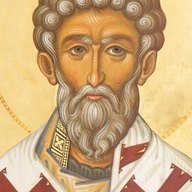
Blessed AugustineExposition on Psalm 121 · on Psalm 121:1
This Psalm is a "Song of degrees;" as we have often said to you, for these degrees are not of descent, but of ascent. He therefore longeth to ascend. And whither doth he wish to ascend, save into heaven? What meaneth, into heaven? Doth he wish to ascend that he may be with the sun, moon, and stars? Far be it! But…
Blessed AugustineExposition on Psalm 121 · on Psalm 121:2
"Our feet were standing in the courts of Jerusalem" (ver. 2) ...Consider what thou wilt be there; and although thou art as yet on the road, place this before thine eyes, as if thou wert already standing, as if thou wert already rejoicing without ceasing among the Angels; as if that which is written were realized in…
Blessed AugustineExposition on Psalm 121 · on Psalm 121:3
"Jerusalem that is being built as a city" (ver. 3). Brethren, when David was uttering these words, that city had been finished, it was not being built. It is some city he speaketh of, therefore, which is now being built, unto which living stones run in faith, of whom Peter saith, "Ye also, as lively stones, are built…
Blessed AugustineExposition on Psalm 121 · on Psalm 121:4
"For there the tribes went up". We were asking whither he ascends who has fallen; for we said, it is the voice of a man who is ascending, of the Church rising. Can we tell whither it ascends? Whither it goes? Whither it is raised? "Thither," he says, "the tribes went up." Whither? To "partaking in the Same." But what…
Blessed AugustineExposition on Psalm 121 · on Psalm 121:5
"For there were seated seats for judgment" (ver. 5). This is a wonderful riddle, a wonderful question, if it be not understood. He calleth those seats, which the Greeks call thrones. The Greeks call chairs thrones, as a term of honour. Therefore, my brethren, it is not wonderful if even we should sit on seats, or…
Blessed AugustineExposition on Psalm 121 · on Psalm 121:6
He at once adds, as unto the seats themselves, "Enquire ye the things that are for the peace of Jerusalem". O you seats, who now sit unto judgment, and are made the seats of the Lord who judges (since they who judge, enquire; they who are judged, are enquired of), "Enquire ye," he says, "the things that are for the…
Blessed AugustineExposition on Psalm 121 · on Psalm 121:7
"Peace be in thy strength" (ver. 7). O Jerusalem, O city, who art being built as a city, whose partaking is in "The Same:" "Peace be in thy strength:" peace be in thy love; for thy strength is thy love. Hear the Song of songs: "Love is strong as death." A great saying that, brethren, "Love is strong as death." The…
Blessed AugustineExposition on Psalm 121 · on Psalm 121:8
Thus as he was here speaking of charity, he adds, "For my brethren and companions' sake, I spoke peace of you". O Jerusalem, thou city whose partaking is in The Same, I in this life and on this earth, I poor, he says, I a stranger and groaning, not as yet enjoying to the full your peace, and preaching your peace;…
Blessed AugustineExposition on Psalm 121 · on Psalm 121:8
"Because of the house of the Lord my God, I have sought good things for you". Not on my own account have sought good things, for then I should not seek for you, but for myself; and so should I not have them, because I should not seek them for you; but, "Because of the house of the Lord my God," because of the Church,…
Every note is a real passage, quoted word for word from a published English translation, with its source. Nothing here is summarised or written by us. Some verses have many notes and some have none, because the Fathers wrote more on some passages than others.
Blessed Augustine, Expositions on the Book of Psalms, tr. A. Cleveland Coxe from the Oxford translation, Nicene and Post-Nicene Fathers, series 1, vol. 8 (1888).
Scripture: the Septuagint, in the translation of Sir Lancelot Brenton (1851), with spelling updated by Adam Boyd (2020); the Greek is Brenton's Septuagint text.
All of these translations are in the public domain. The passages were matched to their verses by the Historical Christian Commentaries project, which also hosts the full texts we link to. The Fathers are a treasury of the Church's mind, and they are best read alongside the life of the Church: if a passage raises a question, bring it to your priest.