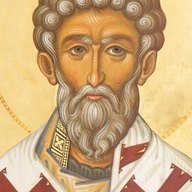
Blessed AugustineExposition on Psalm 131 · on Psalm 131:1
"Lord, remember David, and all his meekness". David according to the truth of history was one man, king of Israel, son of Jesse. He was indeed meek, as the Divine Scriptures themselves mark and command him, and so meek that he did not even render evil for evil to his persecutor Saul. He preserved towards him so great…
How he swore to the Lord, And vowed to the God of Jacob, saying,
Ὡς ὤμοσε τῷ Κυρίῳ, ηὔξατο τῷ Θεῷ Ἰακώβ·
Blessed AugustineExposition on Psalm 131 · on Psalm 131:2
For what purpose? "How he sware unto the Lord, and vowed a vow unto the Almighty God of Jacob" (ver. 2). Therefore remember for this, that he may fulfil what he hath promised. David himself vowed as though he had it in his power, and he prayeth God to fulfil his vow: there is devotion in the vow, but there is humility…
Blessed AugustineExposition on Psalm 131 · on Psalm 131:3
"For Thy servant David's sake, turn not away the face of Thine Anointed". These words are addressed unto God the Father. "For Thy servant David's sake, turn not away the face of Thine Anointed." The Lord was crucified in Judaea; He was crucified by the Jews; harassed by them, He slept. He arose to judge those among…
Blessed AugustineExposition on Psalm 131 · on Psalm 131:3
"The Lord has made a faithful oath unto David, and He shall not repent". What means, "has made an oath"? Hath confirmed a promise through Himself. What means, "He shall not repent"? He will not change. For God suffers not the pain of repentance, nor is He deceived in any matter, so that He would wish to correct that…
Blessed AugustineExposition on Psalm 131 · on Psalm 131:3
What then? "The Lord has made a faithful oath unto David, and He shall not shrink from it; Of the fruit of your body shall I set upon your seat. If your children will keep My covenant and My testimonies that I shall learn them, their children also shall sit upon your seat for evermore". If your children keep My…
Blessed AugustineExposition on Psalm 131 · on Psalm 131:3
"For the Lord has chosen Sion to be an habitation for Himself". Sion is the Church Herself; She is also that Jerusalem unto whose peace we are running, who is in pilgrimage not in the Angels, but in us, who in her better part waits for the part that will return; whence letters have come unto us, which are every day…
Blessed AugustineExposition on Psalm 131 · on Psalm 131:3
"This shall be My rest for ever". These are the words of God. "My rest:" I rest there. How greatly doth God love us, brethren, since, because we rest, He saith that He also resteth! For He is not sometimes Himself disturbed, nor doth He rest as we do; but He saith that He resteth there, because we shall have rest in…
Blessed AugustineExposition on Psalm 131 · on Psalm 131:3
"I will bless her widow with blessings, and will satisfy her poor with bread". Every soul that is aware that it is bereft of all help, save of God alone, is widowed. For how does the Apostle describe a widow? "She that is a widow indeed and desolate, trusts in God." [1 Timothy 5:5-6] He was speaking of those whom we…
Blessed AugustineExposition on Psalm 131 · on Psalm 131:3
"I will clothe her priests with salvation, and her saints shall rejoice and sing". We are now at the end of the Psalm; attend for a short space, Beloved. "I will clothe her priests with salvation, and her saints shall rejoice and sing." Who is our salvation, save our Christ? What means, therefore, "I will clothe her…
Blessed AugustineExposition on Psalm 131 · on Psalm 131:3
"Upon Him shall My sanctification flourish" (ver. 18). Upon whom? Upon Mine Anointed. For when He saith, "Mine anointed," it is the voice of the Father, who saith, "I will bless her widow with blessings, and will satisfy her poor with bread. I will clothe her priests with salvation, and her saints shall rejoice and…
Blessed AugustineExposition on Psalm 131 · on Psalm 131:3
What then doth he mean, "How he sware," etc.? Let us see what vow is this. We can offer God nothing more pleasing than to swear. Now to swear is to promise firmly. Consider this vow, that is, with what ardour he vowed what he vowed, with what love, with what longing; nevertheless, he prayeth the Lord to fulfil it in…
Blessed AugustineExposition on Psalm 131 · on Psalm 131:3
"Lo, we heard of the same at Ephrata". What? A place for the Lord. "We heard of it at Ephrata: and found it in the plains of the forests." Did he hear it where he found it? Or did he hear it in one place, find it in another? Let us therefore enquire what Ephrata is, where he heard it; let us also enquire what mean the…
Blessed AugustineExposition on Psalm 131 · on Psalm 131:3
"We will go into His tabernacles" (ver. 7). Whose? Those of the Lord God of Jacob. They who enter to dwell therein, are the very same who enter that they may be dwelt in. Thou enterest into thy house, that thou mayest dwell therein; into the house of God, that thou mayest be dwelt in. For the Lord is better, and when…
Blessed AugustineExposition on Psalm 131 · on Psalm 131:3
"Arise, O Lord, into Your resting place". He says unto the Lord sleeping, "Arise." You know already who slept, and who rose again...."You, and the ark of Your sanctification:" that is, Arise, that the ark of Your sanctification, which You have sanctified, may arise also. He is our Head; His ark is His Church: He arose…
Blessed AugustineExposition on Psalm 131 · on Psalm 131:3
"Let Thy priests be clothed with righteousness, and let Thy saints sing with joyfulness". When Thou risest from the dead, and goest unto Thy Father, let that royal Priesthood be clothed with faith, since "the righteous liveth by faith;" [Romans 1:17] and, receiving the pledge of the Holy Spirit, let the members…
Every note is a real passage, quoted word for word from a published English translation, with its source. Nothing here is summarised or written by us. Some verses have many notes and some have none, because the Fathers wrote more on some passages than others.
Blessed Augustine, Expositions on the Book of Psalms, tr. A. Cleveland Coxe from the Oxford translation, Nicene and Post-Nicene Fathers, series 1, vol. 8 (1888).
Scripture: the Septuagint, in the translation of Sir Lancelot Brenton (1851), with spelling updated by Adam Boyd (2020); the Greek is Brenton's Septuagint text.
All of these translations are in the public domain. The passages were matched to their verses by the Historical Christian Commentaries project, which also hosts the full texts we link to. The Fathers are a treasury of the Church's mind, and they are best read alongside the life of the Church: if a passage raises a question, bring it to your priest.