A Song of Degrees. Behold now, bless ye the Lord, All the servants of the Lord, Who stand in the house of the Lord, In the courts of the house of our God.
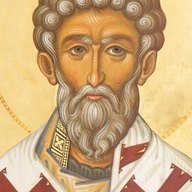
Blessed AugustineExposition on Psalm 133 · on Psalm 133:2
"Lift up your hands by night in the sanctuary, and bless the Lord". It is easy to bless by day. What is "by day"? In prosperity. For night is a sad thing, day a cheerful. When it is well with thee, thou dost bless the Lord. Thy son was sick, and he is made whole, thou dost bless the Lord. Thy son was sick, perchance…
Blessed AugustineExposition on Psalm 133 · on Psalm 133:2
"Behold, now, bless ye the Lord, all ye servants of the Lord", "who stand in the house of the Lord, in the courts of the house of our God". Why has he added, "in the courts"? Courts mean the wider spaces of a house. He who stands in the courts is not straitened, is not confined, in some fashion is enlarged. Remain in…
Blessed AugustineExposition on Psalm 133 · on Psalm 133:3
"The Lord out of Zion bless you, who made heaven and earth". He exhorts many to bless, and Himself blesses one, because He makes one out of many, since "it is good and pleasant for brethren to dwell together in one." It is a plural number, brethren, and yet singular, to dwell together in one. Let none of you say, It…
Every note is a real passage, quoted word for word from a published English translation, with its source. Nothing here is summarised or written by us. Some verses have many notes and some have none, because the Fathers wrote more on some passages than others.
Blessed Augustine, Expositions on the Book of Psalms, tr. A. Cleveland Coxe from the Oxford translation, Nicene and Post-Nicene Fathers, series 1, vol. 8 (1888).
Scripture: the Septuagint, in the translation of Sir Lancelot Brenton (1851), with spelling updated by Adam Boyd (2020); the Greek is Brenton's Septuagint text.
All of these translations are in the public domain. The passages were matched to their verses by the Historical Christian Commentaries project, which also hosts the full texts we link to. The Fathers are a treasury of the Church's mind, and they are best read alongside the life of the Church: if a passage raises a question, bring it to your priest.