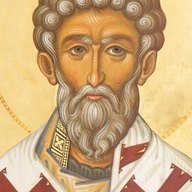
Blessed AugustineExposition on Psalm 138 · on Psalm 138:1
"Lord, Thou hast tried me, and known me" (ver. 1). Let the Lord Jesus Christ Himself say this; let Him too say, "Lord," to the Father. For His Father is not His Lord, save because He hath deigned to be born according to the flesh. He is Father of the God, Lord of the Man. Wouldest thou know to whom He is Father? To…
Blessed AugustineExposition on Psalm 138 · on Psalm 138:2
"Thou hast known My down-sitting and Mine up-rising" (ver. 2). What here is "down-sitting," what "up-rising"? He who sitteth, humbleth himself. The Lord then "sat" in His Passion, "up-rose" in His Resurrection. "Thou," he saith, hast known this; that is, Thou hast willed, Thou hast approved; according to Thy will was…
Blessed AugustineExposition on Psalm 138 · on Psalm 138:3–4
"Thou hast understood my thoughts from afar; Thou hast tracked out my path and my limit" (ver. 3); "and all my ways Thou hast seen beforehand" (ver. 4). What is, "from afar"? While I am yet in my pilgrimage, before I reach that, my true country, Thou hast known my thoughts. ...The younger son went into a far country.…
Blessed AugustineExposition on Psalm 138 · on Psalm 138:5
"Behold Thou, Lord, hast known all my last doings, and the ancient ones". You have known my latest doings, when I fed swine; You have known my ancient doings, when I asked of You my portion of goods. Ancient doings were the beginnings to me of latest ills: ancient sin, when we fell; latest punishment, when we came…
Blessed AugustineExposition on Psalm 138 · on Psalm 138:6
"Thy skill hath displayed itself wonderfully in me: it hath waxed mighty: I shall not be able to attain unto it" (ver. 6). Listen now and hear somewhat, which is obscure indeed, yet bringeth no small pleasure in the understanding thereon. Moses, the holy servant of God, with whom God spake by a cloud, for, speaking…
Blessed AugustineExposition on Psalm 138 · on Psalm 138:7
Behold you find that the runaway in a far country cannot escape His eyes, from whom he flees. And whither can he go now, whose "limit is tracked out"? Behold, what says he? "Whither shall I go from Your Spirit?". Who can in the world flee from that Spirit, with whom the world is filled? [Wisdom 1:7] "And whither shall…
Blessed AugustineExposition on Psalm 138 · on Psalm 138:8
Now listen who may bring us there. The very same One whose face in wrath we wish to flee from. For what follows? "Even there shall Your hand conduct me, and Your right hand lead me". This let us meditate on, beloved brethren, let this be our hope, this our consolation. Let us take again through love the wings we lost…
Blessed AugustineExposition on Psalm 138 · on Psalm 138:8
"For darkness shall not be darkened by Thee" (ver. 12). Do not thou then darken thy darkness; God darkeneth it not, but enlighteneth it yet more; for to Him is said in another Psalm, "Thou, Lord, shalt light my candle: my God shall enlighten my darkness." But who are they who "darken their darkness," which God…
Blessed AugustineExposition on Psalm 138 · on Psalm 138:8
"For Thou, O Lord, hast possessed my reins". The Possessor is within; He occupies not only the heart, but also the reins; not only the thoughts, but also the delights: He then possesses that whence I should feel delight at any light in this world: He occupies my reins: I know not delight, save from the inward light of…
Blessed AugustineExposition on Psalm 138 · on Psalm 138:8
"I will confess to You, O Lord, for terribly have You been made wonderful: wondrous are Your works, and my soul knows it right well". Aforetime "Your knowledge was made wonderful from me, it had waxed great, nor could I attain unto it." From me then "it had waxed great." Whence does "my soul" now "know right well,"…
Blessed AugustineExposition on Psalm 138 · on Psalm 138:8
"My bone is not hid from You, which You have made in secret". "His bone," he says. What the people call ossum, is in Latin called os. This is the word in the Greek. For we might think the word os is here the one which makes in the plural ora, not os (short), which makes ossa. He says then, I have a certain bone…
Blessed AugustineExposition on Psalm 138 · on Psalm 138:8
..."Thine eyes did see Mine imperfect one, and in Thy book shall all be written" (ver. 16), not only the perfect, but also the imperfect. Let not the imperfect fear, only let them advance. Nor yet, because I have said, "let them not fear," let them love their imperfection, and remain there, where they are found. Let…
Blessed AugustineExposition on Psalm 138 · on Psalm 138:8
And what followeth? "But to me Thy friends are made very honourable, O God" (ver. 17); those very ones, who "wandered in the day, and none was in them," became Thy friends, and were made very honourable to me. That bone was made in them in secret after the resurrection of the Lord, and they suffered for His Name, at…
Blessed AugustineExposition on Psalm 138 · on Psalm 138:8
"I will number them, and they shall be multiplied above the sand". By means of them, who "wandered in the day," lo! There has been born all this great multitude, which now is like the sand innumerable, save by God. For He said, "they shall be multiplied above the sand," and yet He had said, "I will number them." The…
Blessed AugustineExposition on Psalm 138 · on Psalm 138:8
And then He tells what meanwhile, during this whole time when He already has risen, and remains still with the Father, He suffers by the intermixture of sinners in His Body, the Church, and by the separation of heretics. "If Thou, O God, shall slay the sinners (since You shall say in Your thought, Depart from Me, you…
Blessed AugustineExposition on Psalm 138 · on Psalm 138:8
Since then the Body of Christ is in the end to be severed in body also from the unholy and wicked, but now meanwhile groans among them, what does the "love of Christ among the daughters, as the lily among thorns"? [Song of Songs 2:2] What are her words? What her conscience? What is the "appearance of the king's…
Blessed AugustineExposition on Psalm 138 · on Psalm 138:8
"And see," says he, "if there be any way of wickedness in me, and lead me in the way everlasting". "Search," he says, "my paths," that is, my counsels and thoughts. What else says he, but "lead me in Christ"? For who is "the way everlasting," save He that is the life everlasting? For everlasting is He who said, "I am…
Blessed AugustineExposition on Psalm 138 · on Psalm 138:8
"If I go up," says he, "to heaven, You are there: if I go down to Hades, You are present". At length, miserable runaway, you have learned, that by no means can you make yourself far from Him, from whom you have wished to remove far away. Behold, He is everywhere; thou, whither will you go? He has found counsel, and…
Blessed AugustineExposition on Psalm 138 · on Psalm 138:8
This plan he found: So will I flee, saith he, from Thy Face, so will I flee from Thy Spirit; from Thy avenging Spirit, Thy avenging Face thus will I flee. How? "If I take again my wings right forward, and abide in the utmost parts of the sea". So can I flee from Thy Face. If he will flee to the utmost part of the sea…
Every note is a real passage, quoted word for word from a published English translation, with its source. Nothing here is summarised or written by us. Some verses have many notes and some have none, because the Fathers wrote more on some passages than others.
Blessed Augustine, Expositions on the Book of Psalms, tr. A. Cleveland Coxe from the Oxford translation, Nicene and Post-Nicene Fathers, series 1, vol. 8 (1888).
Scripture: the Septuagint, in the translation of Sir Lancelot Brenton (1851), with spelling updated by Adam Boyd (2020); the Greek is Brenton's Septuagint text.
All of these translations are in the public domain. The passages were matched to their verses by the Historical Christian Commentaries project, which also hosts the full texts we link to. The Fathers are a treasury of the Church's mind, and they are best read alongside the life of the Church: if a passage raises a question, bring it to your priest.