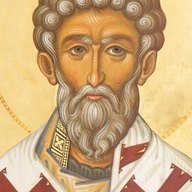
Blessed AugustineExposition on Psalm 140 · on Psalm 140:1
"Lord, I have cried unto Thee, hear Thou me" (ver. 1). This we all can say. This not I alone say: whole Christ saith it. But it is said rather in the name of the Body: for He too, when He was here and bore our flesh, prayed; and when He prayed, drops of blood streamed down from His whole Body. So is it written in the…
Blessed AugustineExposition on Psalm 140 · on Psalm 140:2
"Let my prayer be set forth in Your sight as incense, and the lifting up of my hands an evening sacrifice". That this is wont to be understood of the Head Himself, every Christian acknowledges. For when the day was now sinking towards evening, the Lord upon the Cross "laid down His life to take it again," [John 10:17]…
Blessed AugustineExposition on Psalm 140 · on Psalm 140:3–4
..."Set, O Lord, a watch before my mouth, and a door of restraint around my lips" (ver. 3). He said not a barrier of restraint, but "a door of restraint." A door is opened as well as shut. If then it be a "door," let it be both opened and shut; opened, to confession of sin; closed, to excusing sin. So will it be a…
The righteous shall chasten me with mercy, and reprove me: But let not the oil of the sinner anoint my head: For yet shall my prayer also be in their pleasures.
Blessed AugustineExposition on Psalm 140 · on Psalm 140:5
"The righteous One shall amend me in mercy, and convict me". Behold the sinner confessing. He desires to be amended in mercy, rather than praised deceitfully...."Shall convict me," but "in mercy:" shall convict, yet hates not: yea, shall all the more convict, because He hates not. And why does he therefore give…
Blessed AugustineExposition on Psalm 140 · on Psalm 140:6
You say to me, What am I doing? I am beset with flatterers; they cease not to besiege me; they praise in me what I would not, that praise in me what I hold in little esteem; what I hold dear they blame in me; flatterers, treacherous, deceivers. For instance, "Gaiuseius is a great man, great, learned, wise; but why is…
Blessed AugustineExposition on Psalm 140 · on Psalm 140:7
What then have all those deaths of the martyrs accomplished? Listen: "As the fatness of the earth is spread over the earth, our bones have been scattered beside the pit". "The bones" of the martyrs, that is, the bodies of the witnesses of Christ. The martyrs were slain, and they who slew them seemed to prevail. They…
Blessed AugustineExposition on Psalm 140 · on Psalm 140:8
"For unto You, Lord, are my eyes; in You have I hoped, take not Thou away my life". For they were tortured in persecutions, and many failed. It occurs to him that many have failed, many have been in hazard, and as it were in the midst of the tribulation of persecution is sent forth the voice of one praying; "For unto…
Blessed AugustineExposition on Psalm 140 · on Psalm 140:9
"Keep me from the trap which they have laid for me". What was the trap? "If you consent, I spare you." In the trap was set the bait of the present life; if the bird love this bait, it falls into the trap: but if the bird be able to say, "The day of man have I not desired: You know:" [Jeremiah 17:16] "He shall pluck…
Blessed AugustineExposition on Psalm 140 · on Psalm 140:10
"Sinners shall fall into his nets" (ver. 10). Not all sinners, certain sinners, who are so great sinners, as to love this life to such a degree as to prefer it to everlasting life, "shall fall into his trap." But what sayest thou? Shall they that are such, thinkest thou, fall into his nets? what of Thy disciples, O…
Every note is a real passage, quoted word for word from a published English translation, with its source. Nothing here is summarised or written by us. Some verses have many notes and some have none, because the Fathers wrote more on some passages than others.
Blessed Augustine, Expositions on the Book of Psalms, tr. A. Cleveland Coxe from the Oxford translation, Nicene and Post-Nicene Fathers, series 1, vol. 8 (1888).
Scripture: the Septuagint, in the translation of Sir Lancelot Brenton (1851), with spelling updated by Adam Boyd (2020); the Greek is Brenton's Septuagint text.
All of these translations are in the public domain. The passages were matched to their verses by the Historical Christian Commentaries project, which also hosts the full texts we link to. The Fathers are a treasury of the Church's mind, and they are best read alongside the life of the Church: if a passage raises a question, bring it to your priest.