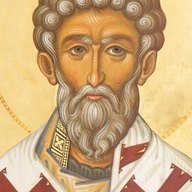
Blessed AugustineExposition on Psalm 147 · on Psalm 147:1
"Praise in unison, O Jerusalem, thy God." Abiding yet in captivity, they behold those flocks, or rather, the one flock of all its citizens, gathered from all sides into that city; they see the joy of the mass, now after threshings and winnowings placed in the garner, fearing nothing, suffering no toil nor trouble;…
Blessed AugustineExposition on Psalm 147 · on Psalm 147:2
He saith, "He hath made strong the bars of thy gates." The making bars strong is not for open gates, but shut ones, wherefore most manuscripts read, "He hath made strong the bolts of thy gates." Observe, beloved. He biddeth Jerusalem when closed in to praise the Lord. We praise in unison now, we praise now; but it is…
Blessed AugustineExposition on Psalm 147 · on Psalm 147:3
What ye cried out a while ago at the very mention of peace, ye cried from longing: your cry was from thirst, not from fulness; for there will be perfect righteousness where will be perfect peace. Now we hunger and thirst after righteousness. "They shall be filled." How shall they be filled? When we have arrived at…
Blessed AugustineExposition on Psalm 147 · on Psalm 147:4
"Who sendeth forth His Word to the earth." Behold, on earth we toil, weary, fainting, sluggish, cold: when should we be raised up to the fat of wheat that satisfieth, did not He send His Word to the earth, whereby we were weighed down, to the earth, whereby we were hindered from returning? He sent His Word, He…
Blessed AugustineExposition on Psalm 147 · on Psalm 147:5
We then are burdened by the sluggishness of this cold body, and the bonds of this earthly and corruptible life; have we no hope of receiving "the Word," which "runneth even unto swiftness"? or hath abandoned us, though by the body we are depressed to the lowest depths? Did not He predestinate us, before we were born…
Blessed AugustineExposition on Psalm 147 · on Psalm 147:6
"Who sends His crystal like morsels of bread". We need not spend our toil again in saying what crystal is. We have already said it, and I do not think that you, beloved, have forgotten it. What is then, "He sends His crystal like morsels of bread"? What is "crystal"? It is very hard, it is very tightly congealed; it…
Blessed AugustineExposition on Psalm 147 · on Psalm 147:7
Thus then we see "the snow, the mist, the crystal:" it is good that He blow and thaw them. For if He blow not, if He Himself thaw not the hardness of this ice, "in the face of His cold who shall stand?" He abandoneth a sinner, behold, He calleth him not; behold, He openeth not his perception; behold, He poureth not in…
Blessed AugustineExposition on Psalm 147 · on Psalm 147:8
"Announcing His Word unto Jacob, His Righteousnesses and Judgments unto Israel" (ver. 19). What "Righteousnesses," what "Judgments"? Because whatever mankind had suffered here before, when it was "snow" and "mist" and "crystal," it suffered for the deserts of its pride and uplifting against God. Let us go back to the…
Blessed AugustineExposition on Psalm 147 · on Psalm 147:9
"He has not done so to the whole race". Let none deceive you: it is not announced to any nation, this judgment of God; namely, how the righteous and the unrighteous suffer, how all suffer for their deserts, how the righteous themselves are freed by the grace of God, not in their own merits. This is not announced to…
Every note is a real passage, quoted word for word from a published English translation, with its source. Nothing here is summarised or written by us. Some verses have many notes and some have none, because the Fathers wrote more on some passages than others.
Blessed Augustine, Expositions on the Book of Psalms, tr. A. Cleveland Coxe from the Oxford translation, Nicene and Post-Nicene Fathers, series 1, vol. 8 (1888).
Scripture: the Septuagint, in the translation of Sir Lancelot Brenton (1851), with spelling updated by Adam Boyd (2020); the Greek is Brenton's Septuagint text.
All of these translations are in the public domain. The passages were matched to their verses by the Historical Christian Commentaries project, which also hosts the full texts we link to. The Fathers are a treasury of the Church's mind, and they are best read alongside the life of the Church: if a passage raises a question, bring it to your priest.