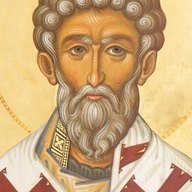
Blessed AugustineExposition on Psalm 149 · on Psalm 149:1
Let us praise the Lord both in voice, and in understanding, and in good works; and, as this Psalm exhorteth, let us sing unto Him a new song. It beginneth: "Sing ye to the Lord a new song. His praise is in the Church of the Saints" (ver. 1). The old man hath an old song, the new man a new song. The Old Testament is an…
Blessed AugustineExposition on Psalm 149 · on Psalm 149:2
"Let Israel rejoice in Him who made Him". What is, "Israel"? "Seeing God." He who sees God, rejoices in Him by whom he was made. What is it then, brethren? We have said that we belong to the Church of the saints: do we already see God? And how are we Israel, if we see not? There is one kind of sight belonging to this…
Blessed AugustineExposition on Psalm 149 · on Psalm 149:3
"Let them praise His Name in chorus". What means "chorus"? Many know what a "chorus" is: nay, as we are speaking in a town, almost all know. A "chorus" is the union of singers. If we sing "in chorus," let us sing in concord. If any one's voice is out of harmony in a chorus of singers, it offends the ear, and throwes…
Blessed AugustineExposition on Psalm 149 · on Psalm 149:4
"For the Lord has dealt kindly among His people". What dealing so kindly, as to die for the ungodly? What dealing so kindly, as with righteous Blood to blot out the handwriting against the sinner? What dealing so kindly, as to say, "I regard not what you were, be ye now what you were not"? He deals kindly in…
Blessed AugustineExposition on Psalm 149 · on Psalm 149:5
"The saints shall exult in glory". I would say somewhat important about the glory of the saints. For there is no one who loves not glory. But the glory of fools, popular glory as it is called, has snares to deceive, so that a man, influenced by the praises of vain men, shall be willing to live in such fashion as to be…
Blessed AugustineExposition on Psalm 149 · on Psalm 149:6
But the saints who "exult in glory," no need is there for us to say how they exult: just hear the verse of the Psalm which follows: "The saints shall exult in glory, they shall rejoice in their beds:" not in theatres, or amphitheatres, or circuses, or follies, or market places, but "in their chambers." What is, "in…
Blessed AugustineExposition on Psalm 149 · on Psalm 149:8–9
"That they may bind their kings in fetters, and their nobles in bonds of iron". "To execute upon them the judgment written". The kings of the Gentiles are to be bound in fetters, "and their nobles in fetters," and that "of iron."...For these verses which we are beginning to explain are obscure. For for this purpose…
Every note is a real passage, quoted word for word from a published English translation, with its source. Nothing here is summarised or written by us. Some verses have many notes and some have none, because the Fathers wrote more on some passages than others.
Blessed Augustine, Expositions on the Book of Psalms, tr. A. Cleveland Coxe from the Oxford translation, Nicene and Post-Nicene Fathers, series 1, vol. 8 (1888).
Scripture: the Septuagint, in the translation of Sir Lancelot Brenton (1851), with spelling updated by Adam Boyd (2020); the Greek is Brenton's Septuagint text.
All of these translations are in the public domain. The passages were matched to their verses by the Historical Christian Commentaries project, which also hosts the full texts we link to. The Fathers are a treasury of the Church's mind, and they are best read alongside the life of the Church: if a passage raises a question, bring it to your priest.