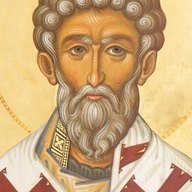
Blessed AugustineExposition on Psalm 52 · on Psalm 52:2
"The unwise man hath said in his heart, There is no God" (ver. 1). Such sort is it of men amid whom is pained and groaneth the Body of Christ. If such is this sort of men, of not many do we travail; as far as seemeth to occur to our thoughts, very few there are; and a difficult thing it is to meet with a man that…
Blessed AugustineExposition on Psalm 52 · on Psalm 52:3
Let us advert also to that sense, which concerning Christ our Lord Himself, our Head Himself, doth present itself. For when Himself in form of a servant appeared on earth, they that crucified Him said, "He is not God." Because Son of God He was, truly God He was. But they that are corrupted and have become abominable…
Blessed AugustineExposition on Psalm 52 · on Psalm 52:4–5
"The Lord from Heaven has looked forth upon the sons of men, that He might see if there is one understanding and seeking after God". What is this? "Corrupted they are," all these that say, "There is no God"? And what? Did it escape God, that they had become such? Or indeed to us would their inward thought be opened,…
Will none of the workers of iniquity know, Who devour my people as they would eat bread? They have not called upon God. There were they greatly afraid, where there was no fear:
Blessed AugustineExposition on Psalm 52 · on Psalm 52:6
"Shall not all know that work iniquity, that devour My people for the food of bread"?....There is therefore here a people of God that is being devoured. Nay, "There is not one that does good, there is not so much as one." We reply by the rule above. But this people that is devoured, this people that suffers evil men,…
Blessed AugustineExposition on Psalm 52 · on Psalm 52:7
For this reason what followeth concerning them? "There have they feared with fear, where there was no fear" (ver. 6). For is there fear, if a man lose riches? There is no fear there, and yet in that case men are afraid. But if a man lose wisdom, truly there is fear, and in that case he is not afraid. ...Thou hast…
Every note is a real passage, quoted word for word from a published English translation, with its source. Nothing here is summarised or written by us. Some verses have many notes and some have none, because the Fathers wrote more on some passages than others.
Blessed Augustine, Expositions on the Book of Psalms, tr. A. Cleveland Coxe from the Oxford translation, Nicene and Post-Nicene Fathers, series 1, vol. 8 (1888).
Scripture: the Septuagint, in the translation of Sir Lancelot Brenton (1851), with spelling updated by Adam Boyd (2020); the Greek is Brenton's Septuagint text.
All of these translations are in the public domain. The passages were matched to their verses by the Historical Christian Commentaries project, which also hosts the full texts we link to. The Fathers are a treasury of the Church's mind, and they are best read alongside the life of the Church: if a passage raises a question, bring it to your priest.