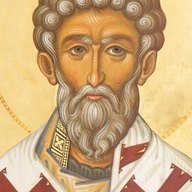
Blessed AugustineExposition on Psalm 75 · on Psalm 75:2
The Jews are wont to glory in this Psalm which we have sung, saying, "Known in Judaea is God, in Israel great is the name of Him:" and to revile the Gentiles to whom God is not known, and to say that to themselves alone God is known; seeing that the Prophet saith, "Known in Judaea is God." ...But God is known in very…
Blessed AugustineExposition on Psalm 75 · on Psalm 75:3
"And there hath been made in peace a place for Him, and His habitation is in Sion" (ver. 2). Again, Sion is as it were the country of the Jews; the true Sion is the Church of Christians. But the intrepretation of the Hebrew names is thus handed down to us: Judaea is interpreted confession, Israel, one seeing God.…
Blessed AugustineExposition on Psalm 75 · on Psalm 75:4
"There He has broken the strength of bows, and the shield, and the sword, and the battle". Where has He broken? In that eternal peace, in that perfect peace. And now, my brethren, they that have rightly believed see that they ought not to rely on themselves: and all the might of their own menaces, and whatsoever is in…
Thou dost wonderfully shine forth from the everlasting mountains.
Φωτίζεις σὺ θαυμαστῶς ἀπὸ ὀρέων αἰωνίων,
Blessed AugustineExposition on Psalm 75 · on Psalm 75:5
"Thou enlightening marvellously from the eternal mountains" (ver. 4). What are the eternal mountains? Those which He hath Himself made eternal; which are the great mountains, the preachers of truth. Thou dost enlighten, but from the eternal mountains: the great mountains are first to receive Thy light, and from Thy…
Blessed AugustineExposition on Psalm 75 · on Psalm 75:6
"There have been troubled all the unwise in heart" (ver. 5)....How have they been troubled? When the Gospel is preached. And what is life eternal? And who is He that hath risen from the dead? The Athenians wondered, when the Apostle Paul spake of the resurrection of the dead, and thought that he spake but fables. But…
Blessed AugustineExposition on Psalm 75 · on Psalm 75:9
"From Heaven You have hurled judgment: the earth has trembled, and has rested". She which now does trouble herself, she which now speaks, has to fear at the end and to rest. Better had she now rested, that at the end she might have rejoiced. Rested? When? "When God arose unto judgment, that He might save all the meek…
Blessed AugustineExposition on Psalm 75 · on Psalm 75:10
Who are the meek in heart? They that on snorting horses have not mounted, but in their humility have confessed their own sins. "For the thought of a man shall confess to You, and the remnants of the thought shall celebrate solemnities to You".
Blessed AugustineExposition on Psalm 75 · on Psalm 75:11
The first is the thought, the latter are the remnants of the thought. What is the first thought? That from whence we begin, that good thought whence thou wilt begin to confess. Confession uniteth us to Christ. But now the confession itself, that is, the first thought, doth produce in us the remnants of the thought:…
Blessed AugustineExposition on Psalm 75 · on Psalm 75:11
"Vow ye, and pay to the Lord our God". Let each man vow what he is able, and pay it. Do not vow and not pay: but let every man vow, and pay what he can. Be not slow to vow: for you will accomplish the vows by powers not your own. You will fail, if on yourselves ye rely: but if on Him to whom you vow ye rely, you will…
Blessed AugustineExposition on Psalm 75 · on Psalm 75:11
To whom shall they offer gifts? "To Him terrible, and to Him that taketh away the spirit of princes" (ver. 12). For the spirits of princes are proud spirits. They then are not His Spirits; for if they know anything, their own they will it to be, not public; but, that which setteth Himself forth as equal toward all…
Every note is a real passage, quoted word for word from a published English translation, with its source. Nothing here is summarised or written by us. Some verses have many notes and some have none, because the Fathers wrote more on some passages than others.
Blessed Augustine, Expositions on the Book of Psalms, tr. A. Cleveland Coxe from the Oxford translation, Nicene and Post-Nicene Fathers, series 1, vol. 8 (1888).
Scripture: the Septuagint, in the translation of Sir Lancelot Brenton (1851), with spelling updated by Adam Boyd (2020); the Greek is Brenton's Septuagint text.
All of these translations are in the public domain. The passages were matched to their verses by the Historical Christian Commentaries project, which also hosts the full texts we link to. The Fathers are a treasury of the Church's mind, and they are best read alongside the life of the Church: if a passage raises a question, bring it to your priest.