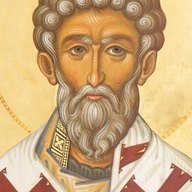
Blessed AugustineExposition on Psalm 8 · on Psalm 8:2
Accordingly it is said, "O Lord, our Lord, how admirable is Your Name in all the earth!". I ask, how is His Name wonderful in all the earth? The answer is, "For Your glory has been raised above the heavens." So that the meaning is this, O Lord, who art our Lord, how do all that inhabit the earth admire You! For Your…
Blessed AugustineExposition on Psalm 8 · on Psalm 8:4
"For I shall see Your heavens, the works of Your fingers". We read that the law was written with the finger of God, and given through Moses, His holy servant: by which finger of God many understand the Holy Ghost. Wherefore if, by the fingers of God, we are right in understanding these same ministers filled with the…
Blessed AugustineExposition on Psalm 8 · on Psalm 8:6
Therefore was the son of man first visited in the person of the very Lord Man, born of the Virgin Mary. Of whom, by reason of the very weakness of the flesh, which the Wisdom of God vouchsafed to bear, and the humiliation of the Passion, it is justly said, "You have lowered Him a little lower than the Angels".
Blessed AugustineExposition on Psalm 8 · on Psalm 8:7
But that glorifying is added, in which He rose and ascended up into heaven; "With glory," he says, "and with honour have You crowned Him; and hast set Him over the works of Your hands". Since even Angels are the works of God's hands, even over Angels we understand the Only-begotten Son to have been set; whom we hear…
Blessed AugustineExposition on Psalm 8 · on Psalm 8:8
"You have put," he says, "all things in subjection under His feet." When he says, "all things," he excepts nothing. And that he might not be allowed to understand it otherwise, the Apostle enjoins it to be believed thus, when he says, "He being excepted which put all things under Him." [1 Corinthians 15:27] And to the…
Blessed AugustineExposition on Psalm 8 · on Psalm 8:9
"Yea moreover," says he, "the beasts of the field." The addition of "moreover" is by no means idle. First, because by beasts of the plain may be understood both sheep and oxen: so that, if goats are the beasts of rocky and mountainous regions, sheep may be well taken to be the beasts of the field. Accordingly had it…
Every note is a real passage, quoted word for word from a published English translation, with its source. Nothing here is summarised or written by us. Some verses have many notes and some have none, because the Fathers wrote more on some passages than others.
Blessed Augustine, Expositions on the Book of Psalms, tr. A. Cleveland Coxe from the Oxford translation, Nicene and Post-Nicene Fathers, series 1, vol. 8 (1888).
Scripture: the Septuagint, in the translation of Sir Lancelot Brenton (1851), with spelling updated by Adam Boyd (2020); the Greek is Brenton's Septuagint text.
All of these translations are in the public domain. The passages were matched to their verses by the Historical Christian Commentaries project, which also hosts the full texts we link to. The Fathers are a treasury of the Church's mind, and they are best read alongside the life of the Church: if a passage raises a question, bring it to your priest.