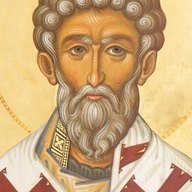
Blessed AugustineExposition on Psalm 81 · on Psalm 81:1
This Psalm, like others similarly named, was so entitled either from the name of the man who wrote it, or from the explanation of that same name, so as to refer in meaning to the Synagogue, which Asaph signifies; especially as this is intimated in the first verse. For it begins, "God stood in the synagogue of gods".…
Blessed AugustineExposition on Psalm 81 · on Psalm 81:2–4
"How long will you judge unrighteously, and accept the persons of the ungodly"; as in another place, "How long are you heavy in heart?" Until He shall come who is the light of the heart? I have given a law, you have resisted stubbornly: I sent Prophets, you treated them unjustly, or slew them, or connived at those who…
I have said, Ye are gods; And all of you children of the Most High.
Ἐγὼ εἶπα, θεοί ἐστε, καὶ υἱοὶ ὑψίστου πάντες.
Blessed AugustineExposition on Psalm 81 · on Psalm 81:6–7
But the kingdom of earthly happiness is pride, to oppose which came the lowliness of Christ, rebuking those whom He wished by lowliness to make the children of the Most High, and blaming them: "I said, You are gods, you are all the children of the Most High". "But you shall die like men, and fall like one of the…
Blessed AugustineExposition on Psalm 81 · on Psalm 81:8
And therefore that this vice may be cured, in the person of the Prophet himself it is said, "Arise, O God, and judge the earth"; for the earth swelled high when it crucified You: rise from the dead, and judge the earth. "For You shall destroy among all nations." What, but the earth? That is, destroying those who…
Every note is a real passage, quoted word for word from a published English translation, with its source. Nothing here is summarised or written by us. Some verses have many notes and some have none, because the Fathers wrote more on some passages than others.
Blessed Augustine, Expositions on the Book of Psalms, tr. A. Cleveland Coxe from the Oxford translation, Nicene and Post-Nicene Fathers, series 1, vol. 8 (1888).
Scripture: the Septuagint, in the translation of Sir Lancelot Brenton (1851), with spelling updated by Adam Boyd (2020); the Greek is Brenton's Septuagint text.
All of these translations are in the public domain. The passages were matched to their verses by the Historical Christian Commentaries project, which also hosts the full texts we link to. The Fathers are a treasury of the Church's mind, and they are best read alongside the life of the Church: if a passage raises a question, bring it to your priest.