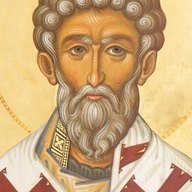
Blessed AugustineExposition on Psalm 87 · on Psalm 87:2
"O Lord God of my salvation, I have cried day and night before You". Let us therefore now hear the voice of Christ singing before us in prophecy, to whom His own choir should respond either in imitation, or in thanksgiving.
Blessed AugustineExposition on Psalm 87 · on Psalm 87:3
"O let my prayer enter into Your presence, incline Your ear unto my calling". For even our Lord prayed, not in the form of God, but in the form of a servant; for in this He also suffered. He prayed both in prosperous times, that is, by "day," and in calamity, which I imagine is meant by "night." The entrance of prayer…
Blessed AugustineExposition on Psalm 87 · on Psalm 87:4
"For my soul is filled with evils, and my life draws near unto hell". Dare we speak of the Soul of Christ as "filled with evils," when the passion had strength as far as it had any, only over the body?...The soul therefore may feel pain without the body: but without the soul the body cannot. Why therefore should we…
Blessed AugustineExposition on Psalm 87 · on Psalm 87:5
Lastly, the very thing said by our Saviour on the Cross, "Father, forgive them, for they know not what they do," is expressed in this Psalm below, "I am counted as one of them that go down into the pit": by them who knew not what they were doing, when they imagined that He died like other men, subjected to necessity,…
Blessed AugustineExposition on Psalm 87 · on Psalm 87:6
"Free among the dead". In these words our Lord's Person is most clearly shown: for who else is free among the dead but He who though in the likeness of sinful flesh is alone among sinners without sin? [Romans 8:3] ...He therefore, "free among the dead," who had it in His power to lay down His life, and again to take…
Blessed AugustineExposition on Psalm 87 · on Psalm 87:7
But as His good works profited only the predestined to eternal salvation, and not all men, nor even all those among whom they were done, he adds, "Dost thou show wonders among the dead?" (ver. 10). If we suppose this relates to those whose flesh life has left, great wonders have been wrought among the dead, inasmuch…
Blessed AugustineExposition on Psalm 87 · on Psalm 87:7
"Shall one show Thy loving-kindness in the grave, or Thy faithfulness in destruction?" (ver. 11). The word "show" is of course understood as if repeated, Shall any show Thy faithfulness in destruction? Scripture loves to connect loving-kindness and faithfulness, especially in the Psalms. "Destruction" also is a…
Blessed AugustineExposition on Psalm 87 · on Psalm 87:7
"Shall thy wondrous works be known in the dark, and thy righteousness in the land where all things are forgotten?" the dark answers to the land of forgetfulness: for the unbelieving are meant by the dark, as the Apostle saith, "For ye were sometimes darkness;" and the land where all things are forgotten, is the man…
Blessed AugustineExposition on Psalm 87 · on Psalm 87:7
But that those prayers, the blessings of which surpass all words, may be more fervent and more constant, the gift that shall last unto eternity is deferred, while transitory evils are allowed to thicken. And so it follows: "Lord, why have You cast off my prayer?", which may be compared with another Psalm: "My God, My…
Blessed AugustineExposition on Psalm 87 · on Psalm 87:7
For this purpose he briefly sketches in what follows the troubles of Christ's body. For it is not in the Head alone that they took place, since it is said to Saul too, "Why do you persecute Me?" [Acts 9:4] and Paul himself, as if placed as an elect member in the same body, says, "That I may fill up that which is…
Blessed AugustineExposition on Psalm 87 · on Psalm 87:7
"They laid Me in the lowest pit", that is, the deepest pit. For so it is in the Greek. But what is the lowest pit, but the deepest woe, than which there is none more deep? Whence in another Psalm it is said, "You brought me out also of the pit of misery." "In a place of darkness, and in the shadow of death," whiles…
Blessed AugustineExposition on Psalm 87 · on Psalm 87:7
"Your indignation lies hard upon Me", or, as other copies have it, "Your anger;" or, as others, "Your fury:" the Greek word θυμὸς having undergone different interpretations. For where the Greek copies have ὀ ργὴ, no translator hesitated to express it by the Latin ira; but where the word is θυμὸς, most object to…
Blessed AugustineExposition on Psalm 87 · on Psalm 87:7
"You have put Mine acquaintance far from Me". If we understand by acquaintance those whom He knew, it will be all men; for whom knew He not? But He calls those acquaintance, to whom He was Himself known, as far as they could know Him at that season: at least so far forth as they knew Him to be innocent, although they…
Blessed AugustineExposition on Psalm 87 · on Psalm 87:7
"My eyes became weak from want". For what eyes are we to understand? If the eyes of the flesh in which He suffered, we do not read that His eyes became weak from want, that is, from hunger, in His Passion, as is often the case; as He was betrayed after His Supper, and crucified on the same day: if the inner eyes, how…
Every note is a real passage, quoted word for word from a published English translation, with its source. Nothing here is summarised or written by us. Some verses have many notes and some have none, because the Fathers wrote more on some passages than others.
Blessed Augustine, Expositions on the Book of Psalms, tr. A. Cleveland Coxe from the Oxford translation, Nicene and Post-Nicene Fathers, series 1, vol. 8 (1888).
Scripture: the Septuagint, in the translation of Sir Lancelot Brenton (1851), with spelling updated by Adam Boyd (2020); the Greek is Brenton's Septuagint text.
All of these translations are in the public domain. The passages were matched to their verses by the Historical Christian Commentaries project, which also hosts the full texts we link to. The Fathers are a treasury of the Church's mind, and they are best read alongside the life of the Church: if a passage raises a question, bring it to your priest.