For the day before the Sabbath, when the land was first inhabited, the praise of a Song by David. The Lord reigns; he has clothed himself with honor: The Lord has clothed and girded himself with strength; For he has established the world, which shall not be moved.
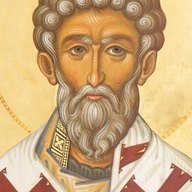
Blessed AugustineExposition on Psalm 92 · on Psalm 92:1
"The Lord reigneth, He is clothed with beauty; the Lord is clothed with strength, and is girded" (ver. 1). We see that He hath clothed Himself with two things: beauty and strength. But why? That He might found the earth. So it followeth, "He hath made the round world so sure, that it cannot be moved." Whence hath He…
Blessed AugustineExposition on Psalm 92 · on Psalm 92:2
"Thy throne is established from thence, O Lord" (ver. 2). What is, "from thence"? From that time. As if he said, What is the throne of God? Where doth God sit? In His Saints. Dost thou wish to be the throne of God? Prepare a place in thy heart where He may sit. What is the throne of God, except where God dwelleth?…
Blessed AugustineExposition on Psalm 92 · on Psalm 92:3–4
"The floods lift up their voices". What are these floods, which have lift up their voices? We heard them not: neither when our Lord was born, did we hear rivers speak, nor when He was baptized, nor when He suffered; we heard not that rivers did speak. Read the Gospel, you find not that rivers spoke. It is not enough…
Blessed AugustineExposition on Psalm 92 · on Psalm 92:5
"Thy testimonies, O Lord, are very surely believed" (ver. 5). The Lord, who dwelleth on high, is mightier than the mighty overhangings of the sea. "Thy testimonies are very surely believed." "Thy testimonies," because He had said beforehand, "These things I have spoken unto you, that in Me ye might have peace. In the…
Every note is a real passage, quoted word for word from a published English translation, with its source. Nothing here is summarised or written by us. Some verses have many notes and some have none, because the Fathers wrote more on some passages than others.
Blessed Augustine, Expositions on the Book of Psalms, tr. A. Cleveland Coxe from the Oxford translation, Nicene and Post-Nicene Fathers, series 1, vol. 8 (1888).
Scripture: the Septuagint, in the translation of Sir Lancelot Brenton (1851), with spelling updated by Adam Boyd (2020); the Greek is Brenton's Septuagint text.
All of these translations are in the public domain. The passages were matched to their verses by the Historical Christian Commentaries project, which also hosts the full texts we link to. The Fathers are a treasury of the Church's mind, and they are best read alongside the life of the Church: if a passage raises a question, bring it to your priest.