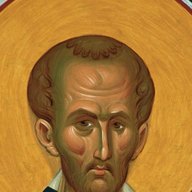
St. John ChrysostomHomily 18 on Romans · on Romans 11:1
"I say then, Hath God cast away His people whom He foreknew? God forbid." And he introduces the form a person would use in doubt, as though taking occasion from what had been said, and after making this alarming statement, by the denial of it he causes the sequel to be allowed with readiness; and what by all the…
God hath not cast away his people which he foreknew. Wot ye not what the scripture saith of Elias? how he maketh intercession to God against Israel, saying,
St. John ChrysostomHomily 18 on Romans · on Romans 11:2–5
"He hath not cast off His people, whom He foreknew." As though he said, I have with me three, five, or ten thousand. What then? has the people come to be three, five, or ten thousand? that seed that compared with the stars of heaven for multitude, or the sand of the sea? Is this the way you deceive us and put a cheat…
And if by grace, then is it no more of works: otherwise grace is no more grace. But if it be of works, then is it no more grace: otherwise work is no more work.
St. John ChrysostomHomily 18 on Romans · on Romans 11:6
"And if by grace, then it is no more of works, otherwise grace is no more grace: but if it be of works, then is it no more grace, otherwise work is no more work." He again springs upon the disputatiousness of the Jews, in what has just been quoted; and on this ground bereaves them of excuse. For you cannot, he means,…
St. John ChrysostomHomily 19 on Romans · on Romans 11:7
"What then? Israel hath not obtained that, which he seeketh for; but the election hath obtained it and the rest were blinded." He had said that God did not cast off His people; and to show in what sense He had not cast them off, he takes refuge in the Prophets again. And having shown by them that the more part of the…
(According as it is written, God hath given them the spirit of slumber, eyes that they should not see, and ears that they should not hear;) unto this day.
St. John ChrysostomHomily 19 on Romans · on Romans 11:8
"According as it is written, God hath given them the spirit of slumber." Now whence came this blinding? He had indeed mentioned the causes of it before, and turned it all upon their own heads, to show that it was from their unseasonable obstinacy that they had to bear this. And now he speaks of it too. For when he…
St. John ChrysostomHomily 19 on Romans · on Romans 11:9–10
"Let their table be made a snare, and a trap, and a stumbling-block." That is, let their comforts and all their good things change and perish, and let them be open to attack from any one. And to show that this is in punishment for sins that they suffer this, he adds, "and a recompense unto them." "Let their eyes be…
I say then, Have they stumbled that they should fall? God forbid: but rather through their fall salvation is come unto the Gentiles, for to provoke them to jealousy.
St. John ChrysostomHomily 19 on Romans · on Romans 11:11
"I say then, Have they stumbled, that they should fall? God forbid." When he has shown that they were liable to evils without number, then he devises an allayment. And consider the judgment of Paul. The accusation he had introduced from the prophets, but the allayment he makes come from himself. For that they had…
St. John ChrysostomHomily 19 on Romans · on Romans 11:12
"Now if the fall of them be the riches of the world, and the diminishing of them the riches of the Gentiles, how much more their fulness?" Here he is speaking to gratify them. For even if these had fallen a thousand times, the Gentiles would not have been saved unless they had shown faith. As the Jews likewise would…
St. John ChrysostomHomily 19 on Romans · on Romans 11:13–14
"For I speak to you Gentiles; inasmuch as I am the Apostle of the Gentiles, I magnify mine office; if by any means I may provoke to emulation them which are my flesh, and might save some of them." Again he endeavors much to get himself clear of untoward suspicion. And he seems to be blaming the Gentiles, and to be…
St. John ChrysostomHomily 19 on Romans · on Romans 11:15
"For if the casting away of them be the reconciling of the world, what shall the receiving of them be but life from the dead?" Yet this again condemns them, since, while others gained by their sins, they did not profit by other men's well doings. But if he asserts that to be their doing which necessarily happened, be…
St. John ChrysostomHomily 19 on Romans · on Romans 11:16
"For if the first-fruits be holy, the lump also is holy; and if the root be holy, so are the branches;" So calling in this passage by the names of the first-fruit and root Abraham, and Isaac, and Jacob, the prophets, the patriarchs, all who were of note in the Old Testament; and the branches, those from them who…
And if some of the branches be broken off, and thou, being a wild olive tree, wert graffed in among them, and with them partakest of the root and fatness of the olive tree;
St. John ChrysostomHomily 19 on Romans · on Romans 11:17
"And if some of the branches be broken off." And yet above thou didst say that the more part perished, and a few were saved only. How came it then that speaking of those that perished, thou hast used a "some," which is indicative of fewness? It is not, he replies, in opposition to myself, but out of a desire to court…
St. John ChrysostomHomily 19 on Romans · on Romans 11:18
"Boast not against the branches." He seems indeed to be comforting the Jew, but points out his vileness and extreme dishonor. And this is why he says not, "boast not," but, "boast not against" do not boast against them so as to sunder them. For it is into their place that ye have been set, and their goods that ye…
St. John ChrysostomHomily 19 on Romans · on Romans 11:19
"Thou wilt say then," he goes on, "The branches were broken off that I might be grafted in." Again he establishes, by way of objection, the opposite to the former position, to show that what he said before, he had not said as directly belonging to the subject, but to draw them to him. For it was no longer by their…
St. John ChrysostomHomily 19 on Romans · on Romans 11:20
"Well," he praises what they said, then he alarms them again by saying, "Because of unbelief they were broken off, and thou art grafted in by faith." So here another encomium, and for the other party an accusation. But he again lays their pride low by proceeding to say, "be not high-minded, but fear." For the thing is…
St. John ChrysostomHomily 19 on Romans · on Romans 11:21
"For if God spared not the natural branches," and then he does not say, neither will He spare thee," but "take heed, lest He also spare not thee." So paring away the distasteful from his statement, representing the believer as in the struggle, he at once draws the others to him, and humbles these also.
Behold therefore the goodness and severity of God: on them which fell, severity; but toward thee, goodness, if thou continue in his goodness: otherwise thou also shalt be cut off.
St. John ChrysostomHomily 19 on Romans · on Romans 11:22
"Behold therefore the goodness and severity of God: on them which fell, severity; but toward thee, goodness, if thou continue in His goodness: otherwise thou also shalt be cut off." And he does not say, Behold thy well doing, behold thy labors, but, "Behold the goodness of God" toward man, to show that the whole comes…
St. John ChrysostomHomily 19 on Romans · on Romans 11:23
"And they also, if they abide not in unbelief, shall be grafted in." For it was not God that cut them off, but they have broken themselves off and fallen, and he did well to say have broken themselves off. For He hath never yet so cast them off, though they have sinned so much and so often. You see what a great thing…
For if thou wert cut out of the olive tree which is wild by nature, and wert graffed contrary to nature into a good olive tree: how much more shall these, which be the natural branches, be graffed into their own olive tree?
St. John ChrysostomHomily 19 on Romans · on Romans 11:24
"For God is able," he says, "to graft them in again," since He doeth things beyond expectation. But if thou wishest for things to be in order, and reasons to be consecutive, you have from yourselves a demonstration which more than meets your wants. "For if thou wert cut out of the olive tree, which is wild by nature,…
For I would not, brethren, that ye should be ignorant of this mystery, lest ye should be wise in your own conceits; that blindness in part is happened to Israel, until the fulness of the Gentiles be come in.
St. John ChrysostomHomily 19 on Romans · on Romans 11:25
"For I would not, brethren, that ye should be ignorant of this mystery, lest ye should be wise your own conceits." Meaning by mystery here, that which is unknown and unutterable, and hath much of wonder and much of what one should not expect about it. As in another passage too he says, "Behold, I tell you a mystery.…
St. John ChrysostomHomily 19 on Romans · on Romans 11:26
"There shall come out of Sion the Deliverer, and shall turn away ungodliness from Jacob." This then he says here also; that it is not the whole people that is pulled up, but many have already believed, and more are likely to believe. Then as he had promised a great thing, he adduces the prophet in evidence, speaking…
St. John ChrysostomHomily 19 on Romans · on Romans 11:27
"For this is my covenant unto them, when I shall take away their sins." Not when they are circumcised, not when they sacrifice, not when they do the other deeds of the Law, but when they attain to the forgiveness of sins. If then this hath been promised, but has never yet happened in their case, nor have they ever…
St. John ChrysostomHomily 19 on Romans · on Romans 11:28
"As concerning the Gospel, they are enemies for your sakes: but as touching the election, they are beloved for the fathers' sakes." That the Gentile then might not be puffed up, and say, "I am standing, do not tell me of what would have been, but what has been," he uses this consideration to bring him down, and says,…
St. John ChrysostomHomily 19 on Romans · on Romans 11:29
"For the gifts and calling of God are without repentance." And even this is not all he says to solace them, for he uses what had already come about. And what came in of consequence, that he states as chiefly intended.
St. John ChrysostomHomily 19 on Romans · on Romans 11:30–32
"For as ye in times past have not believed God, yet have now obtained mercy through their unbelief; even so have these also now not believed, that through your mercy they may also obtain mercy. For God hath concluded them all in unbelief, that He might have mercy upon all." He shows here that those of the Gentiles…
St. John ChrysostomHomily 19 on Romans · on Romans 11:33
"Oh, the depth of the riches, both of the wisdom and knowledge of God! How unsearchable are His judgments!" Here after going back to former times, and looking back to God's original dispensation of things whereby the world hath existed up to the present time, and having considered what special provision He had made…
St. John ChrysostomHomily 19 on Romans · on Romans 11:34–35
"For who hath known the mind of the Lord? or who hath been His counsellor? Or who hath first given to Him, and it shall be recompensed unto him again?" What he means is nearly this: that though He is so wise, yet He has not His Wisdom from any other, but is Himself the Fountain of good things. And though He hath done…
St. John ChrysostomHomily 19 on Romans · on Romans 11:36
"For of Him, and through Him, and to Him, are all things." Himself devised, Himself created, Himself worketh together. For He is rich, and needeth not to receive from another. And wise, and needeth no counsellor. Why speak I of a counsellor? To know the things of Him is no one able, save Himself alone, the Rich and…
Every note is a real passage, quoted word for word from a published English translation, with its source. Nothing here is summarised or written by us. Some verses have many notes and some have none, because the Fathers wrote more on some passages than others.
St. John Chrysostom, Homilies on Romans, Nicene and Post-Nicene Fathers, series 1, vol. 11 (1888–1889).
Scripture: the King James Version (1611); the Greek (tap Ελ) is the 1904 Patriarchal text of the Ecumenical Patriarchate.
All of these translations are in the public domain. The passages were matched to their verses by the Historical Christian Commentaries project, which also hosts the full texts we link to. The Fathers are a treasury of the Church's mind, and they are best read alongside the life of the Church: if a passage raises a question, bring it to your priest.