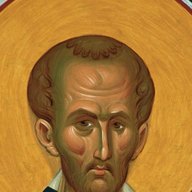
St. John ChrysostomHomily 6 on Matthew · on Matthew 2:1–2
We have need of much wakefulness, and many prayers, that we may arrive at the interpretation of the passage now before us, and that we may learn who these wise men were, and whence they came, and how; and at whose persuasion, and what was the star. Or rather, if ye will, let us first bring forward what the enemies of…
St. John ChrysostomHomily 6 on Matthew · on Matthew 2:1–2
For if ye can learn what the star was, and of what kind, and whether it were one of the common stars, or new and unlike the rest, and whether it was a star by nature or a star in appearance only, we shall easily know the other things also. Whence then will these points be manifest? From the very things that are…
St. John ChrysostomHomily 6 on Matthew · on Matthew 2:1–2
Seest thou, by what store of proofs this star is shown not to be one of the many, nor to have shown itself according to the order of the outward creation? And for what intent did it appear? To reprove the Jews for their insensibility, and to cut off from them all occasion of excuse for their willful ignorance. For,…
St. John ChrysostomHomily 6 on Matthew · on Matthew 2:1–2
"When Jesus was born in Bethlehem of Judaea, in the days of Herod the king, behold, there came wise men from the east to Jerusalem." While wise men followed under the auspices of a star, these believed not, with prophets even sounding in their ears. But wherefore doth he mention to us both the time and the place,…
St. John ChrysostomHomily 6 on Matthew · on Matthew 2:3
But "when Herod," saith the Scripture, "had heard, he was troubled, and all Jerusalem with him." Herod naturally, as being king, and afraid both for himself and for his children; but why Jerusalem? Surely the prophets had foretold Him a Saviour, and Benefactor, and a Deliverer from above. Wherefore then was Jerusalem…
St. John ChrysostomHomily 7 on Matthew · on Matthew 2:4–5
Seest thou how all things are done to convict the Jews? how, as long as He was out of their sight, the envy had not yet laid hold of them, and they rehearsed the testimonies of Him with truth; but when they saw the glory that arose from the miracles, a grudging spirit possessed them, and thenceforth they betrayed the…
St. John ChrysostomHomily 7 on Matthew · on Matthew 2:5–6
"But why," one may say, "if He was to come from thence, did He live in Nazareth after the birth, and obscure the prophecy?" Nay, He did not obscure it, but unfolded it the more. For the fact, that while His mother had her constant residence in the one place, He was born in the other, shows the thing to have been done…
And thou Bethlehem, in the land of Juda, art not the least among the princes of Juda: for out of thee shall come a Governor, that shall rule my people Israel.
St. John ChrysostomHomily 7 on Matthew · on Matthew 2:6
But mark also the exactness of the prophecy. For it does not say, "He will abide" in Bethlehem," but "He will come out" thence. So that this too was a subject of prophecy, His being simply born there. Some of them, however, being past shame, say that these things were spoken of Zerubbabel. But how can they be right?…
St. John ChrysostomHomily 7 on Matthew · on Matthew 2:6
But how saith he that Bethlehem is "not the least among the princes of Judah?" for not in Palestine alone, but in the whole world, the village hath become conspicuous. Why, so far he was speaking to Jews; wherefore also he added, "He shall feed my people Israel." And yet He fed the whole world; but as I have said, He…
St. John ChrysostomHomily 7 on Matthew · on Matthew 2:7
"Then Herod, when he had privily called the wise men, inquired of them diligently what time the star appeared:" Attempting to slay that which was born, an act of extreme folly not of madness only; since what had been said and done was enough to have withholden him from any such attempt. For those occurrences were not…
St. John ChrysostomHomily 7 on Matthew · on Matthew 2:7
On account of this he both calls them privily, and seeks the time not of the Child, but of the star: thereby marking out the object of his chase so as to include far more than it. For the star, I think, must have appeared a long time before. It was a long time which the wise men had to spend on their journey. In…
And he sent them to Bethlehem, and said, Go and search diligently for the young child; and when ye have found him, bring me word again, that I may come and worship him also.
St. John ChrysostomHomily 7 on Matthew · on Matthew 2:8
Having therefore called them, he saith, "Go and search diligently for the young Child; and when ye have found Him, bring me word again, that I may come and worship Him also." Seest thou his extreme folly? Why, if thou sayest these things in sincerity, wherefore dost thou inquire privily? But if intending to plot…
When they had heard the king, they departed; and, lo, the star, which they saw in the east, went before them, till it came and stood over where the young child was.
St. John ChrysostomHomily 7 on Matthew · on Matthew 2:9
"And, lo! the star, which they saw in the east, went before them." For therefore only was it hidden, that having lost their guide, they might come to be obliged to make inquiry of the Jews, and so the matter might be made evident to all. Since after they have made inquiries, and have had His enemies for informants, it…
St. John ChrysostomHomily 7 on Matthew · on Matthew 2:10–11
Shame upon Marcion, shame upon Paul of Samosata, for refusing to see what those wise men saw, the forefathers of the Church; for I am not ashamed so to call them. Let Marcion be ashamed, beholding God worshipped in the flesh. Let Paul be ashamed, beholding Him worshipped as not being merely a man. As to His being in…
St. John ChrysostomHomily 7 on Matthew · on Matthew 2:10–11
Let us then also follow the magi, let us separate ourselves from our barbarian customs, and make our distance therefrom great, that we may see Christ, since they too, had they not been far from their own country, would have missed seeing Him. Let us depart from the things of earth. For so the wise men, while they were…
St. John ChrysostomHomily 8 on Matthew · on Matthew 2:10–11
How then saith Luke, that He was lying in the manger? Because at the birth indeed she presently laid Him there (for, as was not unlikely, in that large assemblage for the taxing, they could find no house; which Luke also signifies, by saying, "Because there was no room, she laid Him" there); but afterwards she took…
And when they were come into the house, they saw the young child with Mary his mother, and fell down, and worshipped him: and when they had opened their treasures, they presented unto him gifts; gold, and frankincense, and myrrh.
St. John ChrysostomHomily 8 on Matthew · on Matthew 2:12
See from this also their faith, how they were not offended, but are docile, and considerate; neither are they troubled, nor reason with themselves, saying, "And yet, if this Child be great, and hath any might, what need of flight, and of a clandestine retreat? and wherefore can it be, that when we have come openly and…
And when they were departed, behold, the angel of the Lord appeareth to Joseph in a dream, saying, Arise, and take the young child and his mother, and flee into Egypt, and be thou there until I bring thee word: for Herod will seek the young child to destroy him.
St. John ChrysostomHomily 8 on Matthew · on Matthew 2:13
"And when they were departed, behold, an angel appeareth to Joseph in a dream, saying, Arise, and take the young Child and His mother, and flee into Egypt." There is something here worth inquiring into, both touching the magi, and touching the Child; for if even they were not troubled, but received all with faith, it…
St. John ChrysostomHomily 8 on Matthew · on Matthew 2:13
And besides what I have said, there is another lesson also, which we are hereby taught, tending not slightly to true self-command in us. Of what kind then is it? To look from the beginning for temptations and plots. See, for instance, how this was the case even at once from His swaddling clothes. Thus you see at His…
St. John ChrysostomHomily 8 on Matthew · on Matthew 2:13
Now the angel having thus appeared, talks not with Mary, but with Joseph; and what saith he? "Arise, and take the young Child and His mother." Here, he saith not any more, "thy wife," but "His mother." For after that the birth had taken place, and the suspicion was done away, and the husband appeased, thenceforth the…
St. John ChrysostomHomily 8 on Matthew · on Matthew 2:13–15
Rather, however, both the people and the patriarch, going down thither, and coming up thence, were together completing the type of this His return. Thus, as they went down to avoid death by famine, so He death by conspiracy. But whereas they on their arrival were for the time delivered from the famine, this man, when…
And was there until the death of Herod: that it might be fulfilled which was spoken of the Lord by the prophet, saying, Out of Egypt have I called my son.
St. John ChrysostomHomily 8 on Matthew · on Matthew 2:15
But wherefore, it may be said, is the young Child sent into Egypt? In the first place, the evangelist himself hath mentioned the cause, saying, "That it might be fulfilled, Out of Egypt have I called my Son." And at the same time beginnings of fair hopes were thenceforth proclaimed before to the world. That is, since…
St. John ChrysostomHomily 8 on Matthew · on Matthew 2:15
And if the Jews should raise a question touching the prophecy, and say, that the words, "Out of Egypt have I called my Son," were uttered concerning themselves; we would tell them, This is a law of prophecy, that in many cases much that is spoken of one set of persons is fulfilled in another; of which kind is that…
Then Herod, when he saw that he was mocked of the wise men, was exceeding wroth, and sent forth, and slew all the children that were in Bethlehem, and in all the coasts thereof, from two years old and under, according to the time which he had diligently enquired of the wise men.
St. John ChrysostomHomily 9 on Matthew · on Matthew 2:16
"Then Herod, when he saw that he was mocked of the wise men, was exceeding wroth." Yet surely it was a case not for anger, but for fear and awe: he ought to have perceived that he was attempting impossible things. But he is not refrained. For when a soul is insensible and incurable, it yields to none of the medicines…
St. John ChrysostomHomily 9 on Matthew · on Matthew 2:16
Here attend to me carefully. Because many things are uttered by many very idly touching these children, and the course of events is charged with injustice, and some of these express their perplexity about it in a more moderate way, others with more of audaciousness and frenzy. In order then that we may free these of…
St. John ChrysostomHomily 9 on Matthew · on Matthew 2:16
Wherefore art thou wroth, O Herod, at being mocked of the wise men? didst thou not know that the birth was divine? didst thou not summon the chief priests? didst thou not gather together the scribes? did not they, being called, bring the prophet also with them into thy court of judgment, proclaiming these things…
St. John ChrysostomHomily 9 on Matthew · on Matthew 2:16
"Yea," saith one, "Herod thou hast full well deprived of excuse, and proved him blood-thirsty; but thou hast not yet solved the question about the injustice of what took place. For if he did unjustly, wherefore did God permit it?" Now, what should we say to this? That which I do not cease to say continually, in…
St. John ChrysostomHomily 9 on Matthew · on Matthew 2:16
"But what kind of sin had these children," it may be said, "that they should do it away? for touching those who are of full age, and have been guilty of many negligences, one might with show of reason speak thus: but they who so underwent premature death, what sort of sins did they by their sufferings put away?" Didst…
St. John ChrysostomHomily 9 on Matthew · on Matthew 2:16
And these are the reasons we have to give; yet these are not all; but there are also others more mysterious than these, which He knoweth perfectly, who Himself ordereth these things. Let us then give up unto Him the more perfect understanding of this matter, and apply ourselves to what follows, and in the calamities…
Then was fulfilled that which was spoken by Jeremy the prophet, saying,
τότε ἐπληρώθη τὸ ῥηθὲν ὑπὸ Ἱερεμίου τοῦ προφήτου λέγοντος·
St. John ChrysostomHomily 9 on Matthew · on Matthew 2:17–18
"Then was fulfilled that which was spoken by Jeremy the prophet, saying, In Rama was there a voice heard, Rachel weeping for her children, and would not be comforted, because they are not." Thus having filled the hearer with horror by relating these things: the slaughter so violent and unjust, so extremely cruel and…
St. John ChrysostomHomily 9 on Matthew · on Matthew 2:17–18
But what, it may be said, hath Rachel to do with Bethlehem? For it saith, "Rachel weeping for her children." And what hath Rama to do with Rachel? Rachel was the mother of Benjamin, and on his death, they buried her in the horse-course that was near this place. The tomb then being near, and the portion pertaining unto…
In Rama was there a voice heard, lamentation, and weeping, and great mourning, Rachel weeping for her children, and would not be comforted, because they are not.
St. John ChrysostomHomily 9 on Matthew · on Matthew 2:19–20
"But when Herod was dead, behold, an angel of the Lord appeareth in a dream to Joseph saying, Arise, and take the young Child and His mother, and go into the land of Israel." He no more saith "fly," but "go." Seest thou again after the temptation refreshment? then after the refreshment danger again? in that he was…
But when he heard that Archelaus did reign in Judaea in the room of his father Herod, he was afraid to go thither: notwithstanding, being warned of God in a dream, he turned aside into the parts of Galilee:
St. John ChrysostomHomily 9 on Matthew · on Matthew 2:22
But how did Archelaus reign over Judaea, when Pontius Pilate was governor? Herod's death had recently taken place, and the kingdom had not yet been divided into many parts; but as he had only just ended his life, the son for a while kept possession of the kingdom "in the room of his father Herod;" his brother also…
St. John ChrysostomHomily 9 on Matthew · on Matthew 2:22–23
Joseph therefore comes to Nazareth, partly to avoid the danger, partly also delighting to abide in his native place. To give him the more courage, he receives also an oracle from the angel touching this matter. Luke, however, doth not say that he came there by Divine warning, but that when they had fulfilled all the…
St. John ChrysostomHomily 9 on Matthew · on Matthew 2:23
We see here the cause why the angel also, putting them at ease for the future, restores them to their home. And not even this simply, but he adds to it a prophecy, "That it might be fulfilled," saith he, "which was spoken by the prophets, He shall be called a Nazarene." And what manner of prophet said this? Be not…
St. John ChrysostomHomily 9 on Matthew · on Matthew 2:23
"Was not this then," one may say, "casting a shade over the prophecy touching Bethlehem?" By no means: rather this very fact was sure greatly to stir up men, and to awaken them to the search of what was said of Him. Thus, for example, Nathanael too enters on the inquiry concerning Him, saying, "Can there any good…
Every note is a real passage, quoted word for word from a published English translation, with its source. Nothing here is summarised or written by us. Some verses have many notes and some have none, because the Fathers wrote more on some passages than others.
St. John Chrysostom, Homilies on the Gospel of Matthew, Nicene and Post-Nicene Fathers, series 1, vol. 10 (1888–1889).
Scripture: the King James Version (1611); the Greek (tap Ελ) is the 1904 Patriarchal text of the Ecumenical Patriarchate.
All of these translations are in the public domain. The passages were matched to their verses by the Historical Christian Commentaries project, which also hosts the full texts we link to. The Fathers are a treasury of the Church's mind, and they are best read alongside the life of the Church: if a passage raises a question, bring it to your priest.